
REVIEW · NEPAL
Pokhara: 7-Day Annapurna Base Camp Via PoonHill & Hot Spring
The big draw is the route’s two-part punch: Poon Hill sunrise at 3,210 meters, followed by Annapurna Base Camp at 4,130 meters. You get a quick taste of high mountain trekking, then push deeper into the Modi River valley and the Annapurna range.
I like the route for two clear reasons. First, it packs a lot into seven days, including Ghorepani, Tadapani, rhododendron forest, ABC, and Jhinu Dada’s hot spring. Second, the private format lets a guide such as Mahesh or Prakash adjust the pace, explain the mountains, and help you manage the harder stretches.
The tradeoff is simple: this is a demanding trek, not a gentle mountain walk. The long uphill and downhill days, thin air at ABC, basic tea-house lodging, and lack of a porter in the listed price all deserve careful thought before you book.
Key Points To Know Before You Book
- Poon Hill comes early: You climb to 3,210 meters for sunrise before continuing toward Tadapani and Chuile.
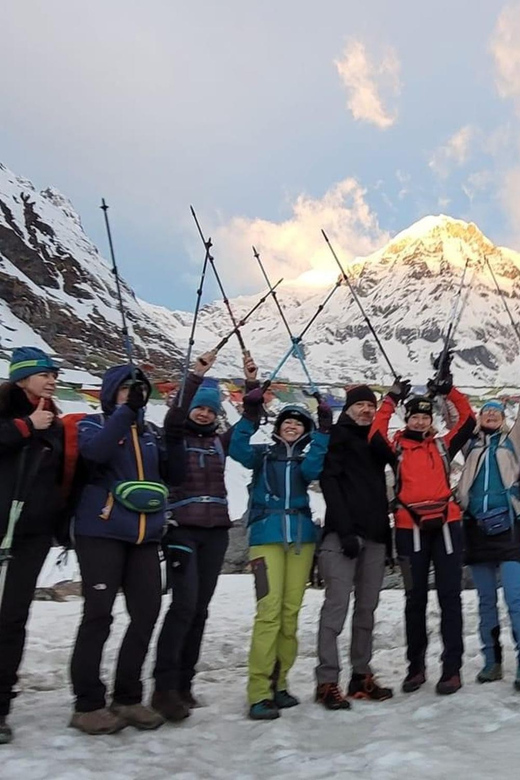
- ABC is the high point: The trail reaches 4,130 meters on day five, with six hours of trekking from Deurali.
- The route finishes with a soak: Jhinu Dada hot spring gives your legs a welcome break before the drive back to Pokhara.
- Private guiding matters: English, Hindi, and Nepali guides are available, and the pace can be adjusted to your ability.
- The price covers the basics: At $267 per person, you get permits, accommodation, guide costs, transport listed in the plan, and meals on the full package.
- Porters cost extra: You need to carry your own gear unless you arrange a porter separately.
What This Seven Day Annapurna Route Is Really Like
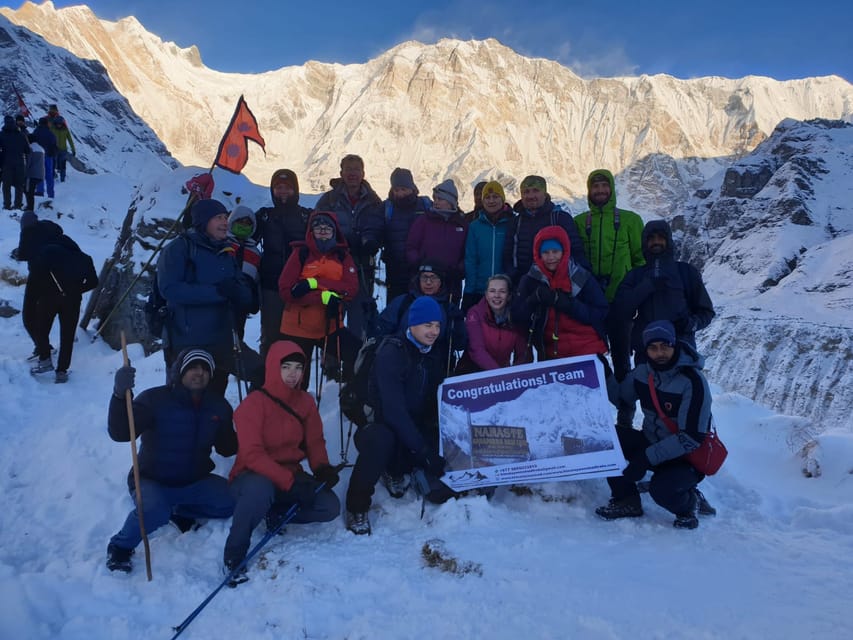
This trek is designed for people who want the classic Annapurna Base Camp experience but have limited time. The Poon Hill section adds a second mountain viewpoint rather than sending you straight up and back through the same valley.
That makes the route more varied, but it also makes the schedule busy. You gain and lose altitude several times, and several days call for around five or six hours on foot. I would treat the stated trekking times as a guide, not a promise. Your pace, stops, weather, and group needs will shape the day.
The private group format is one of the strongest features. You are not tied to a large group moving at one fixed speed. Guides including Mahesh and Prakash have been praised for answering questions, watching the group’s condition, and changing the plan to suit ability and expectations. That kind of support is especially useful when the trail reaches Deurali and ABC.
A few more hot spring trips around Nepal worth a look
- Pokhara: 7-Day Annapurna Base Camp Trek & Natural Hot Spring
★ 5.0 · 11 reviews - Pokhara: Amazing 7-Day ABC Trek with Natural Hot Spring
★ 5.0 · 5 reviews - Pokhara: 7-Day Annapurna Base Camp Trek & Hot Spring
★ 4.0 · 3 reviews
Day One: Pokhara To Ghorepani Through Ulleri
The first day combines a long jeep ride with a solid afternoon walk. You leave Pokhara, drive to Nayapul, and continue by four-wheel-drive vehicle through streams, villages, and rhododendron forest toward Ulleri.
The drive takes about three hours. It is practical rather than luxurious, but it saves your legs from a longer approach on foot. At Ulleri, you begin the roughly four-hour trek to Ghorepani, at 2,840 meters.
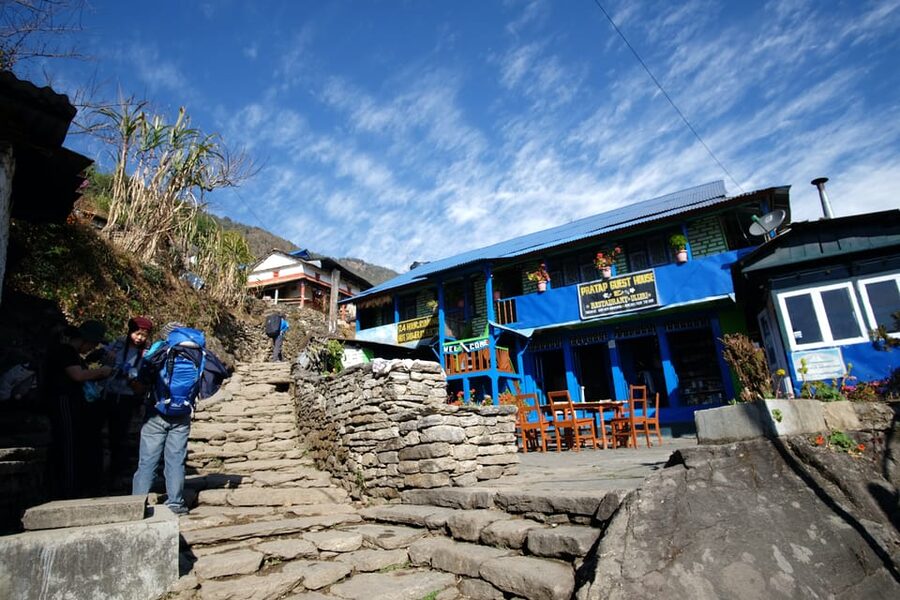
Ghorepani is more than a place to sleep. It is the launch point for the early climb to Poon Hill, so the overnight stop puts you in the right place for the next morning. Accommodation is in a tea house, which means a simple mountain stay rather than a conventional hotel.
You should expect basic facilities during the trek. The package includes available accommodation, but personal costs such as showers, battery charging, bottled or boiled water, laundry, and bar bills are extra. Bring some cash for these small expenses.
Day Two: Poon Hill Sunrise And The Forest Trail To Chuile
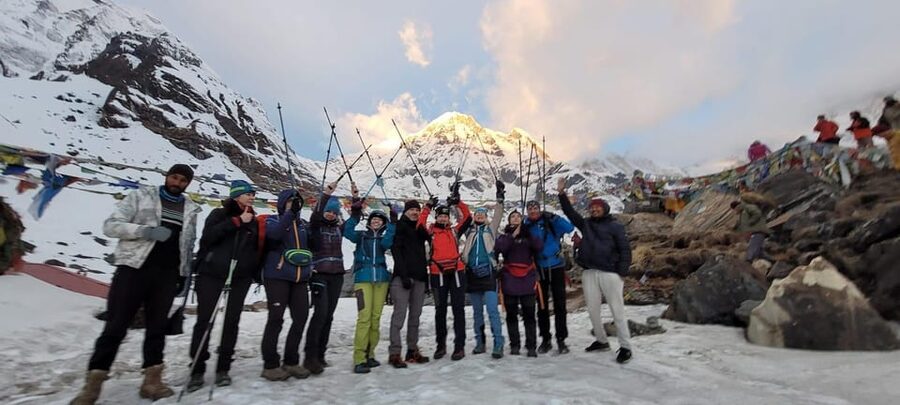
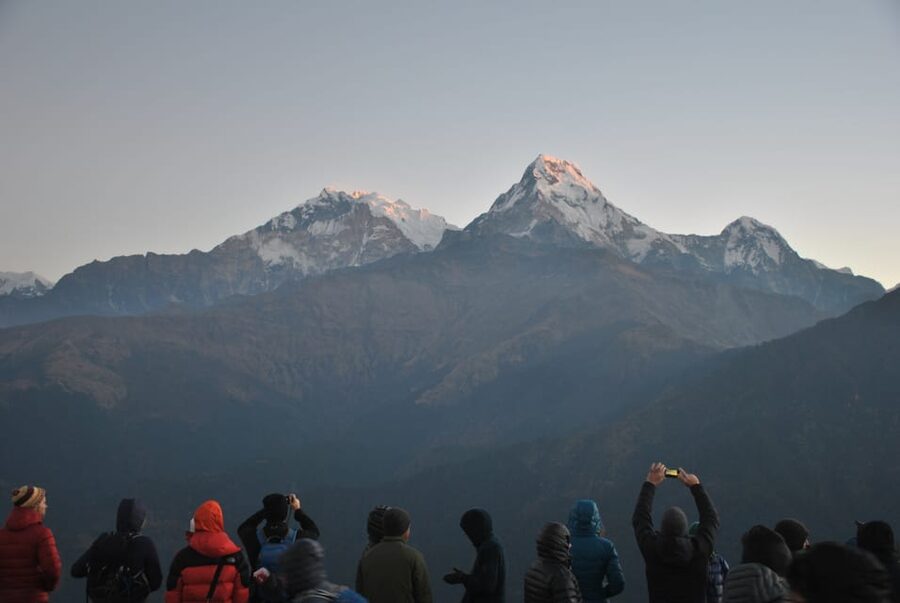
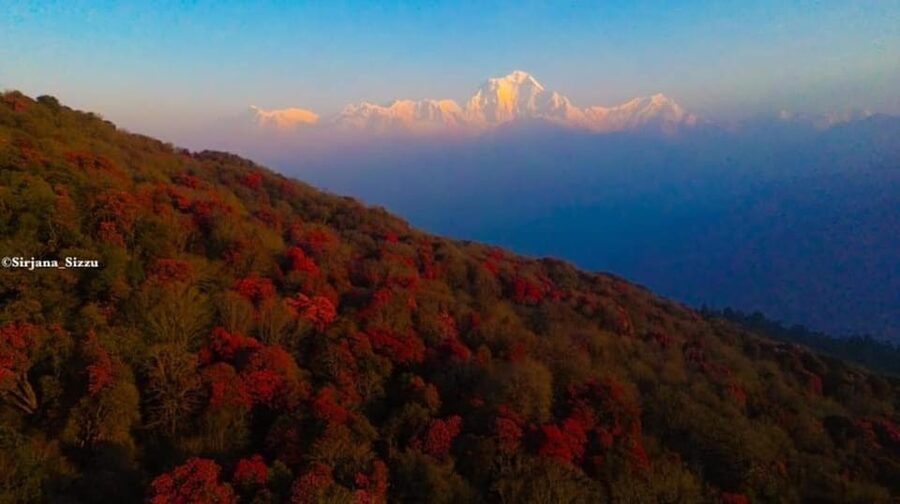
Day two begins early with the climb to Poon Hill. At 3,210 meters, the viewpoint gives you a broad look at the Annapurna range and surrounding peaks. Sunrise is the main event, so bring a jacket and keep your camera ready, but do not expect a slow morning.
After returning to Ghorepani and having breakfast, you descend toward Tadapani and then Chuile. The day lasts about six hours on foot. This is a good example of the route’s rhythm: an early high point, a return to the lodge, and then more trail before the day ends.
The forest section is a major part of the appeal. Rhododendron and other woodland stretches soften the stone paths and keep the day from becoming a march between viewpoints. At the same time, downhill walking can be hard on knees, especially after the early climb.
You spend the night in a hotel in Chuile. The itinerary also refers to Tadapani, so confirm the exact overnight village with the operator before departure. That small check can help you set expectations for the day.
Day Three: Chuile, The Rivers, And Sinuwa
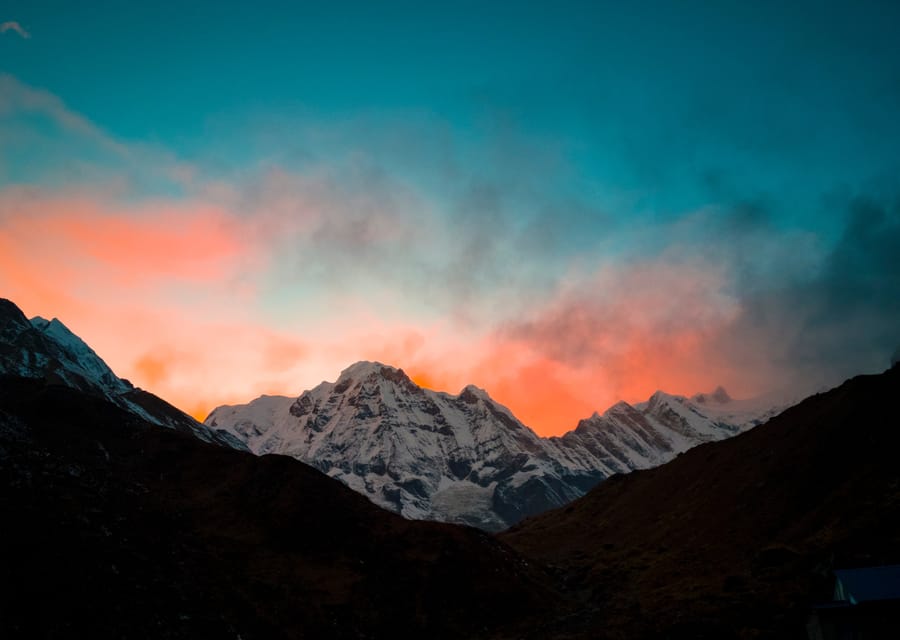
From Chuile, the route turns toward Annapurna Base Camp. You cross the meeting point of the Kumrung and Modi Rivers, then continue beside the river system toward Sinuwa at 2,170 meters.
The stated trekking time is about five hours. Compared with the previous day, the distance may feel more manageable, but the trail still includes changes in height and uneven ground. Your guide’s pacing is useful here, particularly if you are carrying all your own equipment.
This section helps you understand the geography of the trek. You are no longer simply walking between hill villages and viewpoints. The trail follows the river corridor that leads deeper into the Annapurna Sanctuary area.
Sinuwa is also a useful staging point for the next two harder days. You are still far below ABC, but the route now points directly toward Deurali, Machhapuchhre, and the high mountain bowl beyond.
Same place, a different kind of soak:
- Pokhara: 5 Day Annapurna Base Camp Trek & Natural Hot Spring
★ 4.9 · 44 reviews - From Pokhara: 5-Day Annapurna Basecamp Trek with Hot Springs
★ 4.9 · 26 reviews - Pkr/Kathmandu: 5-Day Annapurna Base Camp & Hot spring Trek
★ 5.0 · 6 reviews - Pokhara: 5-Day Trek to Annapurna Base Camp and Hot Springs
★ 5.0 · 4 reviews
Day Four: Sinuwa To Deurali At 3,200 Meters
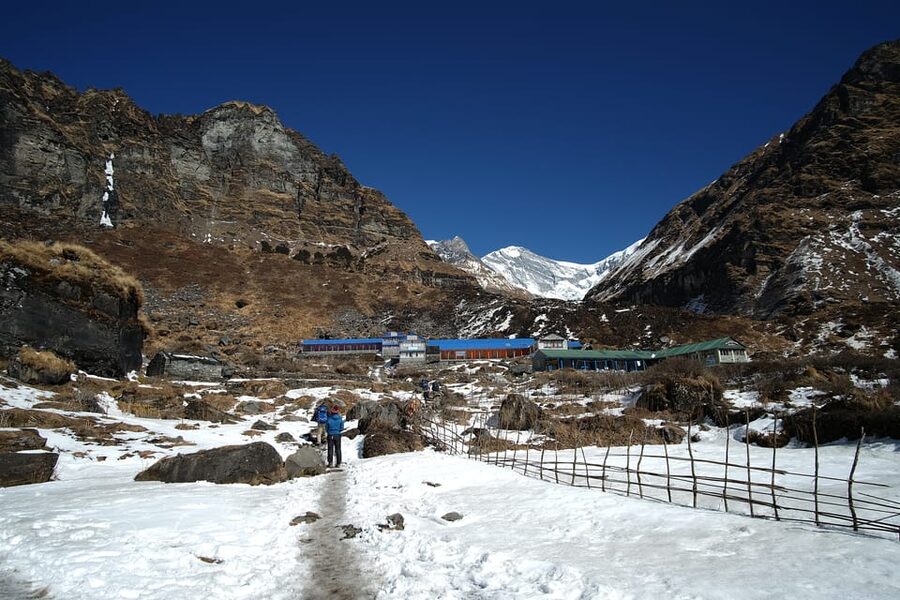
The walk from Sinuwa to Deurali takes about six hours. You pass through bamboo and rhododendron forest, reach Dovan, and continue upward.
The forest gives this day a different feel from Poon Hill. The trail is enclosed in places, then opens to views of Annapurna and Machhapuchhre. You are gaining height steadily, and Deurali at 3,200 meters is close to the altitude of Poon Hill, but it comes after several days of walking.
This is where the trek becomes more serious. You should keep your pace even and tell your guide if you feel unwell. The listed schedule does not specify an acclimatization day, so your group needs to move steadily and sensibly.
The overnight stop at Deurali positions you for the main objective. It also means the following day begins at a useful height, rather than requiring another long approach from a lower village.
Day Five: Deurali To Annapurna Base Camp
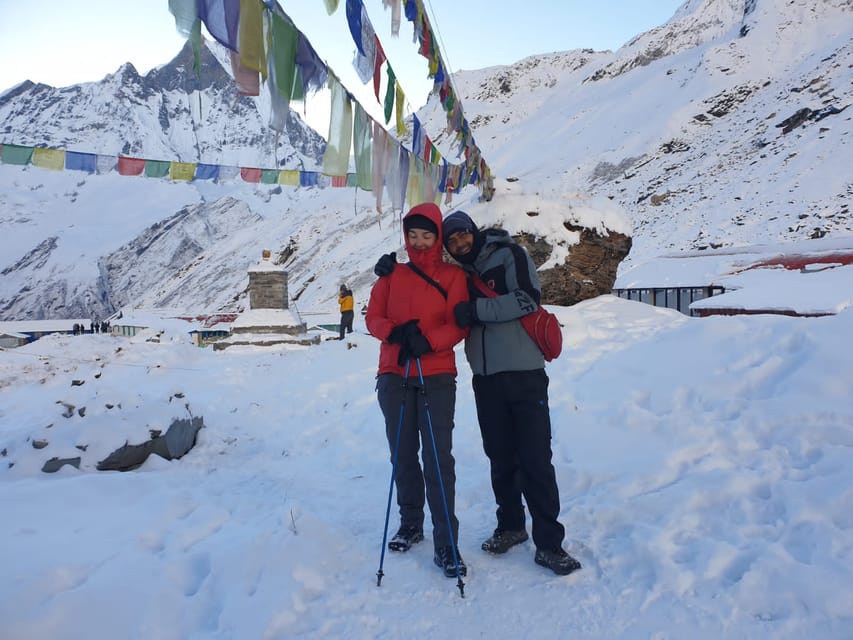
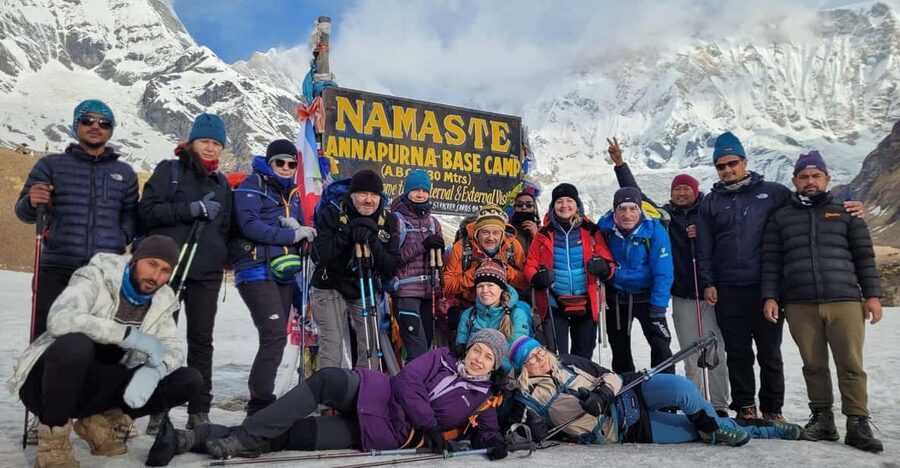
This is the day that gives the trek its name. From Deurali, you walk for about six hours to Annapurna Base Camp, reaching 4,130 meters.
The surroundings become more open and dramatic as you approach the base camp. The route leads into a mountain amphitheater surrounded by snow covered peaks and glaciers. Annapurna and Machhapuchhre are central to the experience, and the high setting gives the destination a sense of arrival that Poon Hill cannot match.
You should not underestimate this day. The altitude is substantial, and six hours at this height can feel much longer than six hours near Pokhara. Keep your daypack light, drink water, and follow the guide’s advice. Water, showers, battery charging, and other personal needs are not included in the price.
The reward is time in one of the Himalayas’ most famous high mountain settings. You are not just looking at a distant summit from a viewpoint. You reach the base camp itself, surrounded by the peaks and glacial scenery that define this part of Nepal.
Day Six: Returning From ABC To Bamboo
After the night at ABC, you retrace the route to Bamboo at 2,300 meters. The descent takes around six hours.
Going down does not make the day effortless. The drop from 4,130 meters is large, and tired legs must deal with uneven paths. Still, you will likely find the air and lower altitude welcome after the high camp.
Retracing the route has one benefit: you see familiar places from a different angle. The mountains, river corridor, and forest look different when you are heading out, and the descent gives you a chance to focus on details you may have missed while climbing.
Bamboo provides a lower and quieter overnight stop before the final day. At this point, the hot spring at Jhinu Dada is close enough to feel like a real reward, but you still have a meaningful walk ahead.
Day Seven: Jhinu Dada Hot Spring And The Ride Back
The final day takes you from Bamboo to Jhinu Dada, at about 1,600 meters. The walking time is roughly five hours, followed by a 2.5 hour drive to Lakeside Pokhara.
The hot spring is the day’s highlight. You have about two hours to soak and let warm water ease your tired muscles. It is a practical ending to a strenuous route, not just a scenic stop.
After Jhinu Dada, you trek for about 30 minutes to Samrung and take a jeep back to Pokhara. The road portion is part of the adventure, and the return drive lets you shift from mountain pace to city pace without adding another full walking day.
You should not plan an important flight or fixed connection immediately after this return unless you have allowed extra time. The listed drive takes 2.5 hours, and road conditions or timing can affect the arrival.
What The $267 Price Covers
At $267 per person, the package offers good value if you want the main logistics handled. The price includes permits, required paperwork, the Trekkers’ Information Management System fee, government taxes, trek accommodation, guide expenses, and the four-wheel-drive transport described in the plan.
The full package also includes breakfast, lunch, and dinner during the trek. Check that you are booking the full package, since the meal inclusion is specifically tied to that option.
Guide costs are covered, including salary, meals, accommodation, transportation, equipment, and insurance. That removes several expenses that can otherwise appear one by one on a mountain trip.
The price does not include a porter. This is important. If you want someone to carry part of your luggage, arrange and budget for that separately. You also pay for drinks, extra water, showers, laundry, phone calls, charging, personal purchases, travel and rescue insurance, and any extra nights in Pokhara.
International flights and the Nepalese visa are also outside the package. Think of the price as a trekking service package, not the total cost of a Nepal holiday.
Guides, Porters, And The Human Side Of The Trek
The guide can make a major difference on a route this compact. Mahesh has been praised for adjusting the plan to suit walking ability and for taking care of the group. Prakash has also received strong praise for his mountain knowledge and helpful manner. The operator offers English, Hindi, and Nepali guiding.
Those names may not be assigned to every departure, so confirm your guide before booking. Still, the repeated praise for personal attention gives you a useful clue about what to look for: a guide who answers questions, watches your pace, and treats the itinerary as flexible when needed.
Porters Bishal and Avinesh have also been singled out for their work on one departure. Since porters are not included in the listed price, ask about availability, cost, and baggage limits before you arrive.
What To Pack And What To Expect In The Lodges
Bring a passport or ID card, comfortable shoes, sunglasses, sunscreen, a jacket, comfortable clothing, a sleeping bag, and trekking gear. A jacket matters for the early Poon Hill start and the high camp at ABC.
You should be ready for tea-house accommodation rather than full-service hotels. The trip includes available lodging during the trek, but the information does not promise a particular room type or private bathroom. A sleeping bag is specifically recommended, so take that advice seriously.
Pack light enough to carry your own load if you do not hire a porter. Keep personal medication, documents, warm layers, and basic toiletries close at hand.
The trip is not suitable for pregnant women. Travel and rescue insurance is not included, and it is especially important to arrange your own coverage for a high-altitude trek.
Who Should Choose This Trek
I would recommend this route to a fit hiker who wants two major Annapurna experiences in one week. Poon Hill provides an early sunrise viewpoint, while ABC gives you the deeper mountain journey and the highest point of the trip.
It also suits people who value private guiding and do not want to organize permits, transport, lodging, and daily meals on their own. The English, Hindi, and Nepali language options make communication easier for many visitors.
I would hesitate to recommend it if you want leisurely days, high-comfort lodging, or a relaxed approach to altitude. The schedule is tight, the route is physically demanding, and the final return to Pokhara still includes a long walk and road journey.
Booking can be canceled up to 24 hours in advance for a full refund, and you can reserve now and pay later. Those terms make planning easier, but they do not remove the need to assess your fitness and arrange insurance.
Should You Book The Annapurna Base Camp Via Poon Hill Trek?
Book it if you want a compact, well-supported route with sunrise at Poon Hill, a genuine high-altitude finish at ABC, and a hot spring at the end. The combination is hard to beat for seven days.
Before paying, confirm three things: the exact guide assigned to your group, whether your booking is the full package with meals, and the extra cost of a porter. If you are comfortable with long walking days and simple tea-house accommodation, the $267 price offers a practical way to see a great deal of the Annapurna region without arranging every detail yourself.
FAQ
How long does the Annapurna Base Camp via Poon Hill trek last?
The trek lasts seven days, beginning in Pokhara and ending with a return to Lakeside Pokhara on day seven.
What is the highest point on the route?
Annapurna Base Camp is the highest point at 4,130 meters. Poon Hill reaches 3,210 meters.
Is transport from Pokhara included?
Yes. The plan includes hotel pickup and drop-off and four-wheel-drive transport according to the itinerary. Day one includes a drive from Pokhara to Nayapul and Ulleri, while day seven includes a jeep from Samrung to Pokhara.
Are meals included during the trek?
Breakfast, lunch, and dinner are included for the full package option. Drinks, bottled or boiled water, and personal purchases are not included.
Is a porter included in the price?
No. A porter is available for purchase, but the listed price does not include one.
What languages can the guide speak?
Guides are available in English, Hindi, and Nepali.
What should I bring for the trek?
Bring a passport or ID card, comfortable shoes, sunglasses, sunscreen, a jacket, comfortable clothes, a sleeping bag, and trekking gear.
Just added around Nepal
- 7 Days Annapurna Base Camp Trek from Pokhara with Hot Spring★ 5.0 · 2 reviews
- POON HILL HOT SPRING – 10 Days Trek★ 5.0 · 3 reviews
- Lower Mustang Jomsom Muktinath Hot Spring Tour in 4 WD Jeep★ 4.5 · 2 reviews
- 5-Day Annapurna Base Camp Trek with Natural Hot Springs★ 5.0 · 3 reviews
- Pokhara: Amazing 7-Day ABC Trek with Natural Hot Spring★ 5.0 · 5 reviews
- Pokhara: 5-Day Trek to Annapurna Base Camp and Hot Springs★ 5.0 · 4 reviews
- Pokhara: 7-Day Annapurna Base Camp Trek & Hot Spring★ 4.0 · 3 reviews
- Pokhara: 5-Day Annapurna Base Camp Trek with Hot Spring★ 5.0 · 3 reviews
Hot Spring Tours, compared.
Volcanic Islands Cruise with Hot Springs Visit
Read our review →
Mount Batur Sunrise Guided Hike and Natural Hot Spring
Read our review →
Sky Lagoon Entrance Pass With 7-Step Spa Ritual
Read our review →
Zakopane, Thermal Springs, Cable Car, Local Tasting
Read our review →
Golden Circle, Kerid Crater, & Blue Lagoon Tour
Read our review →
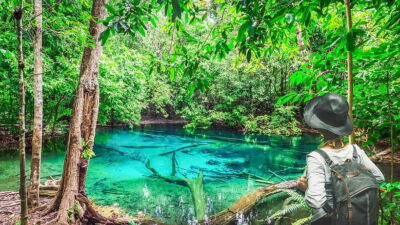
Tiger Cave Temple, Emerald Pool and Hot Springs Tour
Read our review →Browse the lists this tour appears in