
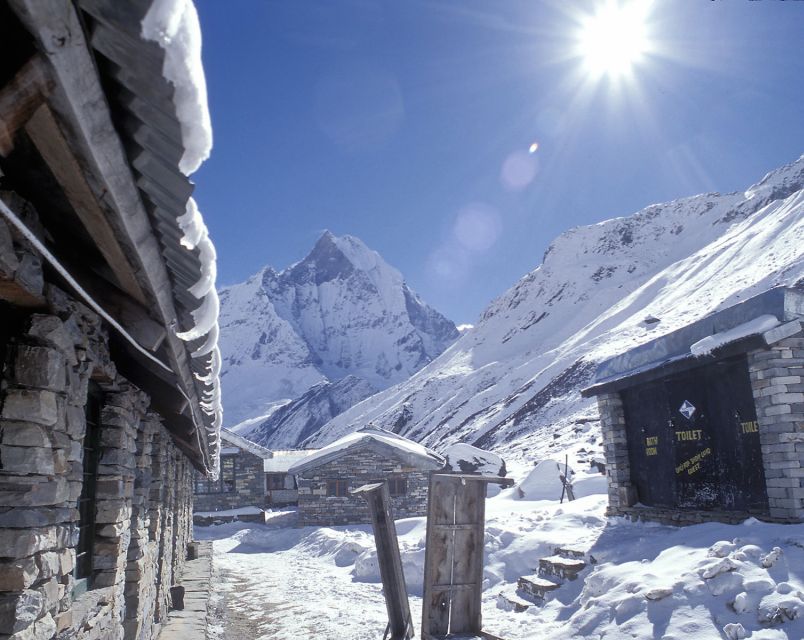
REVIEW · NEPAL
Pokhara: 5-Day Trek to Annapurna Base Camp and Hot Springs
Annapurna Base Camp is one of Nepal’s best short treks because it packs rivers, waterfalls, mountain villages, high forests, glaciers, and huge Himalayan views into a compact route. You begin near Pokhara and finish with a soak at Jhinu hot springs, a fine reward for tired legs.
I like the practical setup: hotel pickup, permits, a registered guide, tourist-standard lodges, and shared jeep transport are included. I also like the human scale of the route, where you walk through villages and forests instead of simply chasing a viewpoint. The main caution is the confusing day count: the description says five days, but another section describes six or seven days. Confirm the exact schedule before paying.
Key points to know
- Annapurna Base Camp reaches 4,120 meters, so altitude and cold matter even on a five-day trip.
- Jhinu hot springs come at the end, after the steep descent from the sanctuary.
- The hardest section is likely day four, when you descend from base camp to Sinuwa over seven to eight hours.
- Shared jeeps reduce cost, but they also mean less control over departure timing and comfort.
- Meals and porters depend on the package, so check whether you are booking the budget or all-inclusive option.
- Past guide names include Tanka, Chhabi, and Amir, though your assigned guide may be different.
Why this Pokhara to Annapurna route works
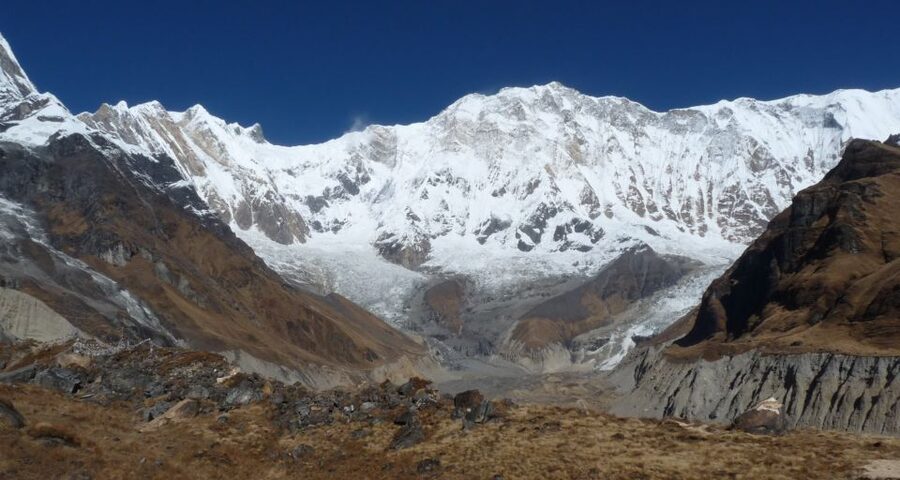
The Annapurna Base Camp trek is a good choice if you want a serious Himalayan walk without committing to two or three weeks on the trail. The route moves from road-access villages into the Annapurna Sanctuary, a mountain basin surrounded by towering peaks.
You will not spend every hour staring at snowy summits. The early sections include jeep travel, stone steps, forest, river crossings, and village paths. That variety is the point. The scenery changes often, and the route feels like a journey through the middle hills before it becomes a high mountain trek.
The advertised price is $206 per person, which can be strong value if your package includes meals, a porter, and the full transport arrangement. The base inclusions cover hotel pickup and drop-off, shared jeep transport, permits, a guide, guide wages, accommodation, taxes, and service charges. But meals and porters are listed as optional, so the final cost depends on the package you choose.
Ask one simple question before booking: Does my price include meals and a porter? That answer can change the value quite a bit.
More Hikes and Treks in Nepal:
- Pokhara: 5 Day Annapurna Base Camp Trek & Natural Hot Spring
★ 4.9 · 44 reviews - From Pokhara: 5-Day Annapurna Basecamp Trek with Hot Springs
★ 4.9 · 26 reviews - Pokhara: 7-Day Annapurna Base Camp Trek & Natural Hot Spring
★ 5.0 · 11 reviews
Day one: Pokhara, Samrung, and Sinuwa
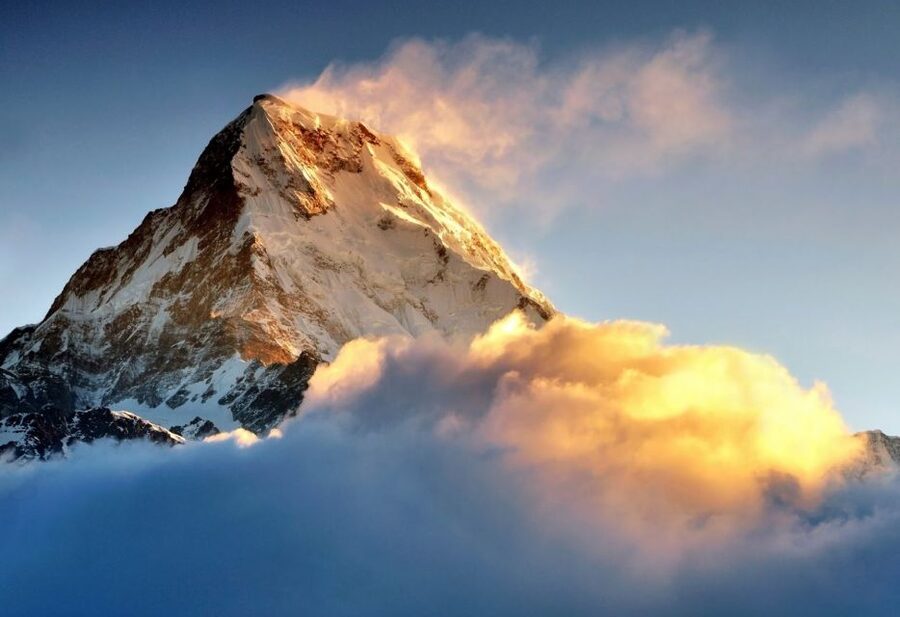
Your morning begins with pickup from a hotel in Lakeside Pokhara or from the airport. You travel by shared jeep toward the road end at Jhinu and begin walking from the Samrung area. The stated timing is about three hours by jeep followed by four hours on foot.
This is a full opening day, not a gentle warm-up. The road saves you a long approach, but the walking begins with enough uphill and uneven ground to test your legs. You follow the Modi Khola River and pass small villages, farmland, and forested sections before reaching Sinuwa.
Sinuwa sits around 2,200 meters, according to the supplied schedule. The elevation is high enough for you to start paying attention to hydration, breathing, and pace, but the bigger issue is the combination of driving and walking on the same day.
Your accommodation is in a tourist-standard lodge. Expect a simple trekking base rather than hotel comfort. The setup is useful because you can eat, sleep, charge devices if available, and prepare for the next morning without needing to carry camping equipment.
A registered guide is especially useful from this point. The trail includes junctions, stone steps, village paths, and changing conditions. A guide also handles the practical side of permits and helps set the pace.
Day two: Sinuwa to Deurali through forest
The second walking day runs from Upper Sinuwa to Deurali at about 3,230 meters. The expected walking time is six to seven hours.
This section gives you a strong sense of how quickly the route changes. The lower villages fade away, and the trail passes through dense forest. You will cross streams and encounter waterfalls along the way, with the Modi Khola valley helping shape the route.
The walk is not technically described as climbing, but it can be tiring because of repeated stone steps and steady uphill sections. Good hiking shoes matter here. Comfortable shoes are listed among the required items, but I would treat proper hiking shoes as the better choice for uneven ground and wet sections.
Deurali is an important overnight stop because it puts you close to the high part of the trek. At this point, you should keep your evening quiet. Eat well, drink water, and organize your daypack so the next morning does not begin with a search for gloves or sunscreen.
At over 3,200 meters, you should also watch how your body feels. The experience is not suitable for people with heart problems, and travel and rescue insurance is strongly advised. The supplied information does not promise medical support on the trail, so insurance is not a box to tick casually.
Day three: Deurali to Annapurna Base Camp
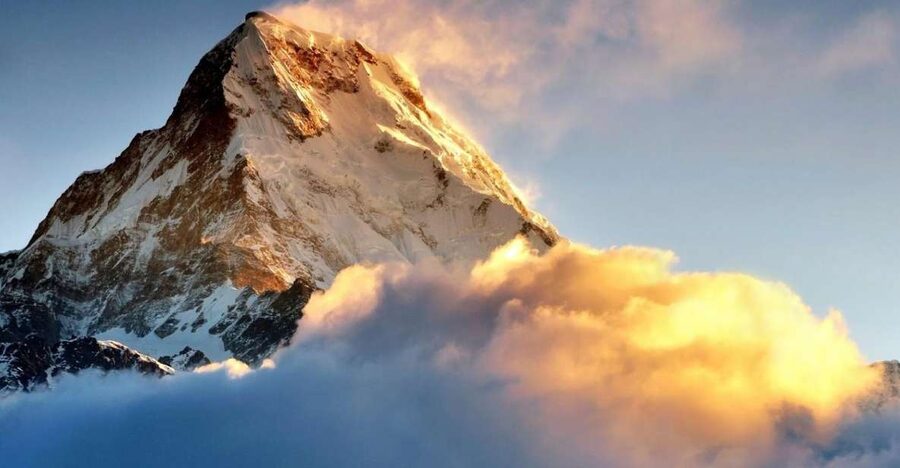
The third day is the main prize: Deurali to Annapurna Base Camp, at 4,120 meters, in about five to six hours.
The route follows streams toward Machhapuchhare Base Camp, often called MBC. Despite the name, this is not the summit of Machhapuchhare. You continue from there into the area described as Ablation Valley, a hollow corridor between the glacier and the mountain.
This is where the route feels most dramatic. You are no longer simply walking through villages and tree cover. The mountains dominate the setting, and the valley narrows into a high sanctuary ringed by peaks.
The final approach to Annapurna Base Camp is not a flat stroll. You cross hills and continue upward until the basin opens around you. At 4,120 meters, cold, wind, and thinner air can make the last part feel longer than the clock suggests.
You spend the night at base camp. That overnight stay is valuable because it gives you time to experience the setting without rushing straight back downhill. It also means you need warm layers, a change of clothes, sun protection, and toiletries. Pack only what you need for the night in your daypack, since a porter may or may not be included in your package.
The mountain views are the reason to come, but do not treat them as guaranteed in every weather condition. Clouds can change the view quickly at high elevation. The route itself still offers glaciers, streams, waterfalls, and high valley scenery even if the peaks are partly hidden.
A few more hot spring trips around Nepal worth a look
- Pkr/Kathmandu: 5-Day Annapurna Base Camp & Hot spring Trek
★ 5.0 · 6 reviews - 5-Day Annapurna Base Camp Trek with Natural Hot Springs
★ 5.0 · 3 reviews - Pokhara: 5-Day Annapurna Base Camp Trek with Hot Spring
★ 5.0 · 3 reviews - 5-Day Aegean Tour – Gallipoli, Troy, Ephesus, Kusadasi, Pamukkale
★ 4.5 · 86 reviews
Day four: the long descent to Sinuwa
The supplied five-day schedule takes you from Annapurna Base Camp to Sinuwa in seven to eight hours. This is probably the most demanding day for your knees.
The route leaves the sanctuary through the valley and drops roughly 1,600 meters from base camp toward Bamboo and Sinuwa. Downhill is often harder than uphill because every step loads the knees, especially on stone paths. Trekking poles would be a sensible personal addition, though they are not listed among the included equipment.
The descent also changes the weather and vegetation. You move away from the cold high basin and back toward forest. The route is scenic, but fatigue can blunt your attention, so keep your pace steady and stop when needed.
This is another reason to ask about the guide’s approach. Past guide feedback singled out Tanka for checking health, adjusting walking speed, and taking safety seriously. That is exactly what you want on a day with a long descent. Guides named Amir and Tanka were also praised for being attentive and good company, while porter Chhabi was remembered for his strength and calm manner.
Those names do not guarantee who will lead your trip. Still, you can ask the operator who your guide and porter will be and whether the guide is government registered, as stated in the inclusions.
Day five: Jhinu hot springs and return to Pokhara
The final day begins with a shorter trek from lower Sinuwa toward Jhinu Danda, then onward by jeep to Lakeside Pokhara. The stated timing is about four hours of walking and three hours by jeep.
Jhinu is the emotional payoff after the long descent. The hot springs offer a place to rest tired muscles beside the river. You should bring a change of clothes and keep swimwear or a suitable bathing layer easy to reach rather than buried at the bottom of your bag.
After the hot springs, the route passes farmland near the river before the jeep transfer back to Pokhara. The road journey is part of the return, not a minor detail. Shared jeep travel can be dusty, crowded, or slower than expected, and road conditions can affect timing.
The supplied narrative also describes a longer version that continues from Annapurna Base Camp to Bamboo, then to Chomrong and Jhinu, with a final return to Nayapul. That version is not the same as the five-day schedule ending at Sinuwa and using the Jhinu road connection.
This is the most important practical issue with the booking. The experience is sold as five days, but the longer description refers to six and seven days and even repeats day numbers. Get the exact route, overnight stops, and return transport confirmed in writing.
Lodges, meals, and porter choices
The accommodation is described as private accommodation in tourist-standard lodges. That gives you a bed and a roof, but you should not expect full hotel services in the high country.
The guide’s salary, accommodation, and meals are included. Your own meals are included only if you select the all-inclusive option. Under the budget option, plan to pay for food as you go.
Drinks are not included. You should budget for hot, cold, and alcoholic drinks, bottled or boiled water, showers, phone calls, laundry, bar bills, and battery charging. These small costs add up on a trek.
A porter is also included only with the all-inclusive choice. If you choose the budget option, you carry your own main bag unless you pay extra for a porter. The supplied information specifically advises bringing funds for extra porter service, so do not assume one is waiting at the trailhead.
I would keep your daypack light with water, sunscreen, sunglasses, a sun hat, a warm layer, rain protection if you have it, snacks, personal medicine, and a change of clothes. Your passport or ID card may be needed for permits and identification.
Guides, safety, and the human side
The guide may be the difference between a hard trek and a badly managed one. The operator supplies a government-registered English-speaking guide, and the past guide feedback points to the qualities that matter most: punctuality, attention to health, safety awareness, and the ability to adjust the pace.
Tanka was specifically remembered for answering questions about nature, animals, and local culture while also watching the group’s condition. Amir was described as friendly and attentive. Chhabi, a porter, was valued for his quiet manner and physical strength.
You should still speak up if you feel unwell. The guide can adjust pace, but you need to report headaches, nausea, unusual breathlessness, or other problems early. At 4,120 meters, ignoring symptoms is a poor plan.
The experience is not suitable for pregnant women or people with heart problems. Everyone should consider travel and rescue insurance. The route is active and remote enough that ordinary holiday insurance may not cover trekking at this elevation, so check the wording of your policy.
Cost, flexibility, and who gets the best value
At $206 per person, the trip can be a sensible buy for someone who wants permits, a guide, accommodation, and transport arranged in one package. The value improves if you choose the all-inclusive option and want a porter and meals handled in advance.
The budget option may work for confident hikers who prefer to carry their own bags and choose meals as they go. It does not remove every expense, though. Drinks, water, showers, charging, laundry, and personal costs remain yours.
Pickup and drop-off are included from Lakeside Pokhara hotels and the airport. You should wait in the lobby or at the entrance of your apartment five to ten minutes before pickup.
Free cancellation is available up to 24 hours before the start, and you can reserve now and pay later. Those terms help if your Pokhara plans are still moving, but they do not solve the conflicting five-day and seven-day descriptions. Clarify the schedule first.
Should you book the Annapurna Base Camp trek?
I would choose this trek if you want a compact Himalayan route with strong scenery, village stays, a registered guide, and a hot spring finish. It suits fit hikers who can manage six to eight hours of walking and who are prepared for a high point of 4,120 meters.
I would be cautious if you dislike shared transport, need a fixed luxury standard, or prefer a relaxed walking schedule. The descent from base camp to Sinuwa is long, and the package details change depending on meals and porter service.
Book it after confirming three things: the exact number of days, the overnight stops, and what your selected price includes. If those details are clear, the route offers a lot for the money and a memorable mix of high mountains, forests, rivers, villages, and Jhinu’s warm water.
FAQ
How long is the Annapurna Base Camp experience?
It is advertised as a five-day trek. Another description refers to six or seven days, so you should confirm the exact schedule and number of nights before booking.
What is the highest point of the trek?
Annapurna Base Camp is at approximately 4,120 meters.
Is hotel pickup included?
Yes. Pickup and drop-off are provided from hotels in Lakeside Pokhara or from the airport by car.
Are meals included?
Meals are included only if you select the all-inclusive option. They are not included with the budget option.
Is a porter included?
A porter is included with the all-inclusive option. An extra charge applies if you need one with the budget option.
What should I bring?
Bring a passport or ID card, comfortable or hiking shoes, sunglasses, a sun hat, spare clothes, sunscreen, insect repellent, toiletries, and a daypack. Also bring money for personal expenses, drinks, water, showers, charging, laundry, and possible porter costs.
Just added around Nepal
- 7 Days Annapurna Base Camp Trek from Pokhara with Hot Spring★ 5.0 · 2 reviews
- POON HILL HOT SPRING – 10 Days Trek★ 5.0 · 3 reviews
- Lower Mustang Jomsom Muktinath Hot Spring Tour in 4 WD Jeep★ 4.5 · 2 reviews
- 5-Day Annapurna Base Camp Trek with Natural Hot Springs★ 5.0 · 3 reviews
- Pokhara: 7-Day Annapurna Base Camp Via PoonHill & Hot Spring★ 5.0 · 6 reviews
- Pokhara: Amazing 7-Day ABC Trek with Natural Hot Spring★ 5.0 · 5 reviews
- Pokhara: 7-Day Annapurna Base Camp Trek & Hot Spring★ 4.0 · 3 reviews
- Pokhara: 5-Day Annapurna Base Camp Trek with Hot Spring★ 5.0 · 3 reviews
Hiking & Trekking, compared.
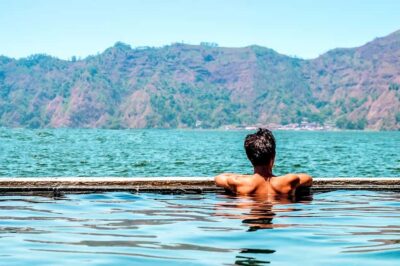
Mount Batur Sunrise Guided Hike and Natural Hot Spring
Read our review →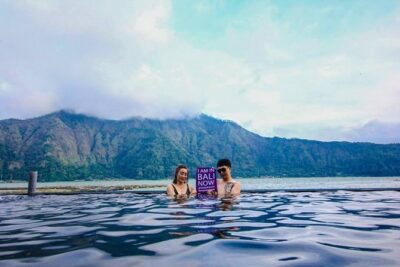
Mount Batur Sunrise Hike and Natural Hot Spring Option
Read our review →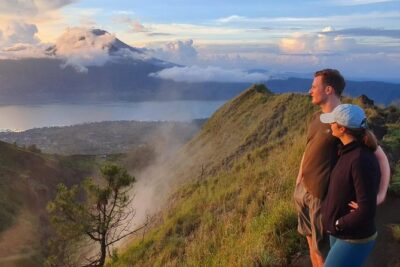
Private Tour Mount Batur Sunrise Trekking and Natural Hot Spring
Read our review →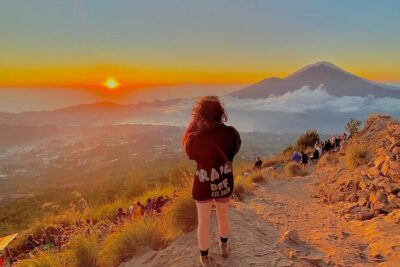
Mount Batur Sunrise Hike, Breakfast & Hot Spring
Read our review →
Mount Batur Sunrise Hike with Breakfast & Hot Spring
Read our review →
Montanejos Hiking Tour & Thermal Pools from Valencia
Read our review →
Landmannalaugar Hike and Hot Springs from Reykjavik & Hella
Read our review →Browse the lists this tour appears in