
REVIEW · TAURANGA
Rotorua Geothermal Living Maori Village Tour Whakarewarewa 6.5hours Tour
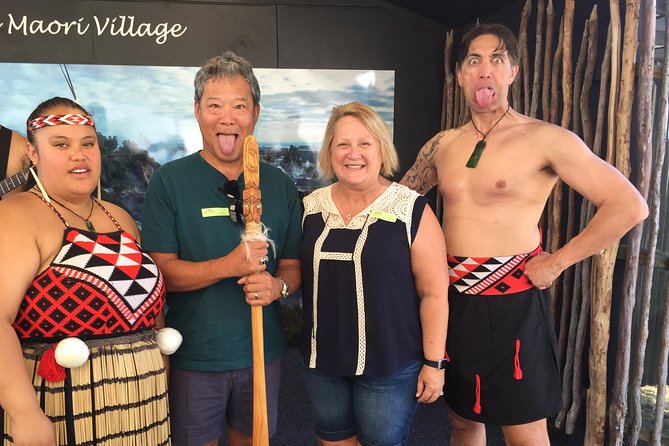
Whakarewarewa Living Māori Village is the heart of this outing. You walk through a real Māori community where boiling pools, steam, and geysers are part of daily life, not simply scenery behind a fence. A village resident leads the visit, explaining how geothermal heat is used for cooking and other everyday needs.
I like the direct local connection and the way the trip combines culture with natural forces. I also like the small minibus format, usually limited to 20 people, which makes the long drive from Tauranga easier and more personal. The main trade-off is time: the village is about 75 to 80 minutes from the port, so some of your six-and-a-half hours will be spent on the road.
Key points to know before booking
- A living community, not just a cultural display: You see how people use the geothermal springs in a village where Māori families have lived for more than 800 years.
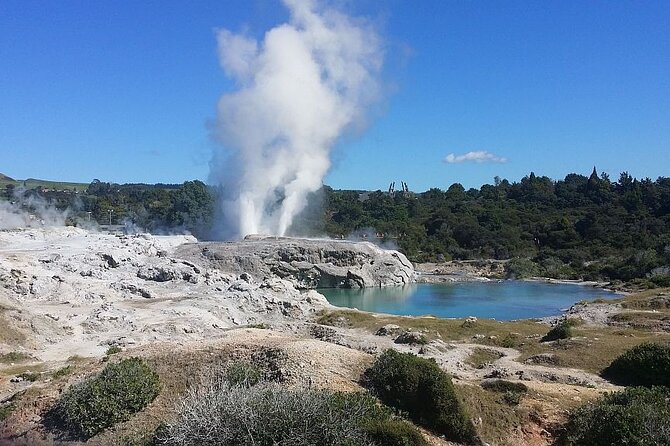
- Pohutu geyser and steaming pools: The famous geyser erupts naturally during the day and is viewed from a safe distance.
- Hangi-style lunch included: Your light lunch is cooked using traditional geothermal methods.
- A 30-minute Māori concert: Singing, dancing, and warrior demonstrations lead up to the famous haka.
- Small-group shore excursion: The air-conditioned vehicle carries no more than 20 people and returns to the Tauranga meeting point.
- Several regional sights in one day: The route includes Lake Rotorua, Rotorua city, Government Gardens, Mount Maunganui, Tauranga, and the kiwifruit country around Te Puke.
Why Whakarewarewa feels different from a standard Rotorua attraction
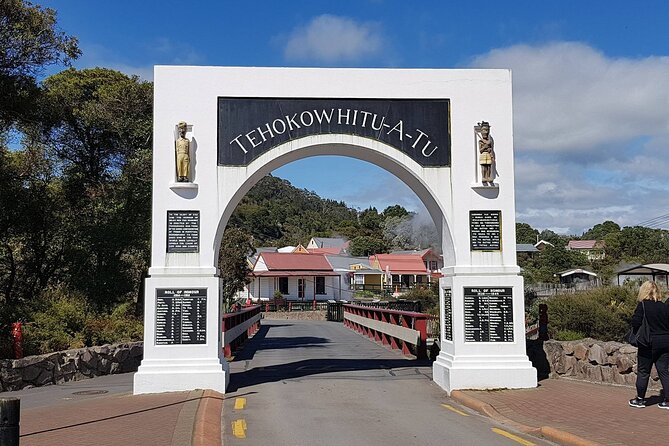
Rotorua has plenty of geothermal parks and Māori cultural shows. This outing takes a different route. Whakarewarewa is a working community, and the geothermal features are woven into ordinary life.
You walk among bubbling pools, steam vents, and hot water rather than simply viewing them from a distant platform. The village guide explains how the harsh environment can also be useful. Heat from the ground has long been used for cooking, and you see how food is prepared in the traditional hangi style.
That connection is the key reason I would choose this tour. You are not only looking at a geyser or watching a performance. You are learning how people have adapted to a place where the ground is hot, the air can smell strongly of sulfur, and the geothermal activity never feels far away.
The village has been home to Māori people for more than 800 years. That long continuity gives the visit a sense of place that a short staged presentation cannot easily reproduce. Your guide through the community may have been born there or may be a long-time resident, and the explanation can include houses, cooking areas, hot pools, and the way the village functions now.
You should still keep your expectations sensible. This is a guided cultural attraction with a scheduled performance, not an unstructured visit to a private neighborhood. At busy times, the local operation may combine several groups for the village portion. The main tour vehicle is limited to 20 people, but the group inside Whakarewarewa can be larger, and that may make it harder to hear every word.
A few more hot spring trips around New Zealand worth a look
- Rotorua: Wai-O-Tapu Geothermal Park Entry Ticket
★ 4.6 · 2,601 reviews - Rotorua Forest Hot Tub Soak at Secret Spot
★ 5.0 · 556 reviews - Wai-O-Tapu Thermal Wonderland, Rotorua, New Zealand
★ 4.5 · 379 reviews
The drive from Tauranga to Rotorua
The excursion begins at 1 Salisbury Avenue in Mount Maunganui, with port pickup and drop-off arranged for cruise passengers. Departure time can change according to the arrival or departure of your ship, so use the confirmed time sent after booking rather than relying only on the time printed on a voucher. You are asked to check in 15 minutes early.
The road journey is part of the experience, but it is also the main practical drawback. The trip to Whakarewarewa takes roughly 75 to 80 minutes by minibus. That is a fair distance for a port day, especially when the full outing lasts about six and a half hours.
I find the drive useful because your guide provides context along the way. Guides such as Jack, Brian, Richie, Peter, Alistair, Saskia, Grahame, and Charlie have been praised for mixing local history with humor and practical commentary. The exact guide varies, but the small vehicle allows for a more conversational feel than a large cruise coach.
You pass forests, lakes, kiwifruit orchards, beaches, and the growing city of Tauranga. The route also travels through Te Puke, known as New Zealand’s kiwifruit center. The area produces about 85 percent of the country’s kiwifruit crop, so the orchards give you a useful sense of the region’s working economy.
If you dislike long drives, this may feel like too much time in a vehicle. If you want a broad look at the Bay of Plenty and Rotorua in one day, the distance is part of the bargain.
Two hours inside Whakarewarewa Living Māori Village
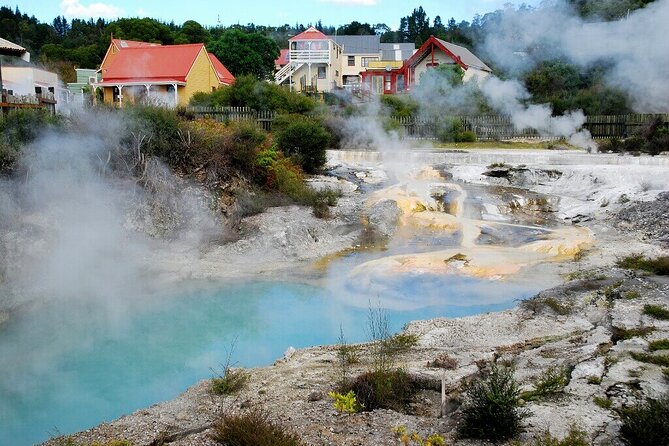
The village visit lasts about two hours and includes admission. This is the section to protect when planning your day, because it contains the main cultural and geothermal experiences.
A Māori village guide takes you through the community and explains how residents manage life among hot springs and steaming ground. The setting is unusual even before the formal explanations begin. You can smell sulfur in the air, see geothermal water bubbling nearby, and watch steam rise around the village.
The guide’s role matters. Instead of receiving only a general explanation from a driver, you hear about the village from someone connected to the community. That can make the difference between seeing a collection of hot pools and understanding why those pools have mattered to local life for generations.
The geothermal conditions are not treated as a problem to avoid. They are used for cooking and other practical purposes. You see how lunch is prepared in a hangi style, giving the meal a clear connection to the place rather than making it just a convenient stop in the schedule.
The famous Pohutu geyser is another major reason to visit. It erupts naturally during the day, although no exact eruption time is promised. You view it from a safe distance, along with other hot springs and steaming pools.
Wear shoes suitable for walking and bring layers. Rotorua’s weather can change, and the combination of open paths, steam, sun, and wind means you will be more comfortable with a hat, sunscreen, and clothing you can add or remove.
The hangi-style lunch and cultural concert
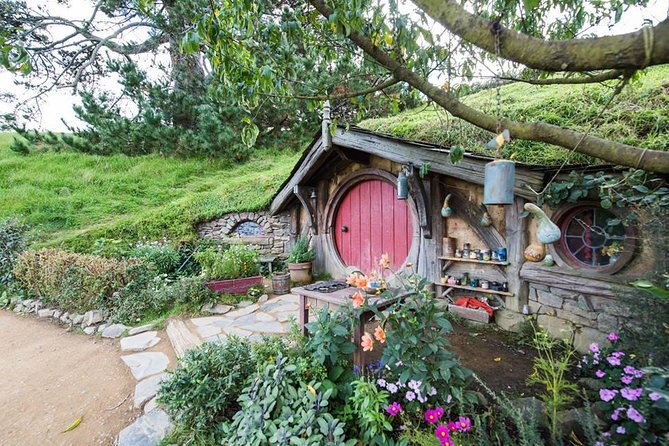
The included light lunch is a useful part of the package. It is not an extra restaurant stop, and its preparation connects directly with the geothermal setting. You get to see how heat from the earth can cook food, then eat as part of the village visit.
The meal is described as light, so I would not book this expecting a large feast. It does, however, remove the need to find lunch during a tightly timed port day.
The 30-minute Māori cultural performance follows or accompanies the village experience. It includes singing, dancing, and warrior demonstrations, with the haka as the best-known piece. The performance gives you a more formal introduction to Māori traditions after the walking tour has shown you daily life.
The show is energetic and easy to fit into the day. Several guides have been praised for adding context around the performance, which helps you understand it as more than a dramatic finale. Still, reactions can vary. One lower rating found the performance less impressive than expected, so I would choose this tour mainly for the village and geothermal setting, with the concert as an important bonus.
Same place, a different kind of soak:
- Rotorua: Hell’s Gate Outdoor Mud Spa & Guided Walk
★ 4.7 · 1,140 reviews - Rotorua: Polynesian Spa Pavilion Hot Pool Bathing (12+ yrs)
★ 4.4 · 376 reviews - Polynesian Spa Rotorua: Deluxe Lake Spa Hot Spring Bathing
★ 4.5 · 358 reviews - Rotorua: Secret Spot Hot Tubs
★ 4.8 · 326 reviews
Lake Rotorua and the Government Gardens
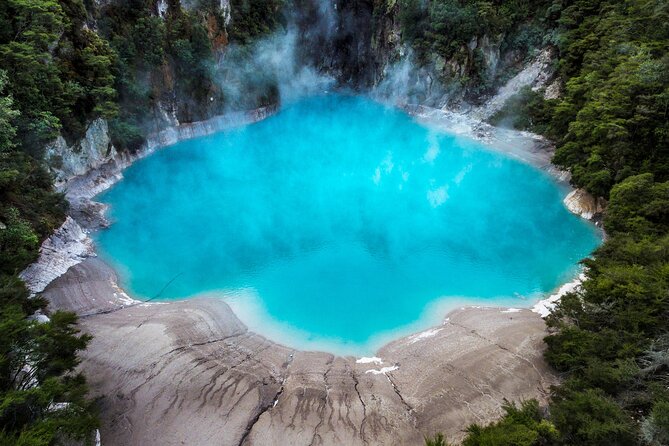
After or around the main Rotorua visit, the route includes Lake Rotorua for about 15 minutes. The lake is the central focal point of the city, and the brief stop gives you a change of pace after the geothermal activity.
This is a short viewing stop rather than a full lake excursion. You will have time to take in the setting, but do not expect a boat ride or an extended walk.
The tour also points out Rotorua’s Government Gardens. The prominent Elizabethan-style building there was New Zealand’s first health spa and now houses the Rotorua Museum. The gardens and building add a different layer to the city, showing how Rotorua’s hot waters later attracted health visitors as well as supporting Māori life.
One practical limitation is that not every listed sight is a full stop. Depending on timing, some places are viewed from the vehicle or receive only a short pause. One family wished for more time at lookouts and the gardens because taking photographs through a minibus window is not ideal.
That is a fair criticism. The operator has to get you back to the ship on time, and the itinerary covers a large area. I would treat these Rotorua sights as orientation and added value, not as substitutes for a separate day exploring the city.
Rotorua city, Tauranga, and Mount Maunganui
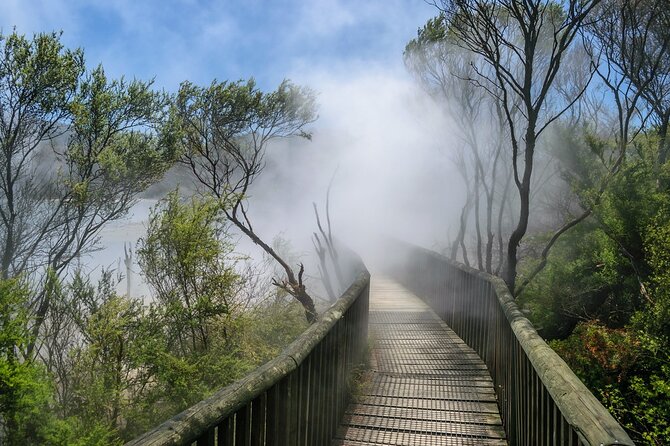
The excursion allows about an hour for showing you Rotorua and its main sights. This is a broad introduction rather than a detailed walking tour. Your guide can explain the city’s geothermal character, local history, and relationship with the surrounding lakes and forests.
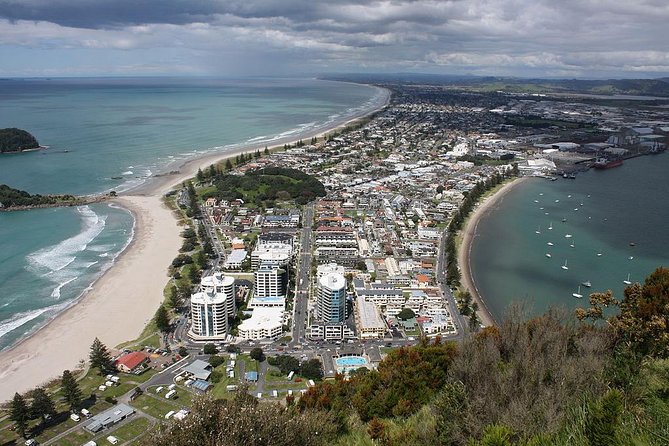
On the return route, you pass through Tauranga, one of New Zealand’s fastest-growing cities and home to the country’s largest port. The tour then takes you through Mount Maunganui, one of the country’s best-known seaside suburbs.
Mount Maunganui is attractive and expensive, with a popular beach and a distinct coastal feel. The tour drives along the area for about 30 minutes, giving you a useful view of the port’s surroundings before returning to the meeting point.
These driving sections work well for a port call because they let you see more without adding extra transfers. They are less satisfying if you want to get out and explore each place on foot. The trip is designed as a compact regional overview, not a series of long independent visits.
What $166.93 buys you
At $166.93 per person, the price is higher than a simple transfer to Rotorua, but this is not just transportation. The fee includes an experienced guide, port pickup and return, admission to Whakarewarewa, the Māori performance, a light hangi-style lunch, and an air-conditioned vehicle.
The value improves if you are visiting from a cruise ship. You do not need to arrange separate transport to Rotorua, find a cultural attraction, organize lunch, or calculate how much time to leave for the return trip. The operator has run these shore excursions for many years and says it has not missed a ship in 24 years, which matters when your departure time is fixed.
A cruise-line coach may carry 60 people or more. This tour limits its minibus to 20, and it often operates with around 12 to 20 people. That smaller format can mean more direct conversation with the guide and less time getting on and off the vehicle.
The caveat is that the small group ends at the village entrance. Whakarewarewa controls its own on-site arrangements, and on busy days several groups may be brought together. If hearing every sentence from the village guide is important to you, stay close and ask the operator about expected crowd levels before departure.
Who will enjoy this day most
I would recommend this excursion to you if you want Māori culture and geothermal activity in the same visit. It suits first-time visitors who want more than a quick photo stop, families who appreciate a guide able to answer questions, and cruise passengers who value a planned return to port.
It is also a good fit if you want a broad view of the Bay of Plenty. You see Rotorua, its lake and gardens, the geothermal village, Te Puke’s orchards, Tauranga, and Mount Maunganui without arranging several separate outings.
Families can do well here, although the day includes a long drive and walking around geothermal features. One guide, Grahame, was noted for keeping children engaged and answering their questions even when most of the group was older.
I would think twice if you want a quiet, private cultural visit, a full day at one attraction, or several long photography stops. The schedule is tight, and the village portion may be busier than the minibus portion.
The tour operates in all weather. Bring layers, a hat, sunscreen, and clothing suited to changing conditions. Personal expenses are not included. Most people can participate, but the supplied information does not give detailed accessibility specifications, so ask before booking if you have mobility needs.
Should you book this Tauranga shore excursion?
I would book it for the authentic village setting, the geothermal cooking, and the chance to hear from a Māori resident. The cultural concert and Pohutu geyser add strong visual highlights, while the small vehicle keeps the long port-to-Rotorua journey manageable.
I would not book it expecting every stop to be a full sightseeing visit. Lake Rotorua, Government Gardens, Rotorua city, Tauranga, and Mount Maunganui are mainly brief views or driving commentary, and the road takes a substantial part of the day.
For a first visit from Tauranga, the package offers good value because it combines transport, food, admission, a performance, and a guide in one carefully timed outing. Free cancellation is available up to 24 hours before the start, while poor-weather or minimum-participant cancellations offer a new date or full refund. Book it if the living Māori village is your priority and you want a reliable way to reach Rotorua without managing the logistics yourself.
FAQ
How long is the Rotorua Māori village tour?
The experience lasts approximately 6 hours and 30 minutes, including travel between Tauranga, Rotorua, and the included stops.
Where does the tour start and finish?
The listed meeting point is 1 Salisbury Avenue, Mount Maunganui 3116, New Zealand. The activity ends back at the meeting point, with port pickup and drop-off provided.
Is lunch included?
Yes. A light lunch prepared in the hangi style is included.
Does the tour include a Māori performance?
Yes. You receive a 30-minute Māori cultural performance featuring singing, dancing, warrior demonstrations, and the haka.
Will I see Pohutu geyser?
Yes. Pohutu geyser can be viewed from a safe distance as it erupts naturally during the day. A specific eruption time is not guaranteed.
What should I bring?
Dress for changing weather and bring layers, a hat, and sunscreen. The tour operates in all weather conditions. You should also check your email for the confirmed departure time and arrive 15 minutes early.
Just added around New Zealand
- West Auckland: Sunset with Thermal pool & Wine Tasting★ 5.0 · 3 reviews
- Whakarewarewa: Self-Guided Geothermal Trails★ 4.5 · 41 reviews
- WAI-O-TAPU Geothermal, Rotorua – Group Day Tour Ex Auckland★ 4.3 · 4 reviews
- Tauranga Private Shore Excursion: Wai-O-Tapu Thermal Wonderland★ 5.0 · 9 reviews
- Wai-O-Tapu Geothermal Valley, & Hot River★ 5.0 · 4 reviews
- Te Puia Geothermal, Kiwi and Māori Art★ 3.5 · 3 reviews
- Waimangu Geothermal Valley & Lake Rotomahana Tour – 7hrs★ 5.0 · 32 reviews
- Hells Gate Geothermal, Mud & Sulphur Spa★ 4.0 · 7 reviews
Hot Spring Tours, compared.
Volcanic Islands Cruise with Hot Springs Visit
Read our review →
Mount Batur Sunrise Guided Hike and Natural Hot Spring
Read our review →
Sky Lagoon Entrance Pass With 7-Step Spa Ritual
Read our review →
Zakopane, Thermal Springs, Cable Car, Local Tasting
Read our review →
Golden Circle, Kerid Crater, & Blue Lagoon Tour
Read our review →
Tiger Cave Temple, Emerald Pool and Hot Springs Tour
Read our review →Browse the lists this tour appears in