
REVIEW · ITALY
National Roman Museum and Diocletian Thermal Baths Walking Tour
Rome’s quieter museum experience can be found at Palazzo Massimo alle Terme, just steps from Republic Square. Behind its plain exterior are superb Roman sculptures, vivid mosaics, frescoes from Empress Livia’s villa, ancient coins, and jewelry. You skip the entry line and explore with a guide who can connect the objects to daily life, art, and power in ancient Rome.
I especially like two things here. First, the museum gives you the art that once filled Roman homes, villas, and public buildings, not just broken columns in an outdoor ruin. Second, the optional visit to Diocletian’s Baths adds a sharp sense of scale, with huge ancient rooms and a basilica shaped from the old bath complex.
The main caution is time. The tour lasts about two to three hours, and one hour at the museum can feel short if you want to study every floor. A late start or a slower pace may also leave less time for the baths.
Key points to know before booking
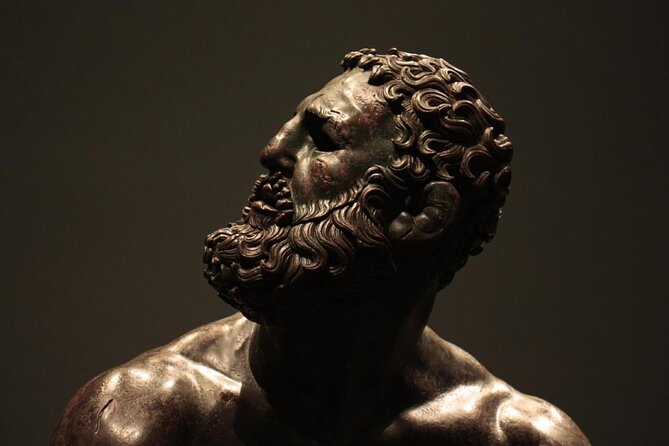
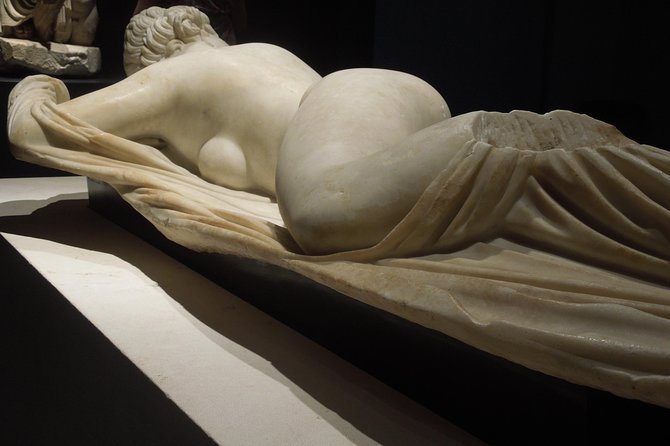
- Palazzo Massimo holds some of Rome’s finest ancient art, including the Boxer at Rest, Discus Thrower, and Sleeping Hermaphrodite.
- Empress Livia’s decorated rooms provide a rare look at Roman domestic painting, not only formal sculpture.
- Diocletian’s Baths were enormous, with space for up to 3,000 people and facilities that included gyms, libraries, and a swimming pool.
- Michelangelo reused part of the baths for the Basilica of St. Mary of the Angels in 1561.
- Private guiding is the strongest feature, with guides such as Matteo, Mattia, Serena, Giorgio, and Damiano praised for clear English and lively explanations.
- The price is high at $323.21 per person, so this makes the most sense if expert interpretation and a private visit matter to you.
Why Palazzo Massimo is worth your Rome time
Rome has famous museums that can feel like compulsory stops. Palazzo Massimo is different. It is not usually packed, and that changes the way you see the art. You can stand in front of a statue without being pushed along by a crowd, and you can take photographs without constantly waiting for a gap.
The museum covers four floors and traces Roman art from the second century BC through the fifth century AD. That range helps you see how Roman taste changed over time. Greek models appear again and again, but Roman artists also developed their own way of showing status, emotion, luxury, and everyday life.
I find the museum especially useful before visiting Rome’s ancient ruins. At the Forum or Palatine Hill, you often see walls, foundations, and fragments. Palazzo Massimo supplies the missing decoration: polished marble, painted plaster, patterned floors, coins, gold work, and portraits. After this visit, the ruins around Rome make more sense because you can picture the color and finish that once surrounded them.
Your guide should help you look beyond the famous names. The Boxer at Rest is a powerful example. The battered bronze figure is not a smooth, idealized athlete. His body shows strain, injury, and fatigue. The Discus Thrower gives you a different version of the athletic ideal, with movement and balance frozen in marble. The Sleeping Hermaphrodite brings another mood, combining myth, sensuality, and surprise.
These works reward a good explanation. Without context, you may see a series of excellent statues and move on. With a strong guide, you can follow the choices in posture, material, expression, and subject. Several guides associated with this experience, including Matteo or Mattia, Serena, Giorgio, and Damiano, have been praised for making the art easier to understand and more personal.
More Thermal Bath Tours in Italy
- Chianciano Terme: Theia Thermal Pools Entrance Ticket
★ 4.4 · 185 reviews - Milan: De Montel Thermal Bath Entrance Ticket
★ 4.6 · 89 reviews - Montecatini Terme Thermal Pool Entrance Ticket
★ 3.5 · 84 reviews
The art inside Palazzo Massimo
The collection is not limited to sculpture. You will see mosaics, frescoes, coins, jewelry, and goldsmith work. That variety matters because it shows how art reached into many parts of Roman life.
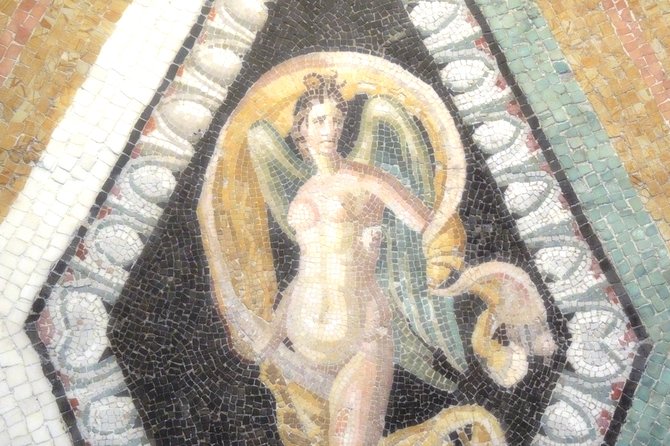
The mosaics are often one of the best surprises. Small pieces of stone and glass form floors and decorative scenes that have survived for centuries. Look closely at the patterns, borders, animals, and figures. They were not merely practical surfaces. They helped announce wealth and taste.
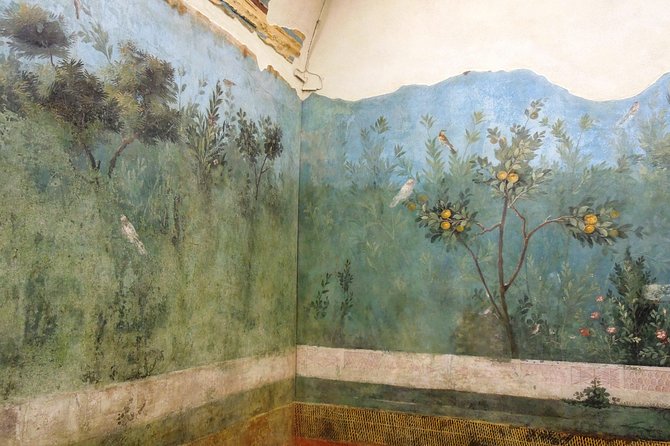
The frescoes offer another kind of evidence. Roman wall painting could make a room seem larger, calmer, or more luxurious. The rooms linked with Empress Livia are especially important because they show how an elite Roman interior might have been decorated. Painted gardens and plants create an enclosed world that feels remarkably fresh, even though the rooms are ancient.
Coins and jewelry shift the focus from grand public art to personal possessions and political messages. A coin could carry the face of an emperor across the empire. A piece of jewelry could signal wealth, family position, or fashion. Your guide can tie these small objects to the larger story of Roman society.
The museum is a good fit if you like details and visual evidence. It is less ideal if you only want a quick list of famous statues. There are many pieces, and not every one will hold your attention equally. One visitor gave the museum four stars because the mosaics and frescoes appealed more than the large number of statues. That is a fair warning: this is an art-focused visit, not a general introduction to every part of Roman history.
What the guide adds to the visit
The guide is the reason to book this rather than simply entering the museum alone. The ticket gets you inside, but a private guide can set a pace and choose a path that matches your interests.
The strongest guide reports describe people who brought stories and legends into the discussion rather than reciting dates. Damiano, who also works at a university in art, was praised for bringing Roman and Greek sculpture, mosaics, and frescoes to life. Serena was noted for linking the museum’s art and architecture with present-day Rome. Matteo and Mattia were repeatedly praised for strong English, warmth, and enthusiasm.
Those names are useful when comparing tour options, but they are not a guarantee of your assigned guide. The experience is provided by Raphael Tours & Events, and the guide you receive may be someone else. Still, the pattern is clear: the best part of the tour depends heavily on the individual leading it.
A private format can also help if one person in your group loves ancient art while another needs a more accessible explanation. One guide managed to hold the attention of a guest who did not usually care much for Ancient Rome. That is exactly what a good museum guide should do: give you a reason to look, not just tell you what you are seeing.
The format is listed as a private activity, with only your group participating. The wider description also refers to private or small-group choices, so check the exact option at booking. Either way, confirm that the price shown applies to your chosen group size and format.
Adding the Baths of Diocletian
The Baths of Diocletian were built in AD 298 and were once the largest bathing complex in Rome. The complex included gyms, libraries, and a swimming pool, with room for up to 3,000 people at a time.
That number is more than a fact to memorize. It helps you understand the baths as a major public center, not simply a place to wash. Roman baths were social spaces where people exercised, met friends, read, relaxed, and conducted parts of daily business. A visit here adds the public and social side of Roman life to the private villas and art collections seen at Palazzo Massimo.
The scale can be hard to grasp from a plan or a surviving wall. Inside the baths, the large rooms give you a better sense of the engineering and ambition involved. You may find the architecture more impressive than any single object because the building itself is the exhibit.
The tour also visits the Basilica of St. Mary of the Angels, formed from part of the bath complex by Michelangelo in 1561. This is one of Rome’s best examples of later history built directly into ancient architecture. You see the original Roman structure, then the way a Renaissance master adapted it for Christian worship.
Pay attention to the proportions and the walls. The church does not erase the baths. Instead, it lets you see how later Romans reused the remains of the ancient city. Your guide can point out which architectural features belong to the baths and which belong to Michelangelo’s work.
The baths are included as an upgrade in the tour description. If you choose the museum-only version, you will not receive this second stop. I would add it if you have the time and want architecture as well as sculpture. If your main goal is to study the museum collection, you may prefer to use the full visit for Palazzo Massimo.
Same place, a different kind of soak:
- Rome: Opera Concert at Palazzo Poli – Fontana di Trevi
★ 4.7 · 1,026 reviews - Ischia: Giardini Poseidon Thermal Park Official Entry Ticket
★ 4.8 · 464 reviews - Merano: Terme Merano Pools Entry Ticket
★ 4.4 · 240 reviews - Rome: Terme di Caracalla Skip-the-line Entry Ticket
★ 3.7 · 182 reviews
Timing, meeting point, and practical details
You meet at the Palazzo Massimo alle Terme ticket office at Largo di Villa Peretti 2, near Republic Square. The location is close to public transportation, and the tour ends back at the meeting point.
The advertised duration is about two to three hours. The listed itinerary gives roughly one hour to Palazzo Massimo and one hour to the Baths of Diocletian, with the remaining time used for meeting, moving between sections, and guiding. That schedule is efficient, but it is not leisurely.
If you take a lot of photographs, tell your guide at the start. One particularly accommodating guide adjusted the pace for a guest who took time with pictures. That kind of flexibility is easier to arrange on a private tour than in a large group.
The skip-the-line entry is useful, but do not confuse it with unlimited time inside. It saves you from waiting at the entrance, which matters most when Rome is busy or when you have another appointment afterward. You still need to arrive at the stated meeting point on time.
There is no hotel pickup or drop-off. Plan your own route to Largo di Villa Peretti, and allow a little extra time if you are unfamiliar with the area around Republic Square. Children must be accompanied by an adult, and the activity is listed as suitable for most participants.
Is $323.21 per person good value?
At $323.21 per person, this is not a budget museum visit. The value comes from the private guide, the skip-the-line entry, and the chance to combine two major sites with one person explaining the connections.
If you are traveling alone or as a couple, the price may feel steep beside a regular museum ticket. You are paying for interpretation and attention, not just admission. The cost makes more sense for a family or small group that can share the private experience, especially if several people want a better understanding of Roman art.
Group discounts are listed, so check the final rate for your party. The exact price can look very different when divided among several people. Also confirm whether your selected option includes the Baths of Diocletian, since that visit is described as an upgrade.
I would not choose this tour if you are content to wander through the museum at your own speed or if your budget is tight. I would consider it good value if you have limited time, want the important works explained, and prefer a calm visit over a crowded major attraction.
The rating is 4.8 from 18 reviews, with 94 percent recommending the experience. The praise is strongest for the guides, the quiet museum setting, the exceptional sculptures, and the combination of ancient baths with Michelangelo’s church. The weaker point is not the subject matter. It is the possibility of a late guide or a tour that feels rushed.
Who should book this Roman art tour?
I would recommend it to anyone who wants more than the Colosseum and Roman Forum. It gives you the art that made those ruins beautiful, then shows you one of the city’s largest ancient public buildings.
It is especially good for:
- Art lovers who want sculpture, frescoes, mosaics, coins, and jewelry in one visit.
- First-time Rome visitors who need clear context before seeing the ancient ruins.
- Repeat visitors looking for a quieter museum with excellent Roman works.
- Families or small groups who benefit from a private pace and direct questions.
- Architecture fans who want to see how Michelangelo adapted the Baths of Diocletian.
- History enthusiasts who enjoy links between private homes, public spaces, religion, and daily life.
You may want another plan if statues do not interest you, since much of Palazzo Massimo is devoted to classical sculpture. You should also avoid packing the rest of your day too tightly. The tour is not long, but there is enough to discuss that rushing off immediately afterward would undercut the experience.
Should you book it?
Book this tour if you want a guide to make Roman art readable and you value a quieter museum visit. The Boxer at Rest, Empress Livia’s frescoed rooms, the mosaics, and the Baths of Diocletian give you a side of Rome that many visitors miss.
I would choose the Baths upgrade if you enjoy architecture and have room in your schedule. If your interest is mainly sculpture and painting, ask for more time at Palazzo Massimo and accept that you may not see every floor in detail.
The price is the deciding issue. For a private group that wants expert attention, it can be worthwhile. For a solo budget visitor, independent entry may be the smarter choice. Either way, Palazzo Massimo deserves a place on your Rome list, and a strong guide can turn its many objects into a clear story rather than a long parade of marble.
FAQ
Where does the tour begin?
It begins at the Palazzo Massimo alle Terme ticket office at Largo di Villa Peretti 2, near Republic Square in Rome.
Where does the tour end?
The activity ends back at the meeting point.
How long does the tour last?
The tour lasts approximately two to three hours.
Is skip-the-line entry included?
Yes. The tour includes guaranteed skip-the-line entry to the National Roman Museum at Palazzo Massimo.
Are the Baths of Diocletian included?
The Baths of Diocletian are included when you select the upgrade option. The museum portion is the main visit.
Can I cancel for a full refund?
Yes. You can cancel at least 24 hours before the experience start time for a full refund. Cancellations or changes made less than 24 hours before the start time are not accepted for a refund.
More Walking Tours in Italy
- Rotorua: Hell’s Gate Outdoor Mud Spa & Guided Walk
★ 4.7 · 1,140 reviews - Rotorua: Hell’s Gate Geothermal Walk
★ 4.4 · 217 reviews - Hell’s Gate Geothermal Walk
★ 4.5 · 120 reviews - From Krakow: Slovakia Treetop Walk, Zakopane & Thermal Spa
★ 4.7 · 110 reviews
More Museums in Italy
- Hellisheiði Geothermal Exhibition: Entry and Audio Tour
★ 4.6 · 88 reviews - Geothermal Energy Exhibition Entry Ticket
★ 4.5 · 34 reviews - Full Day Ice Museum and Chena Hot Springs Tour
★ 4.4 · 32 reviews - Fire & Ice: Chena Hot Springs, Ice Museum + Aurora Adventure
★ 5.0 · 30 reviews
Just added around Italy
- Venice Airport (VCE) to Abano Terme – Round-Trip Private Transfer★ 5.0 · 2 reviews
- Saturnia Thermal & Wellness from Civitavecchia Port★ 5.0 · 8 reviews
- E-Bike Tour fortresses and mountains near the Free Baths of Saturnia★ 5.0 · 10 reviews
- Saturnia’s thermal waters a hike through history★ 5.0 · 2 reviews
- Bassano del Grappa Tour: from Padua and Abano/Montegrotto Terme★ 5.0 · 2 reviews
- Saturnia and Città del Tufo in E Bike★ 5.0 · 2 reviews
- Saturnia Thermal Spring Small Group Day Trip from Rome with Lunch★ 5.0 · 13 reviews
- Private Full-day Cascate del Mulino Hot Springs from Rome★ 5.0 · 31 reviews
Thermal Bath Tours, compared.
Lake Vouliagmeni Thermal Spa And Temple Of Poseidon Private Full Day Tour
Read our review →
Night-Time Experience with Thermal baths and Dinner
Read our review →
Zakopane with Thermal Baths, Cable Car & Hotel Pickup
Read our review →
Budapest Gellert Thermal Spa Full Day Ticket with Cabin or Locker
Read our review →
Swim in Chocholow Thermal Baths with an Optional Zakopane Visit
Read our review →Furnas Night-Time Experience with Thermal baths and Dinner
Read our review →Browse the lists this tour appears in