

REVIEW · AUCKLAND
Ex Auckland: TE PUIA Geothermal, Redwood & Blue Springs
Pōhutu Geyser gives this long day its dramatic centre. At Te Puia, you can watch the Southern Hemisphere’s largest active geyser, see a kiwi in the conservation centre, and sit inside the carved Te Aronui a Rua meeting house for haka, poi, song, and chant. I especially like the way geothermal sights and Māori culture share one visit, and the practical hotel pickup makes Rotorua possible without hiring a car.
I also like the small stops at Tirau and the Waikato River, which break up the long road day. The trade-off is real: you leave Auckland before 6 AM, spend many hours on the road, and pay $234 before lunch and coffee. One more point needs checking before you book: the information says the tour is wheelchair accessible, but also lists it as unsuitable for wheelchair users.
Key points to know before booking
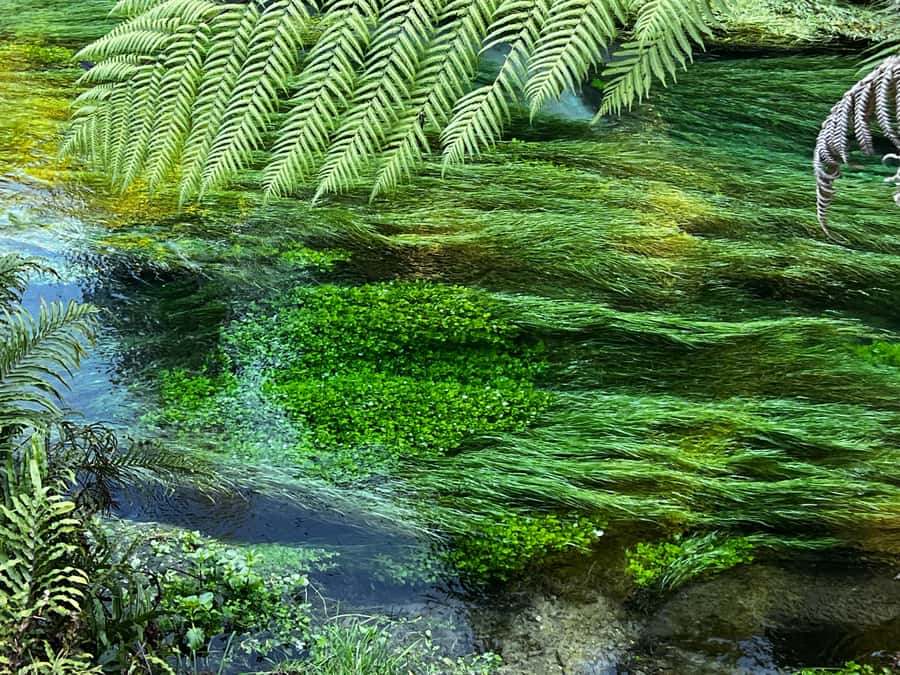
- Pōhutu Geyser is the star of Te Puia, with boiling mud, steam, and regular geothermal action around it.
- The 90-minute Te Puia visit is now guided, so arrive 15 minutes before your booked time.
- The kiwi conservation centre adds real value, especially for anyone who may not see this shy bird in the wild.
- The Māori performance includes pōhiri, waiata, mōteatea, poi, and haka inside Te Aronui a Rua.
- Tirau and the Waikato River provide useful breaks during a very full Auckland to Rotorua day.
- Lunch is not included, so plan to buy food at Te Puia’s café or restaurant.
Why Te Puia makes the long trip worthwhile
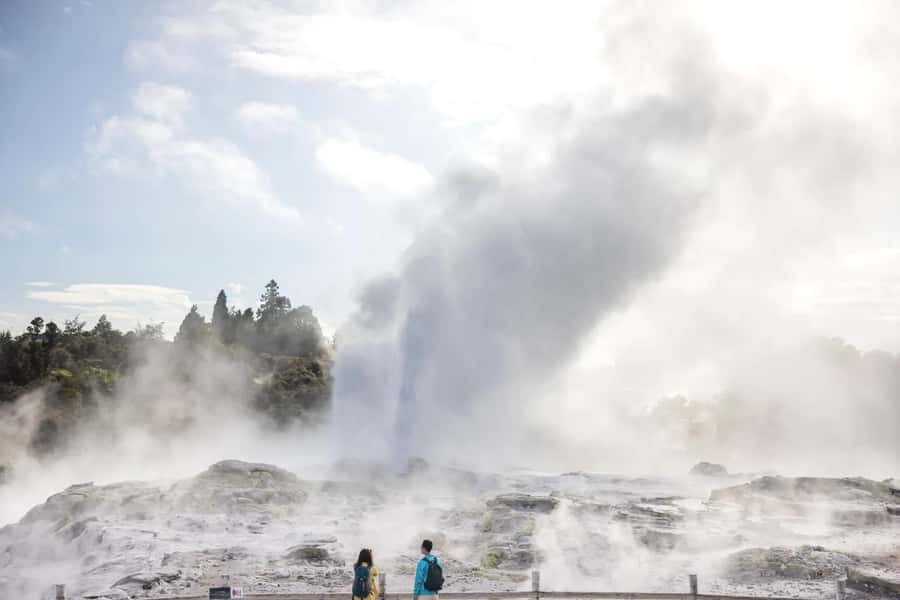
Te Puia is more than a quick geyser stop. It brings together the Te Whakarewarewa Thermal Valley, Māori arts, a kiwi conservation centre, and a staged cultural performance in one well-organized visit.
I like that combination because it gives you several different ways to understand Rotorua. The geothermal valley shows the raw power of the earth. The carving and weaving school explains living Māori traditions. The kiwi centre connects you with one of New Zealand’s most famous native birds. The performance then puts language, music, movement, and ceremony at the heart of the visit.
The main question is not whether Te Puia has enough to see. It does. The question is whether you want to make the return trip from Auckland in one day. From the first pickup to the evening drop-off, this is a 12-hour outing. That makes it efficient, but not restful.
If you have only a short stay in Auckland and strongly want to see Rotorua, this tour solves a difficult transport problem. If you already have several days in the North Island, staying overnight in Rotorua would give you more breathing room.
A few more hot spring trips around Auckland worth a look
- Auckland to Hobbiton Movie Set and Rotorua’s Geothermal Valley
★ 5.0 · 115 reviews - From Auckland: Rotorua Māori Village & Hot Springs with Haka
★ 4.8 · 58 reviews - Ex Auckland: Rotorua Māori Village with Haka and Hot Springs
★ 5.0 · 55 reviews
The early Auckland pickup and the road south
Hotel pickup in Auckland CBD is scheduled between 5:45 and 6:00 AM. Airport hotels are picked up between 6:15 and 6:30 AM. You should wait at the hotel entrance at least 10 minutes early and look for a vehicle marked ENZOY TOURS or use the vehicle number provided before departure.
That early start is not a minor detail. You will spend about two hours reaching Tirau, followed by another hour to Rotorua. Bring water, wear comfortable shoes, and keep a jacket or other weather-ready clothing close at hand. New Zealand weather can change quickly, and much of the Te Puia visit takes place outdoors.
The road journey gives you a useful view of the Waikato region, but you should not expect a leisurely scenic drive with long photo stops. The aim is to get you to Rotorua and back to Auckland in one day. The vehicle also picks up or drops off people connected with other Rotorua attractions, so the schedule can include waiting.
One Japanese participant described the wait as long. That warning matters because a full-day shared tour can lose time at pickups. On the other hand, the company’s guides have shown some flexibility. Denish adjusted parts of the schedule for a family with two small children, and Ambrose was praised for fitting in requests and adding extra surprises during a North Island trip. I would still treat flexibility as helpful rather than guaranteed, since traffic, pickups, and Te Puia’s fixed times limit what the guide can change.
Tirau: a 15-minute taste of small-town New Zealand
After roughly two hours, the first stop is Tirau. You get about 15 minutes to stretch your legs, use the restrooms, and buy a coffee or light refreshment.
Tirau is known for large corrugated iron buildings shaped like a dog and a sheep. These unusual structures make an easy photo stop and give the town a playful identity. The break is short, but it is well placed. After an early start and two hours in the vehicle, you will appreciate the chance to walk around before continuing.
Do not treat Tirau as a major sightseeing stop. Fifteen minutes is enough for a quick look and a bathroom break, not a full exploration. If you want coffee, move promptly. This is one place where a little preparation helps: have your camera ready and do not wander far from the meeting point.
Entering Te Puia and the Te Whakarewarewa Thermal Valley
The main visit takes place at Te Puia in Rotorua. Its thermal valley is the reason this region has such a strong identity. You see steam rising from the ground, boiling mud pools, and hot water forcing its way upward through the earth.
Pōhutu Geyser is the big event. It is the largest active geyser in the Southern Hemisphere, and its eruptions provide the kind of natural spectacle that photographs never quite capture. The sight, sound, and sudden movement make this more than a collection of warm pools. The earth here feels active and unpredictable.
The guided format is important. All Te Puia experiences now last 90 minutes and are guided, so you are not simply sent off with a map. Your guide helps explain what you are seeing and connects the geothermal features with Māori stories and traditions.
You should arrive 15 minutes before your scheduled Te Puia time. This is especially important if you are joining the cultural performance, since the day follows set admission times. Comfortable shoes are a must, and sunscreen, a hat, water, and a camera are sensible additions.
The thermal valley can be a strong choice for first-time visitors who want to see Rotorua’s geothermal side without comparing several separate parks. The drawback is that 90 minutes goes quickly. You will see the major features, but you will not have unlimited time to pause at every pool or wander at your own pace.
Same place, a different kind of soak:
- Rotorua Cultural & Geothermal Small Group Tour From Auckland
★ 5.0 · 22 reviews - Romantic Auckland Sunset tour with Winery & Thermal pool
★ 5.0 · 11 reviews - Waitomo Glow Worm Caves & Te Puia – Rotorua’s Geothermal Valley
★ 5.0 · 9 reviews - Auckland: Rotorua Māori Cultural & Geothermal Tour & Lunch
★ 4.9 · 9 reviews
The kiwi conservation centre
The Kiwi Conservation Centre is one of the strongest parts of the visit. The kiwi is nocturnal and famously difficult to spot in the wild, so a conservation centre gives you a much better chance to see New Zealand’s national bird.
For many people, the kiwi viewing is the emotional high point of the day. The geyser is louder and more dramatic, but the kiwi is rare, odd-looking, and deeply tied to New Zealand identity. You can see it close up in a setting designed for conservation rather than relying on luck in a forest at night.
The centre also adds balance to the geothermal experience. Instead of spending the whole visit among steam and mud, you get time with native wildlife. A family with two children found the mix particularly satisfying, along with the geyser, Māori artwork, and performance.
Keep your expectations sensible. This is a conservation-centre visit, not a wildlife safari. The information provided does not promise a particular viewing duration or animal activity, but the centre is included in the guided Te Puia experience.
Māori carving, weaving, and the wānanga
Te Puia is home to the New Zealand Māori Arts and Crafts Institute. Here, carvers and weavers demonstrate traditional techniques, while guides explain stories passed down through generations.
This section gives the visit depth. You are not only looking at finished sculptures placed around the grounds. You can also see the skills and teaching behind the work. The wānanga, or school, keeps Māori carving and weaving in active use, with artists passing knowledge to the next generation.
The artwork is part of the setting throughout Te Puia. Carved figures, meeting-house details, and sculptures help connect the cultural visit to the thermal valley. I like this because Māori culture is not treated as a short add-on after the sightseeing. It is built into the place itself.
The experience is best for you if you want context rather than a quick photo stop. A guide can explain why a pattern, carving, or building matters in a way a casual walk cannot. Because the schedule is fixed, though, you may need to keep moving rather than linger over every piece of art.
Te Aronui a Rua and the 90-minute cultural performance
The cultural performance takes place in the carved Te Aronui a Rua meeting house. It includes a traditional pōhiri, or Māori welcome, waiata, or song, mōteatea, or chant, poi, and haka.
This is a performance, but it also presents formal elements of Māori culture in a clear sequence. The pōhiri establishes the welcome. Song and chant bring language and rhythm into the meeting house. Poi adds movement and visual detail. The haka supplies the force and energy most people associate with a Māori cultural show.
You will get more from it if you watch the details rather than waiting only for the haka. Pay attention to the singing, the movements, and the carved interior. The setting matters. A performance inside Te Aronui a Rua feels more connected to Māori architecture and community than a show presented in a generic theatre.
The performance is an optional extension to the guided Te Puia visit, so check that it is included in your booking. The supplied tour information presents it as part of this experience, but the wording about the extension means you should confirm the exact package before paying.
Lunch at Te Puia and the cost of a full day
Lunch and coffee are not included. You are expected to eat at the Te Puia café or restaurant at your own expense.
That arrangement is convenient because you do not need to leave the site, but it raises the total cost beyond the advertised $234. Bring a little extra money for food and drinks. You could also ask the provider before departure if outside snacks are allowed, since the instructions specifically direct you to the on-site café or restaurant.
At $234 per person, the tour is not a cheap way to reach Rotorua. The value comes from what is bundled together: hotel pickup and drop-off, round-trip transport, the Te Puia admission, a guided geothermal visit, the kiwi conservation centre, and the Māori performance.
I see it as good value for a first-time visitor who wants all those pieces in one day and does not want to organize buses, entry tickets, and local transport separately. It is less attractive if you care most about a slow pace, independent wandering, or keeping food costs low.
The price also covers convenience. You can leave the driving to someone else, get commentary in English, and return to Auckland CBD around 6 PM. The cost is harder to justify if you already have a rental car or plan to spend a night in Rotorua.
Rotorua highlights and the return north
After Te Puia, the schedule includes about an hour of driving through Rotorua. The vehicle may collect people from other attractions and drop off people checking into Rotorua hotels. This part is not a separate major attraction, but it gives you a broad look at the city and its surroundings.
That flexibility can be useful, but it also explains why the timetable may stretch. If you are on a tight schedule after the tour, do not book an evening activity in Auckland that cannot tolerate a delay.
The return journey includes a stop by the Waikato River. It offers a calm contrast to Te Puia’s steam and boiling mud. You can stretch your legs, take in the river views, and reset before the final drive north.
The hotel drop-off in Auckland CBD is planned for around 6 PM. Airport hotel drop-off details should be confirmed directly, since the stated end point is Auckland CBD.
Who should book this Auckland to Rotorua day trip?
I would choose this tour if you:
- Have one free day and want to reach Rotorua from Auckland
- Want geothermal sights, Māori culture, and kiwi viewing in one package
- Prefer guided transport to driving and planning separate admissions
- Are comfortable with an early start and a long day
- Like a structured schedule with hotel pickup and drop-off
- Are traveling with children who can manage a full day, with the guide potentially able to respond to reasonable requests
I would think twice if you:
- Have back problems
- Need a slow, unhurried schedule
- Want to spend several hours at each geothermal feature
- Prefer to choose your own lunch stop
- Are sensitive to waiting during shared pickups
- Need confirmed wheelchair access
The accessibility information is contradictory. The activity details say wheelchair accessible, while the suitability notes say it is not suitable for wheelchair users. Contact ENZOY Tours before booking and describe your exact needs. Do not rely on the general label alone.
Practical tips for getting more from the day
Wear shoes that can handle outdoor walking and bring layers. Add a hat, sunscreen, water, and weather-appropriate clothing. Smoking is not allowed.
Keep your phone available before pickup. The provider asks for your correct hotel address and contact details and recommends a local SIM or international roaming, plus WhatsApp, for communication. That is useful if the vehicle is delayed or the driver needs to find your entrance.
Be ready early, especially for the Auckland CBD pickup between 5:45 and 6:00 AM. Arriving late can affect the whole group, and Te Puia’s guided schedule is fixed.
Finally, do not forget the food budget. The tour price covers the main experience, but lunch and coffee do not come with it.
Should you book it?
Book this tour if Te Puia is high on your New Zealand wish list and you have only one day from Auckland. The mix of Pōhutu Geyser, kiwi conservation, Māori arts, and the Te Aronui a Rua performance gives you a broad and meaningful introduction to Rotorua.
Skip it in favor of an overnight Rotorua plan if you dislike long road days or want time to compare several thermal parks. At $234, the tour earns its price through convenience and the number of included experiences, not through a relaxed pace.
The strongest practical choice is to book when you value simplicity. You get a guide, transport, major Te Puia sights, and a cultural performance without managing the pieces yourself. Just accept the early start, budget for lunch, confirm accessibility, and leave room for possible waiting during shared pickups.
FAQ
How long is the Auckland to Te Puia tour?
The full activity lasts about 12 hours. Pickup begins early in Auckland, and drop-off in Auckland CBD is planned for around 6 PM.
What time is hotel pickup in Auckland?
Auckland CBD pickup is scheduled between 5:45 and 6:00 AM. Auckland Airport hotel pickup is scheduled between 6:15 and 6:30 AM. You should wait at the hotel entrance at least 10 minutes early.
What is included at Te Puia?
The tour includes entry to Te Puia Rotorua Geothermal Park, a guided geothermal tour, the Kiwi Conservation Centre, and a Māori cultural performance.
Is lunch included?
No. Lunch and coffee are extra. You are asked to eat at the Te Puia café or restaurant at your own expense.
How long are the Te Puia experiences?
All Te Puia experiences are guided and last 90 minutes. You should arrive 15 minutes before your scheduled time.
Is the tour wheelchair accessible?
The activity information gives conflicting details. It says wheelchair accessible in one place but also says it is not suitable for wheelchair users. Contact ENZOY Tours before booking to confirm whether the vehicle and route meet your needs.
Just added around Auckland
- Waitomo Glow Worm Caves & Te Puia – Rotorua’s Geothermal Valley★ 5.0 · 9 reviews
- Romantic Auckland Sunset tour with Winery & Thermal pool★ 5.0 · 11 reviews
- [PRIVATE] SUNSET. Wine. Hot Pool. Dinner★ 5.0 · 3 reviews
- Private 2 Day Tour: Hobbiton, Waitomo, Rotorua Geothermal & Hamilton Gardens★ 4.0 · 5 reviews
- From Auckland: Rotorua’s Geothermal Experience Private Tour★ 4.6 · 2 reviews
- Auckland: Full-Day Trip to Rotorua Geothermal Valley★ 4.2 · 2 reviews
- Auckland: Wai-O-Tapu, Maori Haka & Hot Springs Rotorua Tour★ 3.8 · 5 reviews
- Auckland: Rotorua Māori Cultural & Geothermal Tour & Lunch★ 4.9 · 9 reviews
Hot Spring Tours, compared.
Volcanic Islands Cruise with Hot Springs Visit
Read our review →
Mount Batur Sunrise Guided Hike and Natural Hot Spring
Read our review →
Sky Lagoon Entrance Pass With 7-Step Spa Ritual
Read our review →
Zakopane, Thermal Springs, Cable Car, Local Tasting
Read our review →
Golden Circle, Kerid Crater, & Blue Lagoon Tour
Read our review →
Tiger Cave Temple, Emerald Pool and Hot Springs Tour
Read our review →Browse the lists this tour appears in