
REVIEW · JAPAN
2 Hour Onsen Calligraphy Experience
Hakone’s hot springs are not just scenery for this experience. You use actual onsen water to prepare your ink, then write in a quiet ryokan room while water sounds and the scent of sumi help settle your attention. It is a clever way to connect a local tradition with a hands-on Japanese art.
I like two things here: the small group limit of eight, which gives the teacher time to guide each person, and the fact that you take home a useful, personal souvenir rather than a factory-made trinket. The teacher starts with brush basics, so a complete beginner can join without feeling out of place.
The main consideration is the price. At $60 per person, this is not a bargain if you only want a quick brush-writing demonstration. It makes better sense if you value two quiet hours, patient instruction, Japanese tea, and a finished fan or paper work to carry home.
Key points to know before booking
- Real Hakone onsen water goes into the ink, giving the workshop a clear connection to its setting.
- The group is limited to eight people, allowing for personal help with brush handling and writing technique.
- You create a take-home piece on traditional Japanese paper or a classic round uchiwa fan.
- The mood is quiet and old-fashioned, with the ryokan setting, water sounds, and ink scent doing much of the work.
- Japanese tea, materials, an uchiwa, and a take-home bag are included in the $60 price.
- Plan your own transport to 655 Yumoto in Hakone, and remember that the activity itself does not list hot spring bathing as an inclusion.
Why onsen water changes a basic calligraphy lesson
Many Japanese calligraphy classes give you the usual ingredients: brush, ink, paper, and an instructor. This one adds a sense of place. The ink is prepared with water from the ryokan’s hot spring, so the source of the water connects your writing directly to Hakone.
That detail may sound small, but it changes how the session feels. You are not simply practicing characters in a classroom. You are working with a material drawn from the town’s best-known tradition, inside a historic hot spring inn.
I like experiences that explain a destination through an ordinary action. Here, you do not just hear that Hakone is famous for hot springs. You use one of them as part of making something with your own hands.
The workshop also gives you time to slow down. Several parts of the experience are designed around quiet concentration: preparing the ink, holding the brush correctly, watching the teacher’s movements, and repeating a stroke until it feels more natural. If your Hakone schedule is packed with transport, sightseeing, and quick photographs, these two hours offer a welcome change of speed.
More Onsen Tours in Japan:
- From Osaka: Himeji Castle, Arima Onsen & Mt. Rokko Day Tour
★ 4.6 · 339 reviews - From Tokyo: Private Tour to Fuji/Hakone – Onsen, Art, Nature
★ 5.0 · 116 reviews - Mt. Fuji, Hakone Private Tour from Tokyo – Onsen, Arts and Nature
★ 5.0 · 79 reviews
Arriving at the historic ryokan in Yumoto
The meeting point is at 655 Yumoto, Hakone, Ashigarashimo District, Kanagawa 250-0311. The location is near public transportation, but transportation to the meeting point is not included, so check your route before setting out.
The activity starts and ends at the same place. That makes it easy to fit into a day in Hakone, especially if you plan the workshop between other stops in the Yumoto area. Still, leave enough time to find the building and arrive without rushing. Calligraphy is not improved by sprinting through a station moments before the first brush stroke.
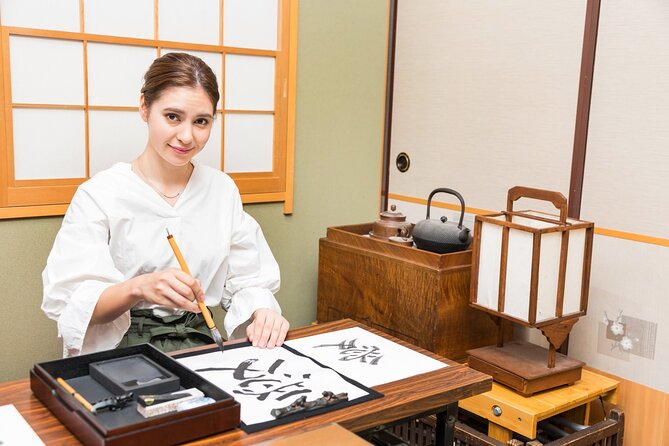
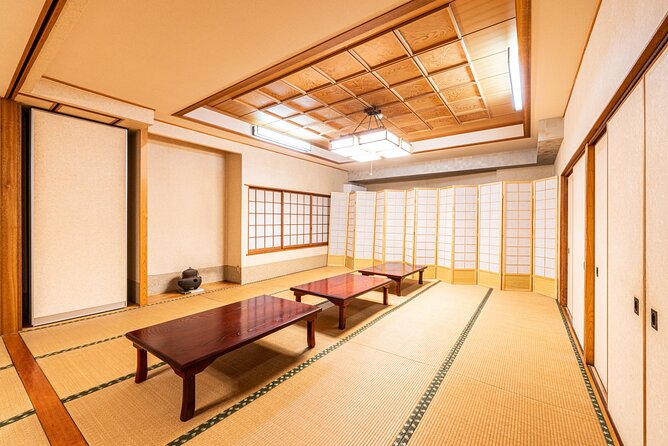
You meet inside the ryokan rather than in a large commercial studio. The setting matters. The quiet air of an old inn, the sound of hot water from outside, and the scent of ink all contribute to the sense of occasion. You might find the room more traditional than polished or modern, which is part of the appeal for anyone seeking an older side of Japan.
The space is indoors, so the workshop is not dependent on weather. It is also a practical choice on a rainy Hakone day, when outdoor sightseeing can become tiring.
The first part: Hakone hot springs and calligraphy basics
The session begins with an introduction to Hakone’s hot spring traditions. This gives you some context before you touch the brush, explaining why onsen water is central to the activity rather than simply a decorative theme.
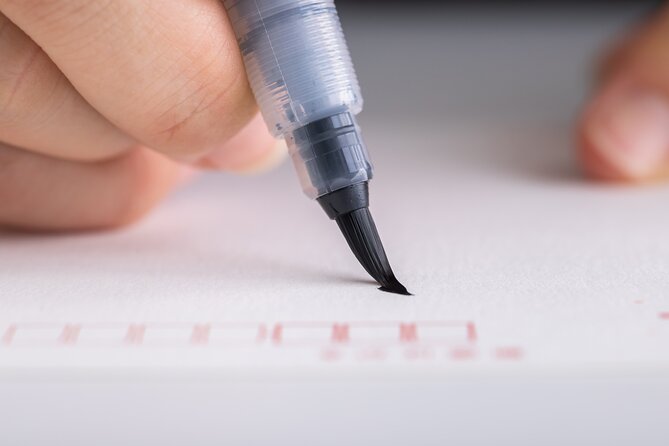
Then the teacher introduces the basic tools and shows you how to hold the brush. That sounds simple, but brush control is often the first hurdle for beginners. The motion is different from writing with a ballpoint pen, and the pressure, angle, and speed of the brush all affect the final mark.
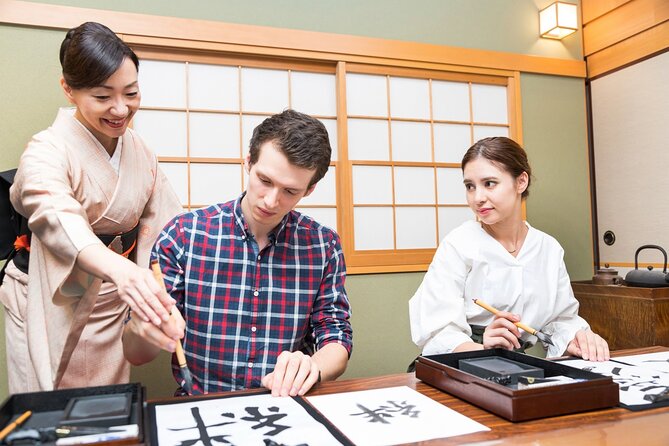
The instruction is intended for both first-timers and people who have tried calligraphy before. You do not need prior knowledge of Japanese characters to take part. The teacher works with each person, offering help as you practice instead of leaving you to copy a sample sheet alone.
That individual attention is one of the strongest reasons to appreciate the maximum group size of eight. A larger class could still be pleasant, but it would be harder for the teacher to watch every hand and correct small problems. Here, the format gives you a better chance to ask for help and understand why a stroke looks the way it does.
Do not expect the first attempt to look perfect. The point is to learn how the brush behaves and to enjoy the process. Even people who have drawn with a brush before may find that writing characters requires a different kind of control.
Preparing ink with water from the hot spring
The defining moment comes when you use onsen water to prepare the sumi ink. This is the part that gives the workshop its strongest connection to Hakone.
The ink has a slightly different sensory character from an ordinary classroom exercise. The scent, the texture on the paper, and the knowledge that the water came from the ryokan’s hot spring all help make the process feel specific to this place. It is not a random craft activity that could happen anywhere.
Take your time here. Preparing the ink is part of the experience, not a chore to rush through before the real work begins. Notice how the ink changes as you work with it, then pay attention to how it moves across the paper.
The ink may also have a faint scent that you notice during the session. That small sensory detail helps separate this from a standard calligraphy lesson. You are working with sight, touch, sound, and smell, which is why the experience can feel more absorbing than a simple demonstration.
The water itself should not be confused with a bath included in the class. The supplied details cover its use in ink preparation, not admission to a hot spring or a bathing session. If you want to visit an onsen separately, plan and pay for that on your own.
A few more hot spring trips around Japan worth a look
- 2 Hours Hiroshima Hot Spring Tour
★ 5.0 · 3 reviews - 2-Hour Deep Blue Hot Springs in Warrnambool
★ 4.5 · 160 reviews - 2-Hour Guided Family Pasta or Pizza Cooking Class in Acqui Terme
★ 5.0 · 22 reviews - Thrilling 2-Hour Zipline Tour in Radium Hot Springs
★ 5.0 · 9 reviews
Writing on paper or an uchiwa fan
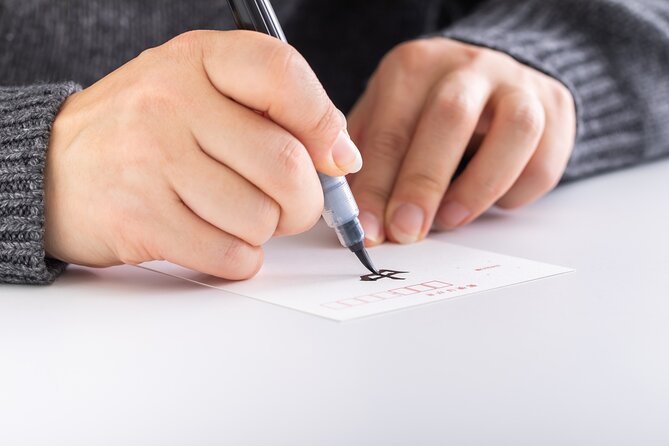
Once you have practiced the brush basics, you create your finished work. The activity allows writing on traditional Japanese paper or on a uchiwa, the classic round paper fan.
The fan is the more distinctive choice if you want a souvenir that immediately looks Japanese. It also gives the finished piece a practical and decorative purpose. You can display it at home, use it as a seasonal object, or keep it as a reminder of Hakone.
Traditional paper offers a more direct calligraphy format. If your main goal is to focus on the character and the brush marks, paper may feel more familiar. If you want something unusual to take home, choose the fan.
The included uchiwa is listed as part of the package, along with the materials and a take-home bag. The experience description also allows for traditional paper, so listen to the teacher’s instructions about the available format and how the work will be handled.
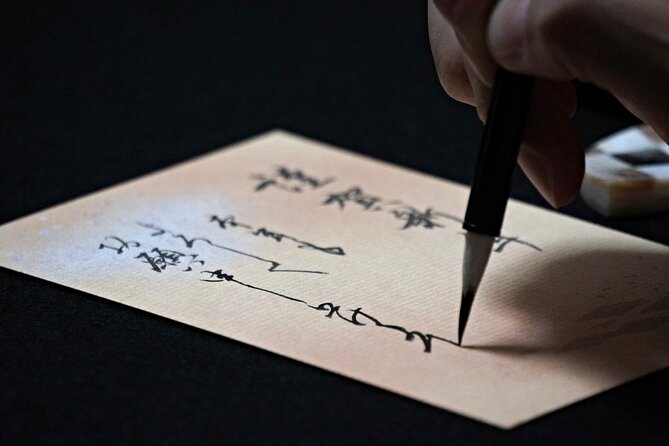
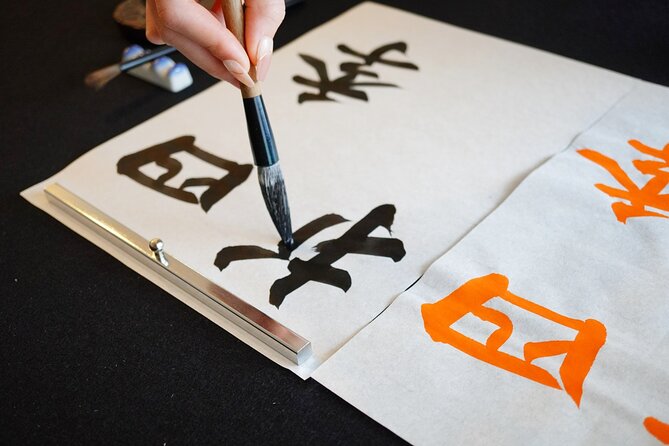
Do not expect a machine-perfect result. The value is in the irregularities: a heavier stroke, a slight shift in the ink, or a character that shows exactly where you were learning. A finished piece with evidence of your hand is more meaningful than a flawless souvenir purchased in a shop.
The teacher’s role is important here. You receive guidance rather than being handed a template and left alone. You may be surprised by how much better your final work looks after a few basic corrections to posture, brush angle, and pressure.
A calm two hours with tea and water sounds
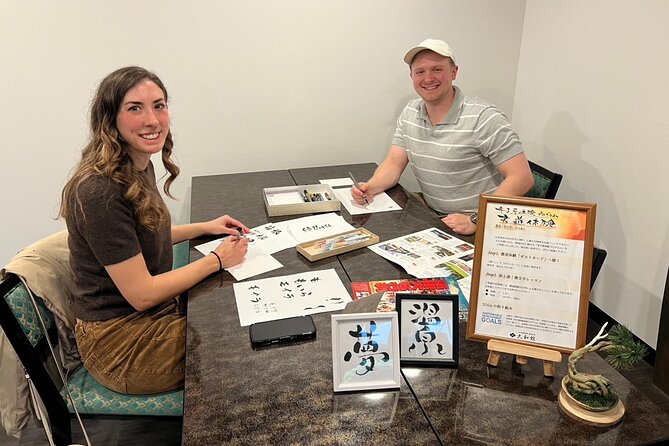
The workshop lasts about two hours. That is long enough to move beyond a quick photo opportunity, but short enough to fit into a broader Hakone itinerary.
The pace is deliberately calm. You may hear water from outside, smell the ink, and work in a room where the quiet makes it easier to concentrate. The atmosphere can help even a lively group settle down, which is useful if you are joining with friends or a club group.
Japanese tea is served during the experience. It is a modest inclusion, but it fits the setting and gives you a pause between instruction and practice. The tea also makes the session feel like a cultural visit rather than a craft lesson squeezed into a busy attraction.
You should expect to spend much of the time seated and focused on small hand movements. That suits people who enjoy careful activities. It may feel slow if you prefer fast-moving sightseeing or a class with lots of explanation and little practice.
The quiet does not mean the session is stiff. You can join with friends, and the shared process gives you something to compare and discuss afterward. Just remember that the strongest part of the workshop comes when you allow yourself to concentrate rather than treat it as a group photo stop.
What the $60 price really covers
At $60 per person, this is a mid-priced cultural activity. You are paying for more than access to a room. The fee covers the instructor, calligraphy materials, onsen water for the ink, one uchiwa, the take-home bag, Japanese tea, cultural explanation, and the indoor venue fee.
The value is strongest if you would otherwise spend part of your Hakone day looking for a meaningful souvenir or a weather-proof cultural activity. You leave with something you made, and the making of it is tied to a local hot spring tradition.
The value is weaker if you are only interested in seeing calligraphy performed. There is no indication that this is a short stage demonstration. The appeal comes from participating, practicing, and producing your own work over two hours.
The group limit improves the calculation. With no more than eight people, the teacher has a reasonable chance to offer personal corrections. That matters more in calligraphy than it would in a general lecture, because your hand position and brush pressure need to be seen directly.
Transportation is extra, and gratuities are not included. A tip is optional, so budget for it only if you feel the instruction deserves one. The experience ends at the starting point, which keeps the logistics simple but does not provide a transfer to your next stop.
Who will enjoy this most
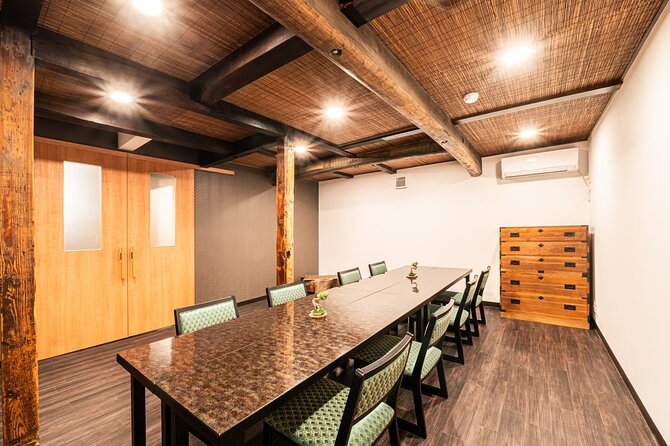
I would recommend this for you if you want a quiet, tactile activity with a strong Hakone connection. It suits first-time calligraphy students, people interested in Japanese culture, couples, friends, and small groups looking for something beyond temples and viewpoints.
It also works well for a mixed group. Someone with no calligraphy experience can learn the basics, while someone who has used a brush before can focus on improving control and presentation.
The workshop may appeal especially to people who enjoy traditional objects. The uchiwa gives you a keepsake with more character than a standard postcard, and the paper option gives you a simple way to preserve the writing itself.
Families and younger participants may enjoy it if they can settle into a quiet, careful activity. The supplied information says most people can participate, but it does not give a specific minimum age, so check with the operator if that matters for your group.
I would think twice if you want a full hot spring bathing experience. The onsen water is used for ink preparation, and the activity takes place at a hot spring ryokan, but bathing is not listed among the inclusions. Treat this as calligraphy with an onsen connection, not as a bathhouse visit.
Practical planning for the Yumoto workshop
The activity is confirmed at booking, and mobile tickets are available. It is typically booked well in advance, with an average booking lead time of 129 days, so do not assume you can always arrange it at the last minute during a busy Hakone trip.
The maximum group size is eight. That small format is good for personal attention, but it also means spaces may be limited on the date you want.
Free cancellation is available if you cancel at least 24 hours before the start time. Cancellations or changes made within 24 hours are not accepted for a refund, and the cut-off follows local time in Japan.
You should also plan your day around the fixed meeting point. Since transportation is not included, confirm how you will reach 655 Yumoto and how long you need afterward to continue sightseeing. The return to the same meeting point makes the end straightforward.
Wear something you can sit comfortably in while working with ink. The supplied details do not specify clothing protection or a particular dress code, so use ordinary care around dark ink and valuable clothing.
Should you book the Onsen Calligraphy Experience?
Book it if you want two unhurried hours, personal instruction, and a souvenir connected to Hakone rather than a generic workshop. The use of real onsen water, the old ryokan setting, the tea, and the small group make the $60 price reasonable for a focused cultural experience.
Skip it if your priority is bathing, a quick activity, or the lowest possible cost. This is a participatory class, not a hot spring admission ticket or a brief brush-writing photo stop.
For most people who enjoy quiet, hands-on culture, I would make room for it. Arrive ready to slow down, listen to the water, and accept that your first character may be uneven. That is part of what makes the finished fan or paper work yours.
FAQ
Where does the Onsen Calligraphy Experience take place?
It takes place at a historic hot spring ryokan at 655 Yumoto, Hakone, Ashigarashimo District, Kanagawa 250-0311, Japan.
How long does the activity last?
The experience lasts approximately two hours.
What is included in the price?
The price includes calligraphy materials, onsen water for preparing the ink, one uchiwa fan, a take-home bag, instruction from an experienced calligraphy teacher, an explanation of Hakone’s hot spring traditions, Japanese tea, and the indoor venue fee.
Do I need previous calligraphy experience?
No. The teacher guides beginners through the basics, including how to hold the brush. People with previous experience can also participate.
Is transportation included?
No. You are responsible for transportation to and from the meeting point. The activity ends back at the starting location.
What is the cancellation policy?
You can cancel for a full refund up to 24 hours before the experience starts. Cancellations or changes made less than 24 hours before the start time are not accepted for a refund.
Just added around Japan
- Samurai Guide Sho’s Mt. Takao Hike, Temple & Onsen from Shinjuku★ 5.0 · 9 reviews
- Tokyo Local Tattoo Friendly Public Bath Experience★ 5.0 · 4 reviews
- Japanese Head Onsen and Scalp Massage Retreat in Tokyo★ 4.5 · 2 reviews
- Mt. Fuji to Lake Kawaguchi, Lake Yamanaka and Onsen Day Tour★ 4.5 · 3 reviews
- Mt. Fuji Tours to Lake Kawaguchi and Yamanaka Onsen English Guide★ 4.5 · 4 reviews
- Tokyo City Adventures Private English Tour With Hotel Pickup★ 5.0 · 12 reviews
- Tattoo-friendly open-air Onsen & drink★ 5.0 · 25 reviews
- Private Tour to Snow Monkey, Zenkoji Temple & Hot Springs Nagano★ 4.0 · 2 reviews
Japanese Onsen Tours, compared.

Himeji Castle, Arima Onsen & Mt. Rokko Day Tour
Read our review →
Private Tour to Fuji/Hakone – Onsen, Art, Nature
Read our review →
All-Day Pass to Yunomori Sathorn Onsen Bath and Spa
Read our review →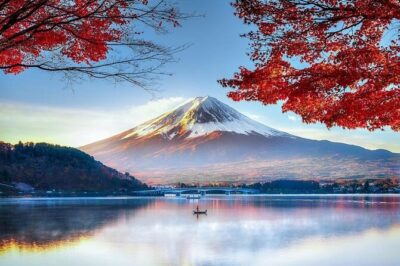
Mt. Fuji, Hakone Private Tour from Tokyo – Onsen, Arts and Nature
Read our review →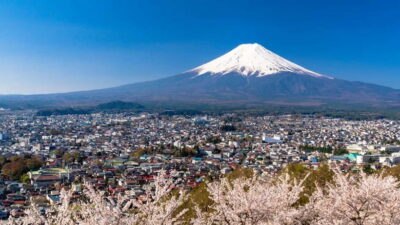
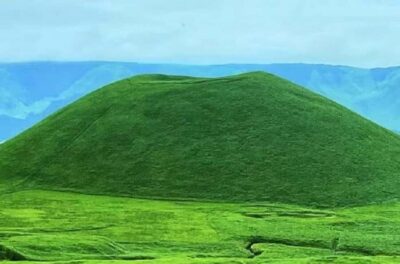
From Fukuoka: Mount Aso, Kurokawa Onsen, and Shrine Tour
Read our review →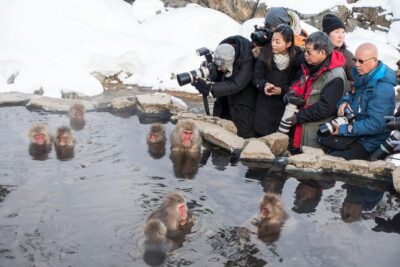
Private Nagano 1-Day Tour:Snow Monkeys,Zenko-ji,Obuse,Sake,Onsen
Read our review →Browse the lists this tour appears in