REVIEW · TOKYO
Private 2-Day Tour: Mt Fuji Hakone & Kamakura + Onsen Ryokan
The best part of this two-day trip is the way it joins Mt. Fuji, Hakone, and Kamakura without making you change hotels or figure out Japan’s rail connections. You get Fuji views from several angles, a hot-spring stay, and a full second day of historic sights.
I like the private van, especially for families or small groups carrying luggage. I also like the overnight ryokan: an onsen and seasonal kaiseki dinner give the trip a real Japanese center, rather than making it just a string of photo stops. The drawback is pace. With many places packed into two long days, some stops are brief, and Fuji visibility depends entirely on the weather.
Key points to know before booking
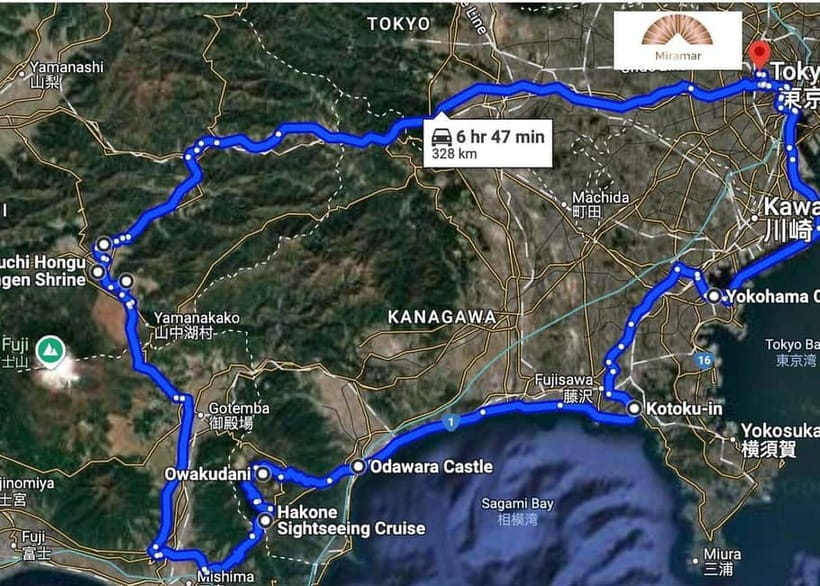
- Several Fuji viewpoints: See the mountain from Lake Kawaguchi, Arakura Sengen Shrine, Oshino Hakkai, and Kitaguchi Hongu Fuji Sengen Shrine.
- A proper ryokan night: Stay at Tōnosawa Ichinoyu Honkan in Hakone with hot springs, dinner, and a traditional breakfast.
- Private transport from Tokyo: Ride in a Toyota Alphard or Hiace with an English- or Chinese-speaking driver.
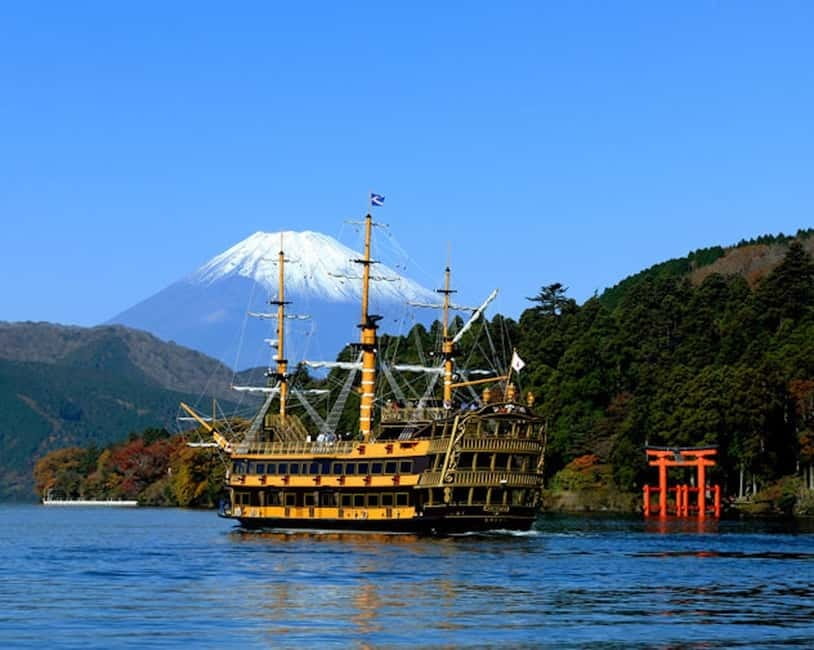
- A scenic Lake Ashi cruise: The 45-minute boat ride begins at 9:30 AM and ends at Togendai Port.
- Big sights beyond Fuji: Visit Owakudani, Odawara Castle, Kamakura’s Great Buddha, and possibly Yokohama Chinatown.
- Helpful guide service: Keith has been praised for answering questions, offering tips, and giving guests time to explore.
Why this two-day route works
Mt. Fuji, Hakone, and Kamakura are all sensible additions to a Tokyo stay, but connecting them independently takes planning. You need to coordinate trains, buses, boat schedules, luggage, and a ryokan check-in. This tour handles the driving in a private vehicle, letting you focus on the views.
The route also gives you different sides of Japan in a short time. Fuji country brings lakes, shrines, and clear mountain vistas. Hakone adds volcanic ground and hot springs. Kamakura brings a giant bronze Buddha and old temple-town atmosphere. The mix is broad, but not dull.
The private format matters most on the road. You are not tied to a large group’s pace, and the driver can answer questions in English or Chinese. Custom changes are possible on request, including pickup location, sightseeing stops, and meal arrangements. Still, customization should be discussed before the day begins, since the published route already uses nearly all available time.
The vehicle is a Toyota Alphard or Hiace. Both are comfortable choices for the long drives, and pickup is available from hotels and Airbnbs within Tokyo’s 23 wards. The first drive to the Fuji area takes about two hours, followed by roughly an hour on the return to Tokyo on day two.
More Hot Spring Day Trips in Japan
- [Seasonal Limited] Mt. Fuji 5th Station &Hot Spring Day Tour
★ 4.5 · 53 reviews - Mt. Fuji 5th, Oshino Hakkai, Onsen Full-Day Trip From Tokyo
★ 4.5 · 50 reviews - Full Day Tour at Mt. Fuji, Onsen, Lake Kawaguchi and Yamanaka
★ 4.0 · 24 reviews
Day one: Fuji views from Kawaguchi to Oshino
The first morning begins with pickup in Tokyo and a drive toward Yamanashi Prefecture. Your first main stop is Oishi Park beside Lake Kawaguchi, where you have about 30 minutes for a walk, photographs, and a first look at Mt. Fuji.
This is a short visit, so think of it as a scenic introduction rather than a full lakeside outing. On a clear day, the combination of water, open views, and Fuji is excellent. On a cloudy day, the lake still gives you a pleasant break from the vehicle, but the mountain may vanish.
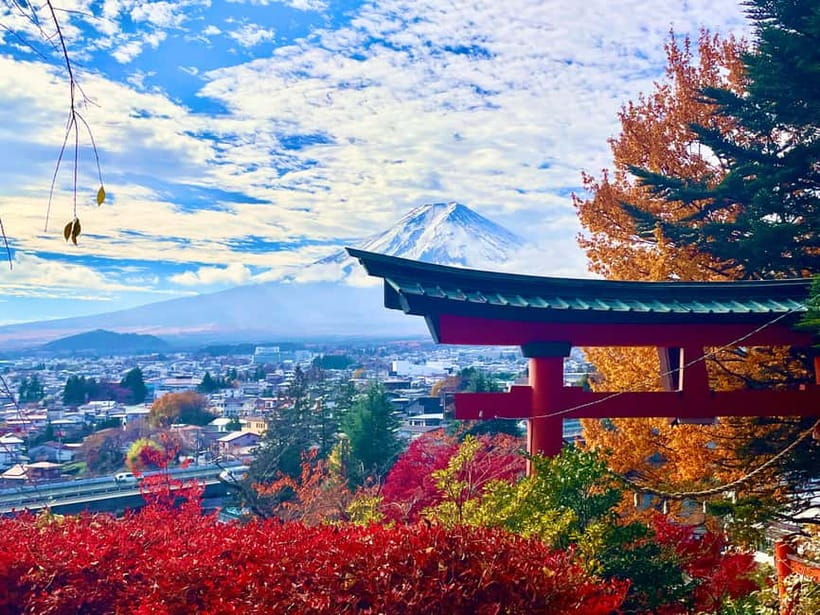
Next comes Arakura Sengen Shrine, one of the most recognizable Fuji viewpoints in Japan. The famous five-story pagoda sits above the town with Mt. Fuji behind it. You have about an hour here, including the walk to the viewpoint.
The view is highly photogenic, but this stop requires stairs and walking. Bring comfortable shoes, as requested by the operator, and allow extra effort for the climb. It is one of the tour’s strongest photo stops, yet the best view is not right beside the van.
The route then continues to Kitaguchi Hongu Fuji Sengen Shrine. This shrine has a different feel from the pagoda viewpoint. It is tied to the traditional pilgrimage route up Mt. Fuji, and its forested setting offers a quieter cultural pause.
You have about 30 minutes here. That is enough to see the shrine and appreciate the setting, though not enough for a slow, detailed visit. I would treat it as a valuable contrast to the more famous photo stops: less about a postcard and more about Fuji’s religious importance.
Oshino Hakkai and a Yamanashi lunch
Oshino Hakkai follows lunch. The schedule allows about an hour for the spring area, including walking, sightseeing, and some shopping.
The springs are known for clear water and views toward Mt. Fuji. The setting gives you another way to experience the region, with a slower rhythm after the shrine visits. The name in the tour details is sometimes written as Ushino Hakkai or Ushino Springs, but the stop is Oshino Hakkai.
Lunch is included on day one and features hōtō, a traditional noodle dish from Yamanashi Prefecture. This is a useful regional touch. Instead of stopping for a generic meal, you get a local specialty associated with the Fuji area.
Do not expect lunch to be leisurely if the day is running behind. Traffic and mountain weather can affect the schedule, and the tour has several more stops before the ryokan. If you need extra time for shopping or photos at Oshino Hakkai, ask your driver early.
A Hakone ryokan night at Tōnosawa Ichinoyu Honkan
The first day ends at Tōnosawa Ichinoyu Honkan, a traditional Japanese ryokan in Hakone. This overnight stay is the heart of the experience.
You have time to relax in the onsen for several hours before dinner. For many visitors, this is more valuable than adding another rushed attraction. The hot spring gives your feet a rest after the shrine paths and walking areas, while the ryokan setting slows the trip down.
Dinner is a traditional Japanese meal with seasonal ingredients and fresh seafood. The experience is described as kaiseki, meaning a multi-course meal served in a carefully arranged progression. The exact dishes can vary, but the point is to sample Japanese food in a setting tied to the local inn tradition.
The next morning includes a Japanese breakfast with fish, rice, pickles, and miso soup. It is a very different start from a hotel buffet, and it helps make the overnight stay feel like part of the trip rather than simple accommodation.
Bring a change of clothes and warm clothing. Temperatures can shift around Mt. Fuji and Hakone, and the operator specifically advises preparing for changing weather. You should also be comfortable with the customs and practical details of an onsen stay, though the supplied information does not specify bathing arrangements or room features.
More Hot Spring Day Trips in Tokyo
- Tokyo: Mt Fuji Lake Kawaguchi & Yamanaka Hot Spring Day Tour
★ 4.0 · 14 reviews - Mt. Fuji 5th Station, Oshino Hakkai and Hot Spring Day Trip
★ 3.5 · 13 reviews - Mt. Fuji Skiing Experience- YETI Ski Resort & Onsen Day Trip
★ 4.2 · 8 reviews - Mt Fuji Small Group 1 Day Tour Kawaguchi and Yamanaka with Pickup
★ 5.0 · 4 reviews
Day two: Lake Ashi and Owakudani
Day two starts with the Lake Ashi sightseeing cruise. The boat departs at 9:30 AM and takes about 45 minutes to reach Togendai Port.
This is one of the most pleasant parts of the route because you get a break from road travel. From the lake, you can see the surrounding hills and, in clear conditions, Mt. Fuji. The mountain view is never guaranteed, so enjoy the boat ride itself rather than treating it only as a Fuji photograph.
After the cruise, you visit Owakudani, Hakone’s volcanic valley. Sulfur vents and hot spring activity give the area a raw, geological character. You can walk through the scenic area, learn about the volcanic features, and buy the famous black eggs boiled in the sulfur-rich hot springs.
The stop lasts about 45 minutes. That allows time to see the vents and browse, but it is not a long hike. Weather can affect visibility and access around volcanic areas, so the route may change if conditions are poor. The operator may offer another scenic stop if Fuji visibility is weak or conditions interfere.
Owakudani is a good reminder that Hakone is not only about elegant inns and lake cruises. The valley brings active earth, sulfur, and unusual food into the day. Some visitors may find the smell strong, so keep that in mind if you are sensitive to sulfur.
Odawara Castle and the road to Kamakura
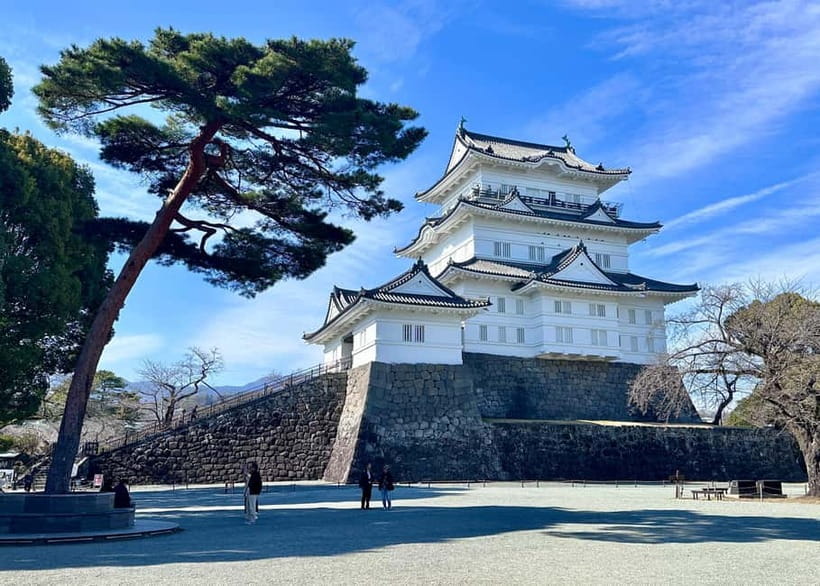
Odawara Castle gives the second day a samurai-era focus. You have about 45 minutes to walk around the grounds, visit the museum, and see the views from the top.
The castle is a reconstruction, but the site remains an important historical stop. The museum helps explain the area’s samurai past, while the gardens and higher viewpoints provide a change from the volcanic scenery of Hakone.
Forty-five minutes is enough for an overview, not a full museum study. If you enjoy Japanese castles, you may wish for more time here. If you prefer a broad trip with many different sights, the short visit keeps the route moving.
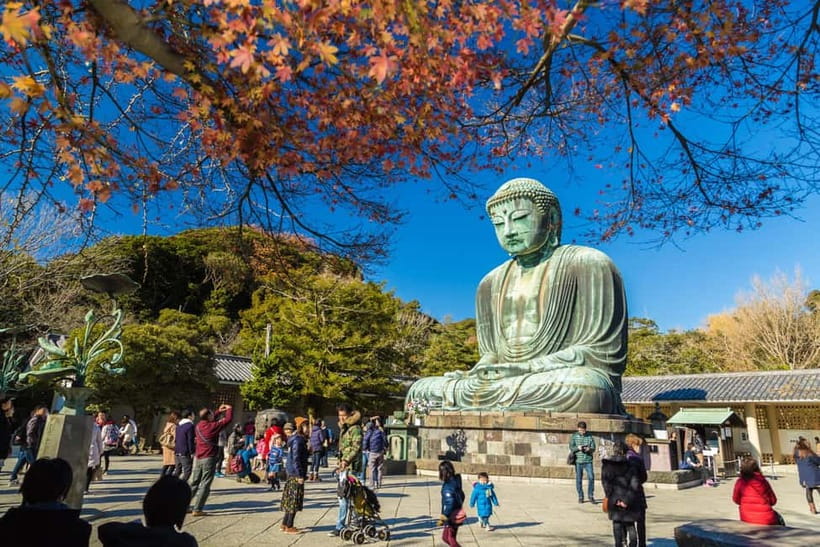
The journey then continues to Kamakura Daibutsu, the Great Buddha of Kamakura. The bronze statue is more than 13 meters tall and is one of Japan’s most familiar religious monuments.
The planned visit is about 30 minutes. That is enough to see the statue and take photographs, but it leaves little room for a wider Kamakura temple visit. You should view this stop as a focused introduction to the Great Buddha rather than a complete tour of Kamakura.
The contrast with Mt. Fuji is part of the appeal. The first day centers on mountain worship and rural scenery, while Kamakura shifts toward coastal religious culture and monumental Buddhist art.
The possible Yokohama stop and return to Tokyo
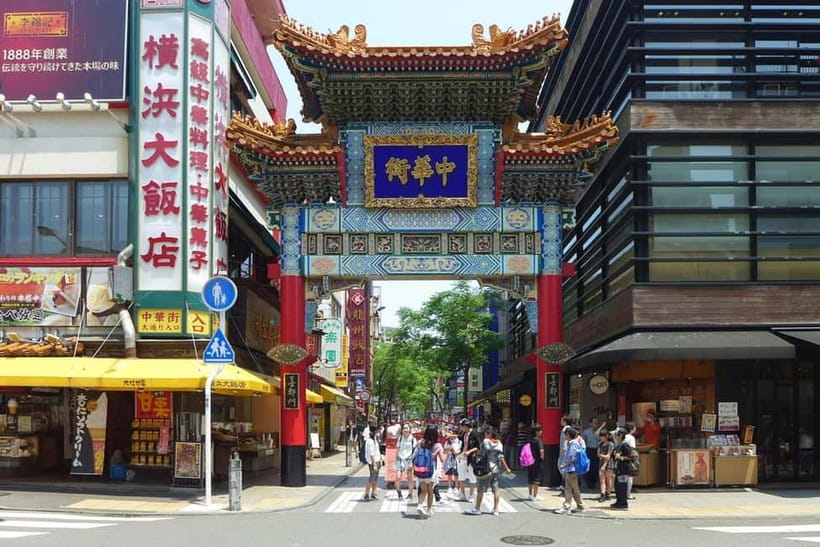
If time allows, the driver can make a quick stop in Yokohama Chinatown. About 30 minutes is planned for walking, shopping, and sightseeing.
This is a bonus rather than a promise. Traffic, weather, and the time spent at earlier stops can decide whether it fits. I would not book this tour mainly for Chinatown, but it can be a fun final burst of food and city energy before the drive back.
The van then returns you to Tokyo, with drop-off at your Ginza hotel or another central Tokyo location. Pickup and drop-off are limited to locations inside Tokyo’s 23 wards, so confirm your address before booking if you are staying outside that area.
Is $838 per person good value?
The price is $838 per person, which is substantial. The value depends heavily on your group size and how much you value comfort and saved planning time.
The fee includes private transportation, pickup and drop-off within Tokyo’s 23 wards, entrance fees to the listed sites, day-one hōtō lunch, the ryokan night, onsen access, dinner, breakfast, and the Lake Ashi boat ride. It also includes up to 10 hours of touring per day.
You still pay for lunch on day two and personal expenses. Shopping at Oshino Hakkai, Owakudani, or Yokohama Chinatown is not covered.
For a couple or family that would otherwise need to arrange private transfers, a Hakone night, boat tickets, and several separate sightseeing connections, the package can make sense. The private van is the main value. You save time and avoid hauling bags through multiple train stations.
For a solo visitor, the price is harder to justify. The cost is per person, and the route covers many places quickly. You may prefer a longer Hakone stay or separate day trips if you want more time at each sight.
Who will enjoy this tour most?
I would recommend it to families, couples, and small groups who want maximum coverage with minimal transport stress. It also suits first-time visitors who want Fuji, Hakone, and Kamakura in one planned experience.
The tour is especially useful if you want an English- or Chinese-speaking driver and prefer a private vehicle to public transport. Keith has received strong praise for being helpful, answering many questions, sharing tips, and giving guests time to explore. That personal guidance can make a packed schedule feel easier.
This is less suitable if you want long hikes, slow shrine visits, or a deep look at one region. The route includes many stops, and the listed visits range from 30 to 60 minutes. You should be ready for frequent boarding, walking, photographs, and short transitions.
Weather is the biggest uncontrollable factor. Fuji may be hidden, especially in cloud or rain. The trip operates in normal poor weather, with changes possible in extreme conditions. Pack warm layers, comfortable walking shoes, and a change of clothes.
Cancellation is free up to 24 hours in advance according to the booking terms, while the detailed policy lists increasing charges from seven days before arrival. Because those terms appear different, read the exact conditions shown at checkout before paying.
Should you book it?
Book this tour if you want a private, efficient introduction to several major sights and you value the ryokan night as much as the sightseeing. The onsen, kaiseki-style dinner, Japanese breakfast, and private van make it more than a standard Fuji photo trip.
Skip it if you want to linger. The schedule is ambitious, the second-day lunch is not included, and Fuji views are weather-dependent. For the right group, though, this is a practical way to connect Mt. Fuji, Hakone, Odawara, and Kamakura without spending your Tokyo holiday managing the details.
FAQ
Where does the tour start and finish?
Pickup is available from hotels and Airbnbs inside Tokyo’s 23 wards. Drop-off is in central Tokyo, including Ginza or another requested central location.
Is transportation private?
Yes. The tour uses a private Toyota Alphard or Hiace for your group.
Which languages does the driver speak?
The driver service is available in English and Chinese.
What is included in the price?
The price includes private transportation, Tokyo pickup and drop-off within the stated area, entrance fees to the listed sites, day-one hōtō lunch, the ryokan stay, onsen experience, traditional dinner, Japanese breakfast, and the Lake Ashi boat ride.
Is lunch included on the second day?
No. Lunch on day two and personal expenses are not included.
Where do you stay overnight?
The overnight stay is at Tōnosawa Ichinoyu Honkan, a traditional Japanese ryokan in Hakone.
What time does the Lake Ashi boat depart?
The boat departs at 9:30 AM and takes about 45 minutes to reach Togendai Port.
Can the itinerary change?
Yes. The route may be adjusted because of weather, Mt. Fuji visibility, traffic, or extreme conditions. Alternative scenic stops may be offered if needed.
What should you bring?
Bring your passport or ID card, warm clothing, comfortable walking shoes, and a change of clothes. Pets are not allowed, except assistance dogs, and smoking is not allowed in the vehicle or indoors.
More 2-Day Experiences in Tokyo
- Tokyo: 2-Day Mt. Fuji, Kamakura and Izu Hot Springs Tour
★ 3.3 · 3 reviews - Mount Rinjani Trekking 2D/1N Summit Sunrise & Sunset Views
★ 4.7 · 67 reviews - From Istanbul: Ephesus & Pamukkale 2-Day Trip with Flights
★ 4.5 · 66 reviews - 2 Days Ephesus and Pamukkale Tours from Istanbul
★ 5.0 · 65 reviews
More Onsen Tours in Tokyo
- From Tokyo: Private Tour to Fuji/Hakone – Onsen, Art, Nature
★ 5.0 · 116 reviews - Mt. Fuji, Hakone Private Tour from Tokyo – Onsen, Arts and Nature
★ 5.0 · 79 reviews - Tattoo-friendly open-air Onsen & drink
★ 5.0 · 25 reviews - From Tokyo: Private Motorcycle Tour – Fuji, Hakone, Onsen
★ 4.9 · 12 reviews
Just added around Tokyo
- Samurai Guide Sho’s Mt. Takao Hike, Temple & Onsen from Shinjuku★ 5.0 · 9 reviews
- Tokyo Local Tattoo Friendly Public Bath Experience★ 5.0 · 4 reviews
- Japanese Head Onsen and Scalp Massage Retreat in Tokyo★ 4.5 · 2 reviews
- Mt. Fuji to Lake Kawaguchi, Lake Yamanaka and Onsen Day Tour★ 4.5 · 3 reviews
- Mt. Fuji Tours to Lake Kawaguchi and Yamanaka Onsen English Guide★ 4.5 · 4 reviews
- Tokyo City Adventures Private English Tour With Hotel Pickup★ 5.0 · 12 reviews
- Tattoo-friendly open-air Onsen & drink★ 5.0 · 25 reviews
- Private Tour to Snow Monkey, Zenkoji Temple & Hot Springs Nagano★ 4.0 · 2 reviews
Japanese Onsen Tours, compared.
Himeji Castle, Arima Onsen & Mt. Rokko Day Tour
Read our review →
Private Tour to Fuji/Hakone – Onsen, Art, Nature
Read our review →
All-Day Pass to Yunomori Sathorn Onsen Bath and Spa
Read our review →
Mt. Fuji, Hakone Private Tour from Tokyo – Onsen, Arts and Nature
Read our review →
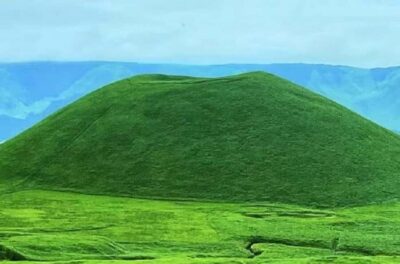
From Fukuoka: Mount Aso, Kurokawa Onsen, and Shrine Tour
Read our review →