

REVIEW · OSAKA
Osaka: Nara, Todaiji, Uji Matcha, and Hot Spring Tour
The best part of this day is the mix: sacred deer, Japan’s Great Buddha, Uji tea, and a hot spring in one outing from Osaka. You get a taste of Nara and southern Kyoto without arranging several train trips yourself, though the long route means every stop has a clock ticking.
I like the strong variety and the chance to see places that feel very different from Osaka. I also like the evening soak at Genji-no-Yu, a welcome change after walking temple grounds. The catch is simple: this is an 8 to 9-hour day, and some stops may feel rushed, especially if traffic or weather slows the group.
Key points to know before booking
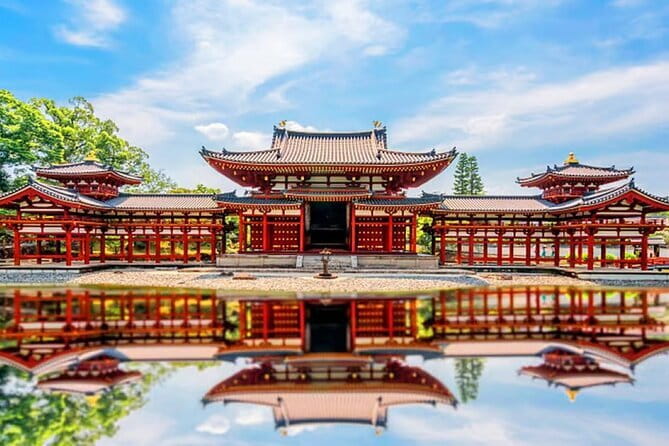
- Nara Park includes 1 hour 20 minutes: You have time for the deer and a walk, but not unlimited time for every nearby sight.
- Tōdai-ji and Kasuga-taisha are separate stops: Their entry fees are not included, so bring extra cash.
- Uji combines tea, temples, and bathing: The plan includes Uji matcha and may include Byodo-in, followed by Genji-no-Yu.
- Transportation is the real value: An air-conditioned vehicle links Osaka, Nara, and Uji in one day.
- The group is capped at 15 people: That is more manageable than a large coach, though the experience still depends on the guide and timing.
- Wear good walking shoes: The day includes temple grounds, park paths, and a hot spring visit.
One long day from Osaka to Nara and Uji
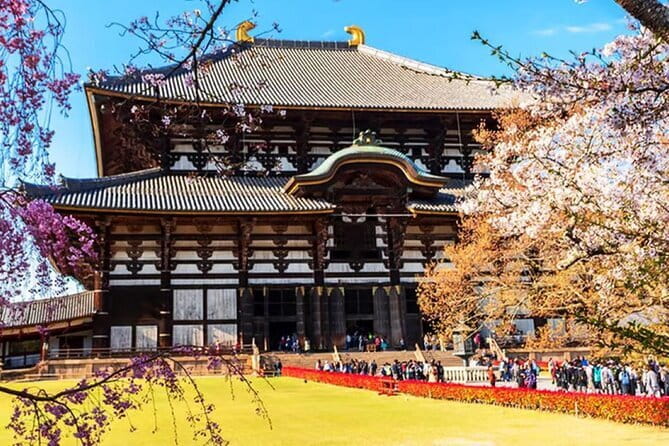
This tour is built for you if Osaka is your base and you want to see two important cultural areas without changing hotels or working out several rail connections. You meet at 8:30 a.m. at 1-chōme-3 Nipponbashi Parking in central Osaka, then travel by air-conditioned vehicle.
The route covers Nara and Uji, with transport time included in the advertised 8 to 9 hours. That matters. You are not getting eight or nine full hours at the sights. The day includes driving, loading and unloading, and moving between sites.
The vehicle carries no more than 15 people, and a multilingual guide and driver handle the route. That small maximum is useful at meeting points and on narrow temple paths. Still, you should expect a group schedule rather than a private tour. If you want to linger over one shrine or spend a long time in a tea shop, this may feel too structured.
The price is about $81 per person. For that amount, round-trip transportation and the guide are included, which makes the cost reasonable for a full day across two cities. Food, drinks, and several admission tickets are extra. I would budget roughly another $10 for the paid entries or hot spring costs noted in the tour details, then confirm the exact arrangement before departure because the inclusions and exclusions are not perfectly clear.
A few more hot spring trips around Japan worth a look
- From Osaka: Himeji Castle, Arima Onsen & Mt. Rokko Day Tour
★ 4.6 · 339 reviews - Osaka: Nara and Uji Day Trip with Deer Park and Hot Spring
★ 4.4 · 302 reviews - From Tokyo: Private Tour to Fuji/Hakone – Onsen, Art, Nature
★ 5.0 · 116 reviews
Meeting Nara’s deer at Nara Park
Nara Park is the first major stop, with about 1 hour and 20 minutes set aside. This is the part of the day that works especially well for families. The park is known for free-roaming deer treated as sacred, and seeing them wander among the paths gives Nara a character you cannot get from a temple visit alone.
You should keep your attention on the deer and your belongings. They are accustomed to people, but they are still animals, not props. The supplied experience information refers to deer feeding, yet the food arrangement is unclear. Food and drinks are officially listed as extra, and one reported problem involved deer food being unavailable from local vendors. I would not count on food being included. Ask the guide where to buy it, if feeding is allowed that day, and what to do if supplies run out.
The 80-minute stop gives you time to walk through part of the park and take photographs. It may not give you enough time to explore every corner, visit all nearby temples, and enjoy a slow break. In cold weather, the open park can feel harsh, so bring layers. Good shoes matter here, as they do for the rest of the day.
For families with children, Nara Park is likely the most immediately engaging stop. The deer create a direct connection with the place, while the temple visits offer a quieter, more formal side of Japanese culture.
Entering Tōdai-ji and seeing the Great Buddha
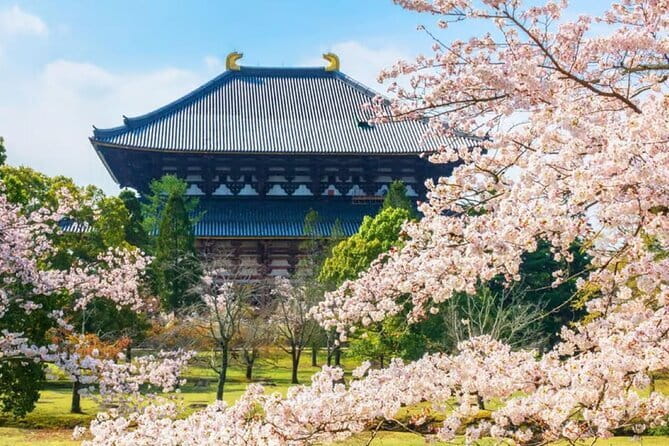
Tōdai-ji follows Nara Park, with about 40 minutes planned. The temple is home to the Great Buddha, a huge bronze Vairocana Buddha measuring about 15 meters high. It is the visual anchor of the Nara visit, and even a short visit can leave a strong impression.
The time limit is the main concern. Tōdai-ji is not just a single statue in a room. You need to walk from the drop-off area, enter the temple grounds, pay the admission fee, and reach the Great Buddha Hall. Forty minutes can work if the group moves directly, but it leaves little room for a relaxed look at the grounds.
Admission is not included. The supplied information also lists Tōdai-ji among the optional paid entries, so keep money ready and ask the guide how the group will handle tickets. One account of the day described the guide advising against visiting the Buddha because of limited time. That is an important warning, not a minor detail. If Tōdai-ji is your main reason for booking, confirm at the start that the stop will include entry.
I would treat the Great Buddha as a priority. If you have to choose between extra time with the deer and a rushed temple visit, decide in advance which matters more to you. The tour tries to cover a lot, and your own priorities will make the day feel either well-paced or frustrating.
A quieter pause at Kasuga-taisha Shrine

Kasuga-taisha receives about 40 minutes. Founded in the eighth century, the Shinto shrine is linked with the Fujiwara clan and is known for its many stone and bronze lanterns. The setting gives you a different religious experience from Tōdai-ji. Here, the focus shifts from a monumental Buddhist statue to a Shinto shrine complex and its wooded approach.
Forty minutes is enough for a purposeful visit, but not for a leisurely exploration of every path. The shrine’s appeal is in the atmosphere, lanterns, and traditional details rather than one single dramatic object. I would listen carefully to the guide here, since a short explanation can help you understand why the shrine matters.
Admission is not included. The details also spell the name in two ways, Kasuga-taisha and Kausga, so make sure you know which stop the guide is referring to. If the schedule is running late, this may be another place where you must choose between a quick look and a longer visit.
The three Nara stops work best as a set. Nara Park shows you the deer, Tōdai-ji gives you the Great Buddha, and Kasuga-taisha introduces a Shinto shrine. The weakness is that the schedule gives you a sample of each rather than a full day in Nara.
Same place, a different kind of soak:
- Mt. Fuji, Hakone Private Tour from Tokyo – Onsen, Arts and Nature
★ 5.0 · 79 reviews - Tokyo: Mount Fuji 5th Station & Onsen Day Trip
★ 4.3 · 75 reviews - From Fukuoka: Mount Aso, Kurokawa Onsen, and Shrine Tour
★ 4.6 · 72 reviews - Private Nagano 1-Day Tour:Snow Monkeys,Zenko-ji,Obuse,Sake,Onsen
★ 5.0 · 71 reviews
Uji matcha and the appeal of Byodo-in
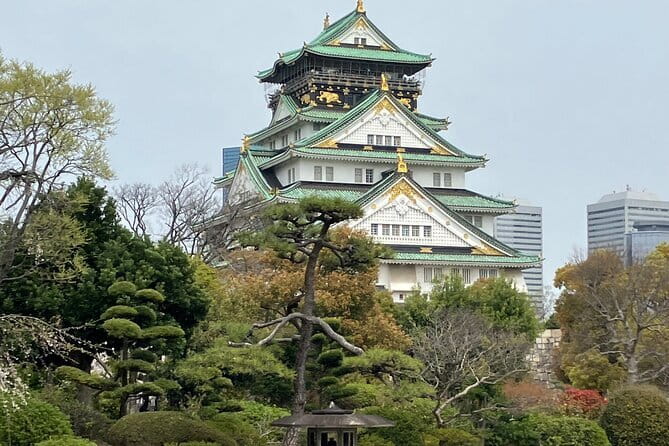
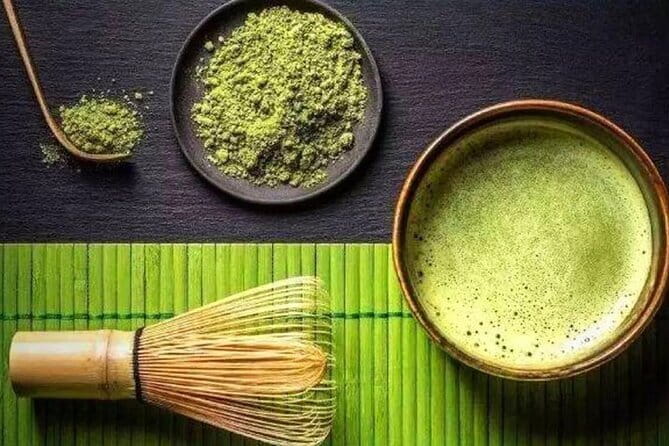
The tour then heads to Uji, a city famous for Uji matcha. The plan calls for time to enjoy green tea at a traditional tea house, giving you a chance to slow down after the walking in Nara. Matcha is not just a drink here. It is one of the clearest ways to connect the stop with Uji’s local identity.
The Uji portion also includes the chance to see Byodo-in, a UNESCO World Heritage Site famous for its Phoenix Hall. The hall is one of Japan’s most recognizable Buddhist buildings, but the details say its admission is not included. The Tale of Genji Museum is also listed among the possible extra costs, although the supplied schedule does not assign it a separate stop.
You should confirm exactly what your group will visit in Uji. The overview promises matcha and Byodo-in, while the timed itinerary gives Uji a broad 2-hour-20-minute block before the hot spring. That is enough time for a tea stop and one major sight, but the final choice may depend on traffic, opening arrangements, and the guide’s route.
This is also where the tour’s pacing can become a problem. One account described the Uji temple and matcha portions as lacking enough time. If Byodo-in is important to you, say so early. Do not assume that the words Uji and matcha automatically mean a long tea experience or a full temple visit.
An evening soak at Genji-no-Yu
Genji-no-Yu is scheduled for about 1 hour and 20 minutes, within a broader Uji block of 2 hours and 20 minutes. The facility offers indoor and outdoor natural hot spring baths and takes its name from The Tale of Genji, the classic work associated with Uji.
This is the tour’s most restful element. After walking around Nara’s park and temple grounds, a hot spring can reset your feet and give the day a calmer finish. You should allow time to understand the bathing routine and change, not only the time spent in the water.
The entry situation needs clarification. The inclusion section says the hot spring is included, while the exclusions list hot springs among costs of around $10. I would ask the provider before departure whether the entrance fee is covered or paid locally. Do not assume the answer from the headline price.
Visible tattoos are not allowed under the stated rules. That is a firm practical point, since many Japanese bathing facilities have strict tattoo policies. Unaccompanied minors are also not permitted on this activity.
The hot spring is a good reason to choose this tour over a standard Nara day trip, but it is not ideal for everyone. If you dislike communal bathing, have tattoo restrictions, or would rather spend more time at Tōdai-ji and Byodo-in, the final stop may feel like time taken from the temples.
What the $81 price really covers
At $81, the tour’s value rests mainly in its transport. You are covering Osaka, Nara, and Uji in one day, with an air-conditioned vehicle and a multilingual guide and driver. That saves you from planning transfers and finding your way back to Osaka after a long day.
The price does not cover food or drinks. It also does not clearly cover every temple, shrine, museum, and hot spring charge. Tōdai-ji, Kasuga-taisha, Byodo-in, the Tale of Genji Museum, and hot spring costs are listed as extra, with an approximate $10 figure mentioned. Take that as a reminder to carry additional money, not as a precise total.
I see good value here for a first visit when convenience matters more than a slow pace. I see less value if you already know Nara and Uji well, because you may spend money and time moving with the group when you could take trains and set your own schedule.
The minimum group size is four people. If that minimum is not reached before the trip, you can be offered a cancellation or a route change. The tour caps the group at 15, which helps keep the vehicle and stops more manageable.
The day’s main strengths and weak spots
The strongest feature is variety. In one day, you see sacred deer, a major Buddhist temple, a Shinto shrine, a tea-producing city, and a hot spring facility. The family appeal is real, especially at Nara Park, where children can engage with the setting right away.
I also like the balance between active and restful time. Nara requires walking, while the Uji bath gives you a chance to sit and recover. That contrast makes the long day easier than a schedule filled only with temples.
The weak spot is time control. The tour asks you to fit several significant places into a single route, and 40 minutes at a major temple can disappear quickly. Cold weather may also make long outdoor stops uncomfortable. Wear warm clothing when needed and choose supportive shoes.
Food expectations need care. Food and drinks are not included in the stated inclusions, and deer food may not be available at the park. Bring money and ask about meal timing, since no meal stop is specified.
Who should book this Osaka day trip
I would recommend it to you if you have limited time in Osaka and want an organized introduction to Nara and Uji. It suits families, first-time visitors, and anyone who values a single vehicle and a guide over independent planning.
It is also a good fit if the hot spring sounds as appealing as the temples. That final soak gives the day a distinctive shape and may be the experience you remember most.
I would hesitate if Tōdai-ji or Byodo-in is your top priority and you want plenty of time inside. I would also hesitate if you dislike fixed schedules, need a guaranteed long tea visit, or have visible tattoos that prevent hot spring entry.
FAQ
Where does the tour start?
It starts at 8:30 a.m. at 1-chōme-3 Nipponbashi Parking, 1丁目-3 Nipponbashi, Chuo Ward, Osaka, 542-0073, Japan.
Where does the tour end?
The activity ends back at the meeting point in Osaka.
How long does the tour last?
The tour lasts approximately 8 to 9 hours, including transportation time.
Is transportation included?
Yes. Round-trip transportation from Osaka in an air-conditioned vehicle is included.
Is a guide provided?
Yes. A multilingual guide and driver are provided.
How large is the group?
The activity has a maximum of 15 people.
Are temple and shrine admission fees included?
No. Entry to Tōdai-ji, Kasuga-taisha, and Byodo-in is listed as extra. The Tale of Genji Museum is also listed among the extra-cost attractions.
Is food included?
No. Food and drinks are not included. The arrangement for deer food is unclear, so you should not assume it will be provided.
Can I join the hot spring visit if I have a visible tattoo?
No. The stated rules do not allow visible tattoos. Unaccompanied minors are also not allowed.
Should you book it?
Book this tour if you want a broad, convenient day from Osaka and accept a quick pace. The combination of Nara Park, the Great Buddha, Uji matcha, and Genji-no-Yu gives you a lot for the price, particularly when you value included transport.
Before paying, confirm three points: that Tōdai-ji entry is part of the actual route, how much time is guaranteed for Byodo-in and matcha, and whether the hot spring fee is included. If the answers suit your priorities, this is a practical introduction to Nara and Uji. If you want slow temple visits and full control of your day, take the trains independently instead.
Just added around Japan
- Samurai Guide Sho’s Mt. Takao Hike, Temple & Onsen from Shinjuku★ 5.0 · 9 reviews
- Tokyo Local Tattoo Friendly Public Bath Experience★ 5.0 · 4 reviews
- Japanese Head Onsen and Scalp Massage Retreat in Tokyo★ 4.5 · 2 reviews
- Mt. Fuji to Lake Kawaguchi, Lake Yamanaka and Onsen Day Tour★ 4.5 · 3 reviews
- Mt. Fuji Tours to Lake Kawaguchi and Yamanaka Onsen English Guide★ 4.5 · 4 reviews
- Tokyo City Adventures Private English Tour With Hotel Pickup★ 5.0 · 12 reviews
- Tattoo-friendly open-air Onsen & drink★ 5.0 · 25 reviews
- Private Tour to Snow Monkey, Zenkoji Temple & Hot Springs Nagano★ 4.0 · 2 reviews
Hot Spring Tours, compared.
Volcanic Islands Cruise with Hot Springs Visit
Read our review →
Mount Batur Sunrise Guided Hike and Natural Hot Spring
Read our review →
Sky Lagoon Entrance Pass With 7-Step Spa Ritual
Read our review →
Zakopane, Thermal Springs, Cable Car, Local Tasting
Read our review →
Golden Circle, Kerid Crater, & Blue Lagoon Tour
Read our review →
Tiger Cave Temple, Emerald Pool and Hot Springs Tour
Read our review →Browse the lists this tour appears in