
REVIEW · INDONESIA
mount rinjani 3D/2N summit,lake.hot spring and crater rim
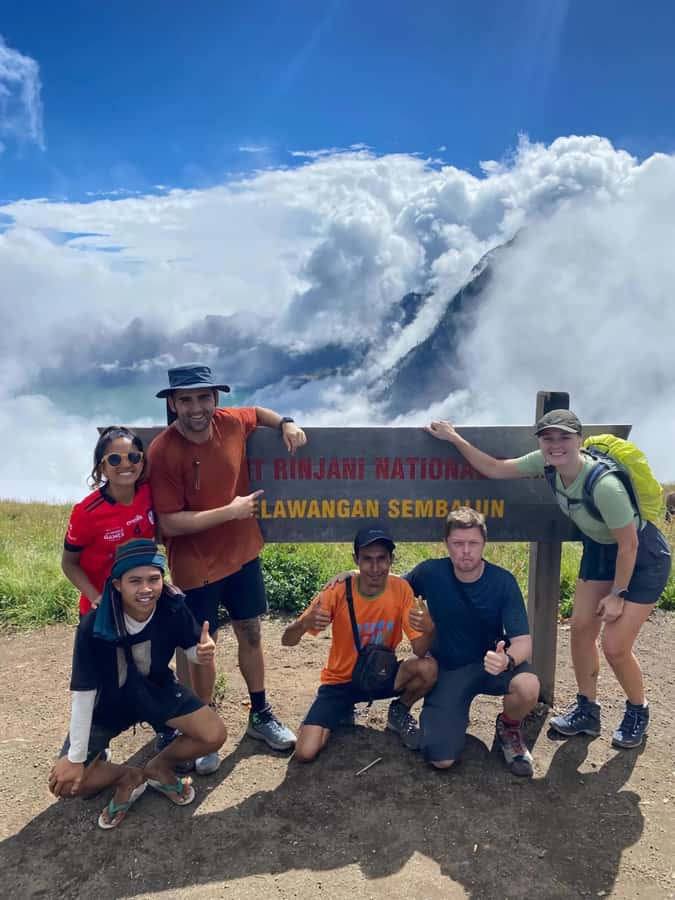
Mount Rinjani’s best feature is the route itself: you climb through Sembalun’s open grasslands, reach the summit for sunrise, drop to Segara Anak Lake and its hot springs, then cross the volcano to finish in Senaru. It is a proper mountain trek, not a scenic stroll with a few uphill bits.
I like the full-crossing route, which gives you several distinct views instead of sending you back the way you came. I also like the practical setup: guides, porters, food, tents, sleeping bags, mattresses, cooking gear, and trekking poles are included. The catch is the schedule. The summit push begins around 3 a.m., and the steep, rocky climbs will test anyone who arrives without decent fitness.
Key points at a glance
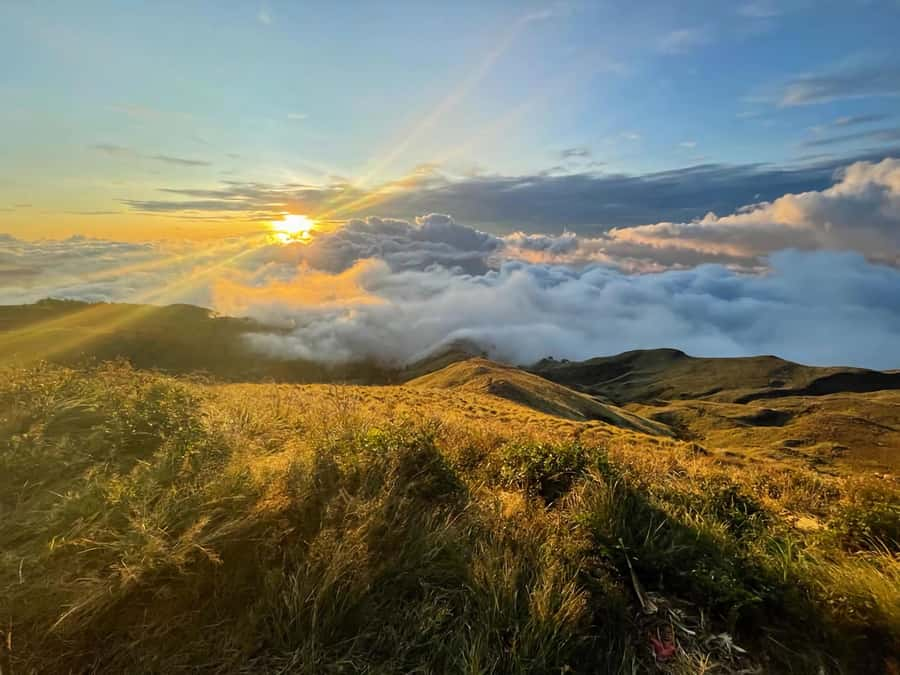
- Sembalun to Senaru: Start in open highland grassland and finish through thicker tropical forest.
- 3,726-meter summit: Leave camp around 3 a.m. for sunrise, with a demanding three-hour climb.
- Segara Anak Lake: Reach the crater lake for lunch, a short soak in the hot springs, and a welcome rest.
- Two crater-rim camps: Sleep first at Sembalun Crater Rim, then at Senaru Crater Rim with views back across the volcano.
- Small group format: The group is limited to 10 participants, with an English or Indonesian-speaking guide.
- Budget carefully: The $137 price excludes the national park fee, personal gear, accommodation before the trek, and transfers after it.
Why this Rinjani route is worth three days
Mount Rinjani is Indonesia’s second-highest volcano, and this trek uses its most complete three-day pattern. You do not simply climb to a rim, take a few photos, and return. You see the mountain from several sides, including the summit, the crater lake, both major crater rims, and the forest route toward Senaru.
That variety matters. Sembalun gives you wide, open views early in the trip, while the Senaru descent feels greener and more enclosed. In between, the trail reaches the stark volcanic slopes around the summit and the striking blue-green setting of Segara Anak Lake.
The trek also has a clear rhythm. Day one is a long uphill approach to the Sembalun Crater Rim. Day two is the hardest and most rewarding: summit before breakfast, descend to the lake, visit the hot springs, then climb out of the crater to a second campsite. Day three is a long downhill walk to Senaru.
I would choose this route if you want the full Rinjani experience and have enough energy for two major climbing days. If you prefer a gentler mountain trip, the early summit start and repeated ascents may feel severe.
More Volcano Hot Spring Tours in Indonesia
- Bali: Mount Batur Sunrise Guided Hike and Natural Hot Spring
★ 4.8 · 9,284 reviews - Bali/Mount Batur: Private Sunrise Jeep Tour & Hot Spring
★ 4.8 · 3,528 reviews - Mount Batur Sunrise Hike and Natural Hot Spring Option
★ 5.0 · 1,927 reviews
Day one: Sembalun’s grasslands to the 2,639-meter rim
The day begins with pickup at about 7 a.m. The stated plan starts from Senaru, followed by a 4WD transfer to Sembalun, where you register at the Rinjani Trek Centre at 1,156 meters. Pickup and drop-off options include both Sembalun and Senaru, so confirm your exact arrangement after booking.
The opening trail crosses rolling grassland rather than dense forest. That gives you broad views and helps you see the climb ahead, but it also means little shade. Bring sun protection, keep drinking water, and use your hat early rather than waiting until you feel hot.
The route passes Pos 1 and Pos 2, with breaks for rest and snacks. At Pos 3, around 1,800 meters, you stop for a longer lunch break before the trail becomes much steeper. This is a useful point to check your water, adjust your pack, and make sure your footwear is comfortable. Small problems become large ones on a three-day climb.
After lunch, the route climbs sharply toward Sembalun Crater Rim. The final section is a serious effort, especially after the open approach and midday heat. You camp at about 2,639 meters, where the reward is a wide view toward Segara Anak Lake, the summit of Rinjani, and northern Lombok.
Sunset from this camp is one of the trip’s main scenes. You can also see the summit route you will attempt in the dark the following morning. That view is inspiring, though it may also make the early start feel very real.
Your first night is in a tent, using the supplied mattress and sleeping bag. A toilet tent is included. Do not expect hotel comfort. The value here is that porters carry the cooking and camping equipment, leaving you with your personal day pack instead of a full expedition load.
The 3 a.m. summit push and sunrise
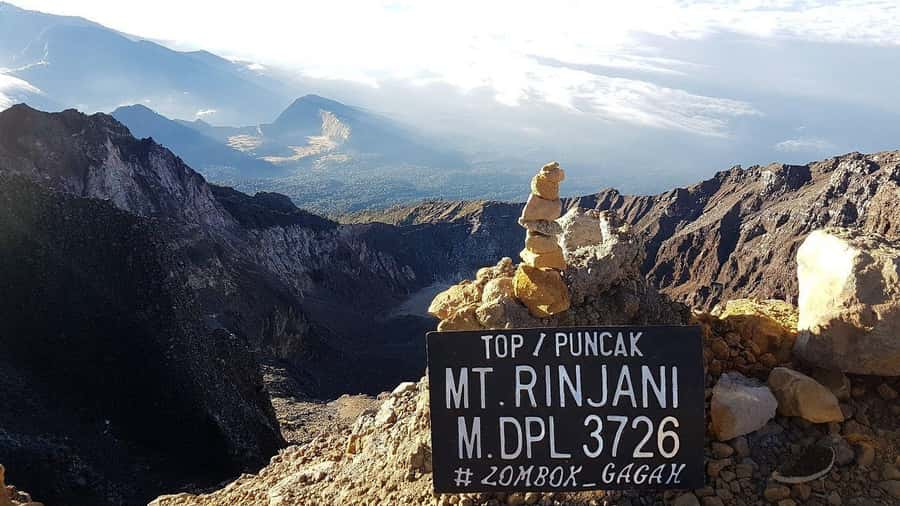
Day two begins around 3 a.m. with a light breakfast. You then set off for the summit at 3,726 meters, with the climb taking roughly three hours according to the planned schedule.
This is the most difficult part of the trip. The ascent is steep and rocky, and you are walking in darkness before sunrise. A headlamp or hand torch is not included, so bring your own. A phone light is a poor substitute for a proper flashlight on uneven ground.
The timing aims to put you at the summit for sunrise. From the top, you may see the crater, Lake Segara Anak, the surrounding parts of Lombok, Mount Agung in Bali, and the Gili Islands when conditions are clear. The supplied highlights also point to broad views over the tropical forest and the island beyond.
The summit can be cold, particularly before the sun appears. Pack a warm jacket, gloves, long pants, and rain gear even if the lower elevations feel warm. Conditions on a mountain can change quickly, and the packing list specifically calls for both cold-weather and wet-weather items.
You return to the crater-rim camp for a hot breakfast and a rest. This return is important because the day is far from over. The schedule then sends you down into the crater, toward the lake.
Segara Anak Lake and the short hot-spring stop
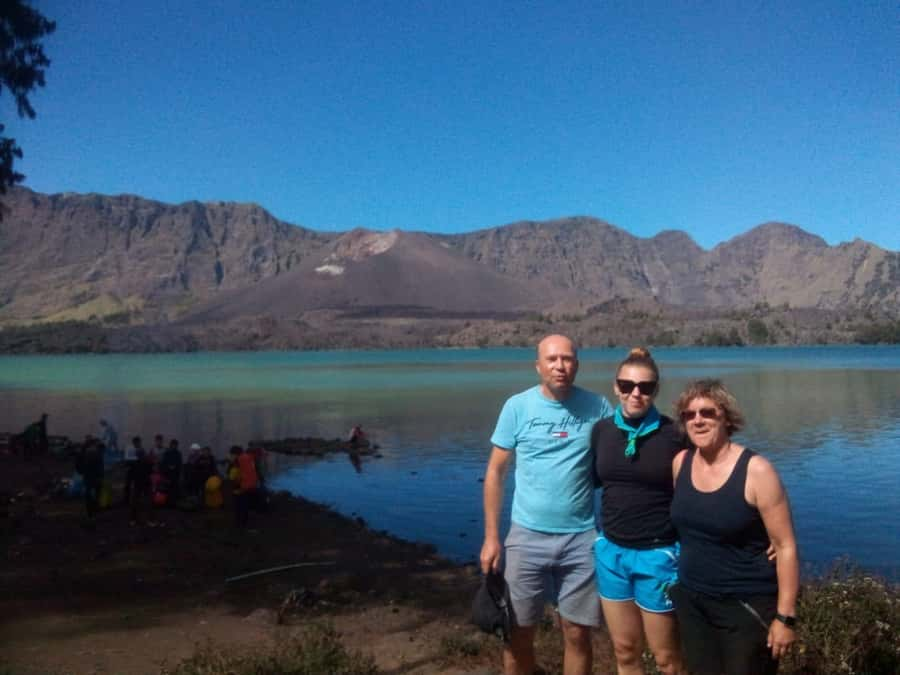
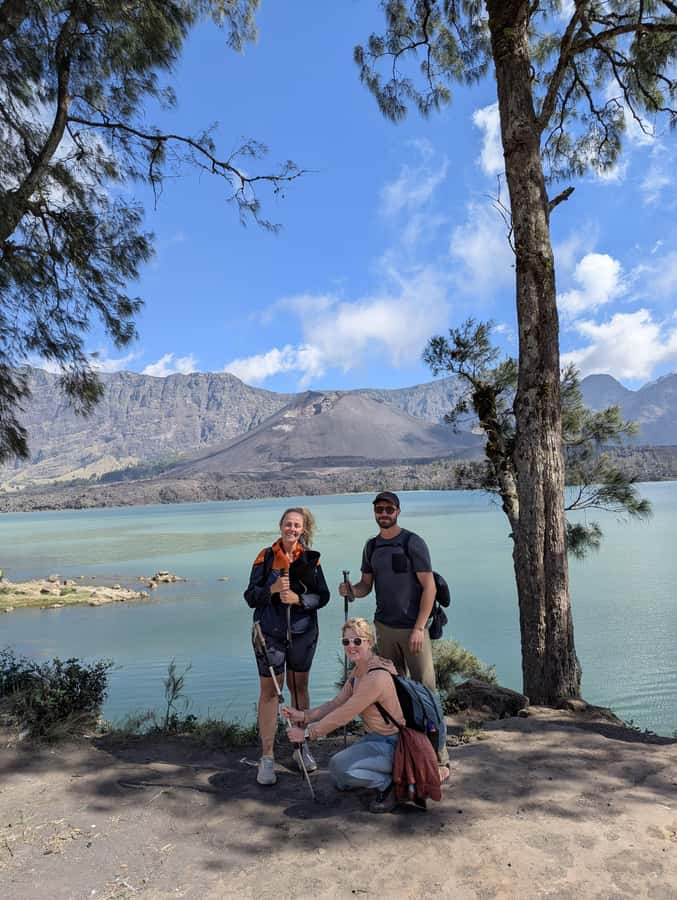
The descent to Lake Segara Anak reaches roughly 2,000 meters. After the exposed upper slopes, the lake offers a very different setting. It sits inside Rinjani’s crater, with volcanic walls and the smaller Gunung Baru cone forming part of the view.
Lunch is planned beside the lake. You then have time to use the hot springs for a few minutes. Treat this as a brief recovery stop, not a long spa session. The water may help tired legs feel better, but you still have a hard climb ahead.
This section is one of the strongest reasons to choose the three-day route. The lake is not just a viewpoint reached from a road. You have earned the approach on foot, and the setting gives the trek a clear change of pace after the summit.
After the lake, you continue around the shore before climbing out of the crater. The route is steep and rocky, then passes through denser forest. This is another demanding transition: you have already climbed the summit, descended to the lake, and now need to gain height again.
Same place, a different kind of soak:
- From Ubud: Mount Batur Shared Jeep Sunrise & Hot Spring Tour
★ 4.8 · 1,842 reviews - Mount Batur Sunrise Jeep Tour with Optional Activities
★ 5.0 · 1,555 reviews - Bali: Shared Mount Batur Jeep Sunrise with Hot Springs
★ 4.9 · 1,332 reviews - Ubud Hot Springs and Waterfall Private Guided Tour
★ 5.0 · 719 reviews
Second night at Senaru Crater Rim
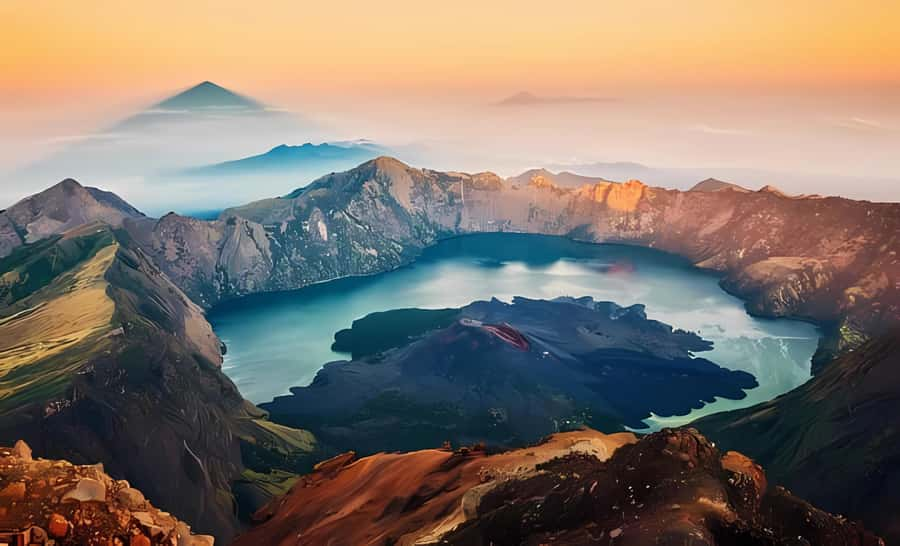
The second night is spent at Senaru Crater Rim, around 2,641 meters. The camp looks back toward the lake and the summit, giving you a different angle from the first night at Sembalun.
This rim also offers views of Gunung Baru, the small volcanic cone inside Rinjani’s crater. On clear days, Mount Agung in Bali and the Gili Islands can appear in the distance. The sunset and sunrise possibilities here are part of the appeal, although the exact view depends on cloud and weather.
By this point, your body will likely be tired. The second camp is not a minor stop added for decoration. It breaks up the route and makes the full traverse possible. Still, the combination of the summit climb, lake descent, and crater exit makes day two the trip’s hardest physical day.
Dinner and camping equipment are included, along with porters to carry the group’s cooking and camping gear. Your personal luggage is different. An extra porter for your own bag is not included, so pack light or budget for that service.
Day three: four to five hours down through Senaru
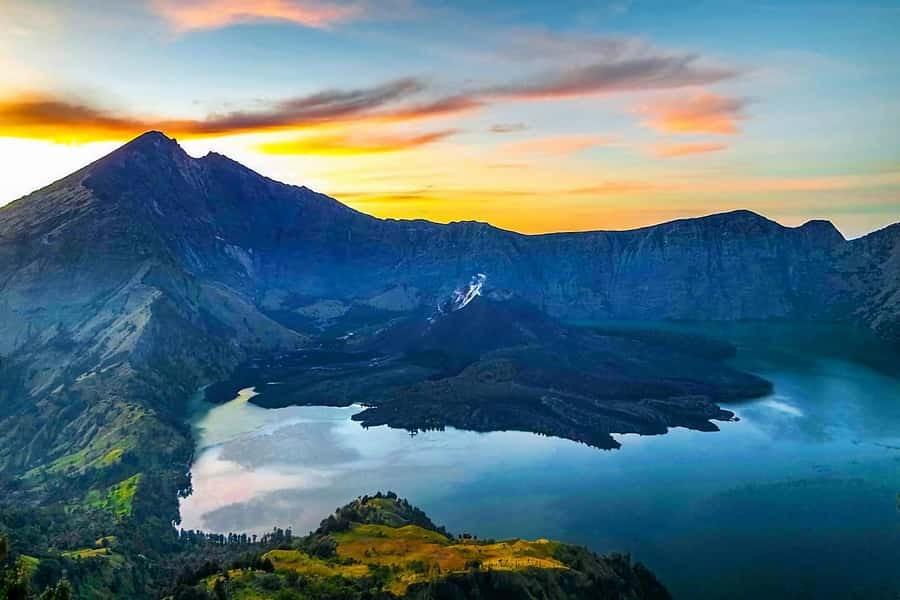
After breakfast, you descend toward Senaru. The planned walking time is about four to five hours, with rest points at Pos 3, Pos 2, and Pos 1. A longer break for lunch is also planned.
The forest becomes thicker and more lush as you lose height. This gives the final day a different feel from the dry, open grassland around Sembalun. It is still a sustained descent, however, and downhill walking can be hard on knees and toes. Trekking poles are included, which should help with balance and reduce some strain.
You reach Senaru at about 1 p.m. The program does not include transfers after the trek, so arrange your onward transport in advance. The stated drop-off options include Senaru and Sembalun, but the exact post-trek transfer details need to be confirmed with the operator.
What the $137 price really covers
At $137 per person, this is a useful package for a three-day mountain trip because several costly and awkward pieces are already handled. You receive an English or Indonesian-speaking guide, professional porters, food, drinking water, a tent, toilet tent, paper, sleeping bag, mattress, gloves, and trekking poles.
The porters carry the cooking gear and camping equipment, which is especially valuable on this route. You still need to carry your own clothing, toiletries, camera, water for immediate use, and other personal items.
The headline price is not the full cost. The national park entrance fee is listed separately at IDR 200,000 per person per day. On a three-day schedule, that could mean IDR 600,000 per person, though you should confirm how the current fee is collected.
You also pay separately for a night of accommodation in Senaru or Sembalun before the trek, transfers after the trek, personal trekking gear, a headlamp, and an extra porter for your own luggage. Those extras do not make the package poor value, but they do make the final budget higher than $137.
The small group limit of 10 is another useful part of the package. It is large enough to share the cost of guides and porters, but smaller than a mass-market mountain group. Ask about the final group size if a quieter pace matters to you.
What to pack, and what not to forget
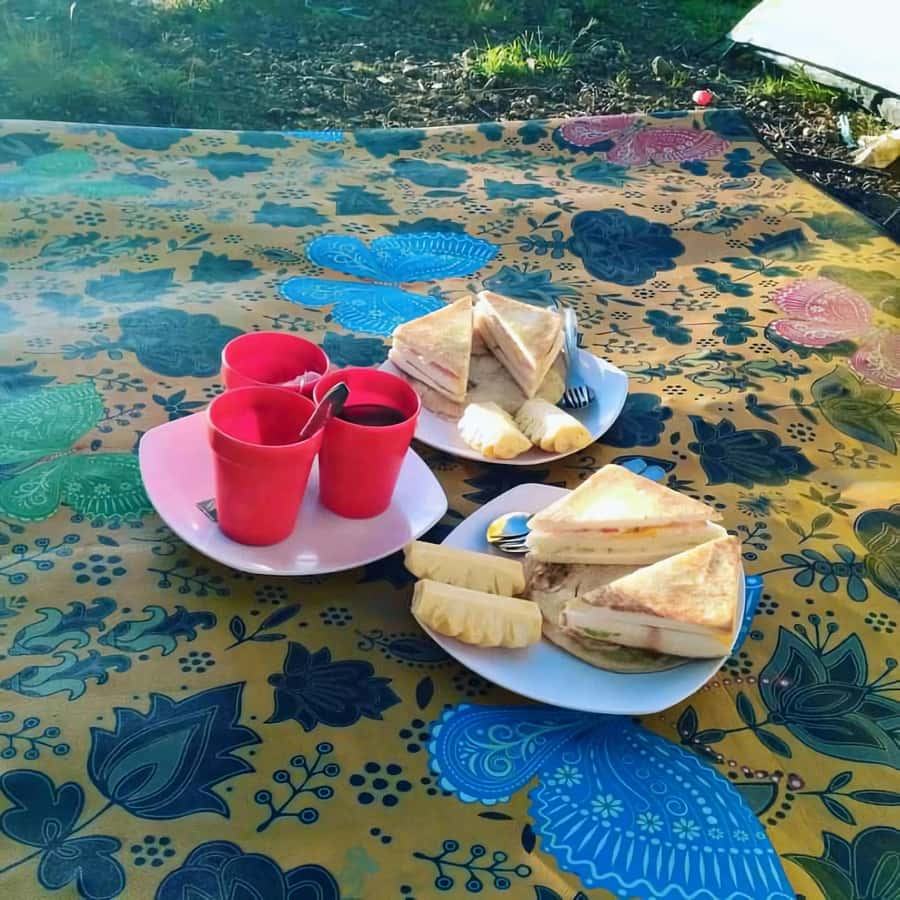
The packing list is practical, but pay special attention to the items not included. You need hiking shoes, a rain jacket, long pants, hiking pants, a jacket, gloves, sunscreen, a flashlight, toiletries, a towel, water, cash, and a power bank.
A headlamp is one of the most important items. The summit climb begins in darkness, and your hands are better used for balance and trekking poles than for holding a phone.
Keep your daily pack small. The included porters carry group equipment, not automatically all of your personal belongings. If you want an additional porter for your luggage, that costs extra.
Bring your passport, since it appears on the required list. Contact the operator after reserving, as requested, to confirm pickup time, meeting place, route details, and any current park requirements.
Who will enjoy this trek most
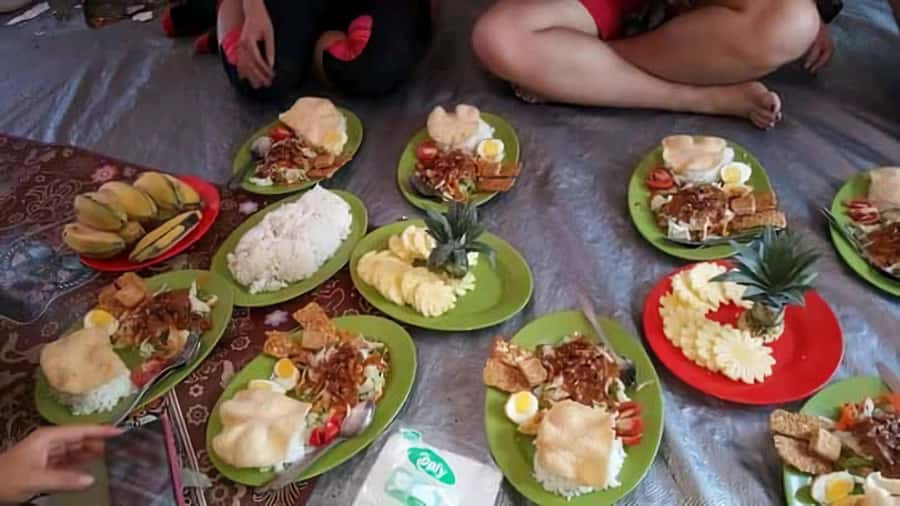
This trek suits you if you want a serious but organized mountain adventure. You should be comfortable walking for several hours, climbing steep slopes, sleeping in a tent, and starting before dawn. The program is not suitable for children under seven, and the physical demands suggest that adults should assess their own fitness carefully.
It is a good match for someone who wants more than a summit photo. You get grassland, crater views, a high summit, a volcanic lake, hot springs, forest, and two different crater rims.
It is less suitable if you need comfortable beds, flexible start times, or short walking days. The program is tightly shaped by sunrise, camp locations, and mountain conditions. You cannot simply shorten day two once you are inside the crater.
Reno is specifically associated with this service, along with two porters who provided close support on one organized trip. The available feedback also points to strong care before and after the trek. That is useful on Rinjani, where clear communication about transport, gear, and meeting points matters as much as the views.
Booking decision
I would book this trek if you want the fullest three-day route and are ready for the 3 a.m. summit start, steep terrain, and basic camping. The strongest value comes from the combination of porters, meals, camping equipment, guides, and a route that covers both Sembalun and Senaru.
Before paying, confirm the national park fee, your pickup location, post-trek transfer, personal luggage arrangements, and whether a headlamp can be rented or must be supplied by you. If those details are clear, this is a well-structured way to experience Rinjani’s summit, lake, hot springs, and crater rims in one demanding trip.
FAQ
Where does the Mount Rinjani trek start and finish?
The walking route starts at Sembalun and finishes in Senaru. Pickup options include Sembalun and Senaru, and drop-off options also include both locations, so confirm the exact arrangement after booking.
How long is the trek?
The experience lasts three days and two nights. The first night is at Sembalun Crater Rim, and the second night is at Senaru Crater Rim.
What time does the summit climb begin?
You wake at about 3 a.m. on day two for a light breakfast and then start the roughly three-hour climb to the 3,726-meter summit.
Are meals and camping equipment included?
Yes. Food and drinking water are included, along with a tent, toilet tent and paper, sleeping bags, mattresses, cooking equipment, and trekking poles.
Is the national park entrance fee included?
No. The national park fee is listed separately at IDR 200,000 per person per day.
What languages are available?
The live guide is available in English or Indonesian. An audio guide is also listed in English and Indonesian.
Just added around Indonesia
- Volcano, Hot Spring, Mud Bath & Tea plantation all included★ 5.0 · 5 reviews
- Ubud: mount.batur sunrise jeep with breakfast and hot spring★ 5.0 · 6 reviews
- Mount Batur Sunset/Sunrise Jeep Tour & Natural Hot Springs★ 5.0 · 5 reviews
- Ubud: Mount Batur Jeep Sunrise, Hot Spring in one day★ 4.6 · 5 reviews
- Sunrise / Sunset Jeep Tour Mt. Batur Kintamani & Hot Spring★ 5.0 · 12 reviews
- Sunrise Trekking / Hike Mount Batur Private & Natural Hot Spring★ 5.0 · 12 reviews
- Mount Batur Sunrise & Natural Hot Springs★ 5.0 · 10 reviews
- Mount Batur Sunrise Trek with Natural Hot Spring – All Inclusive★ 5.0 · 3 reviews
Volcano Hot Spring Tours, compared.
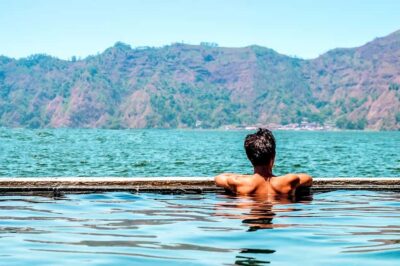
Mount Batur Sunrise Guided Hike and Natural Hot Spring
Read our review →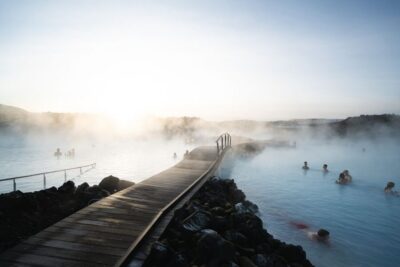
Golden Circle, Kerid Crater, & Blue Lagoon Tour
Read our review →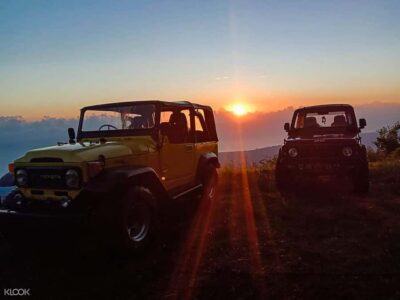
Bali/Mount Batur: Private Sunrise Jeep Tour & Hot Spring
Read our review →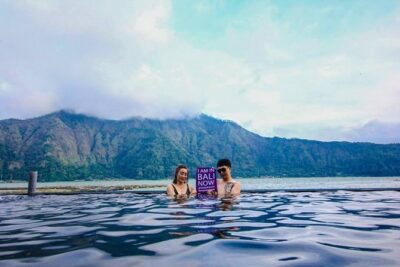
Mount Batur Sunrise Hike and Natural Hot Spring Option
Read our review →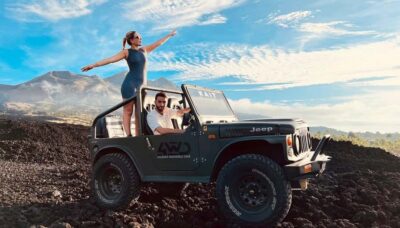
Mount Batur Shared Jeep Sunrise & Hot Spring Tour
Read our review →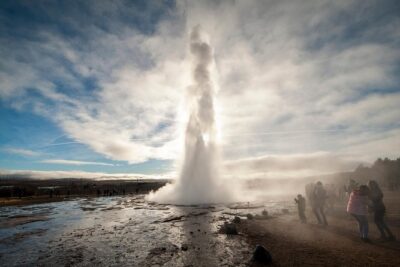
Golden Circle, Secret Lagoon and Kerid Crater Tour from Reykjavik
Read our review →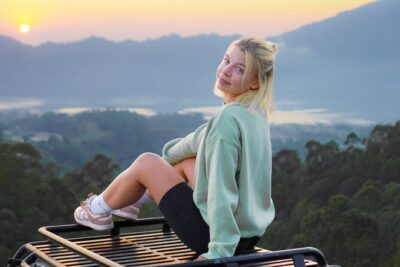
Mount Batur Sunrise Jeep Tour with Optional Activities
Read our review →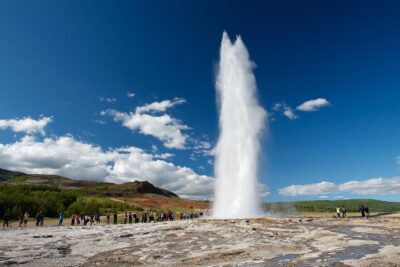
Golden Circle, Kerid Crater & Geothermal Lagoon -Small Group Tour
Read our review →Browse the lists this tour appears in