
REVIEW · JAPAN
Kyoto: Hike and Hot Springs in Kurama
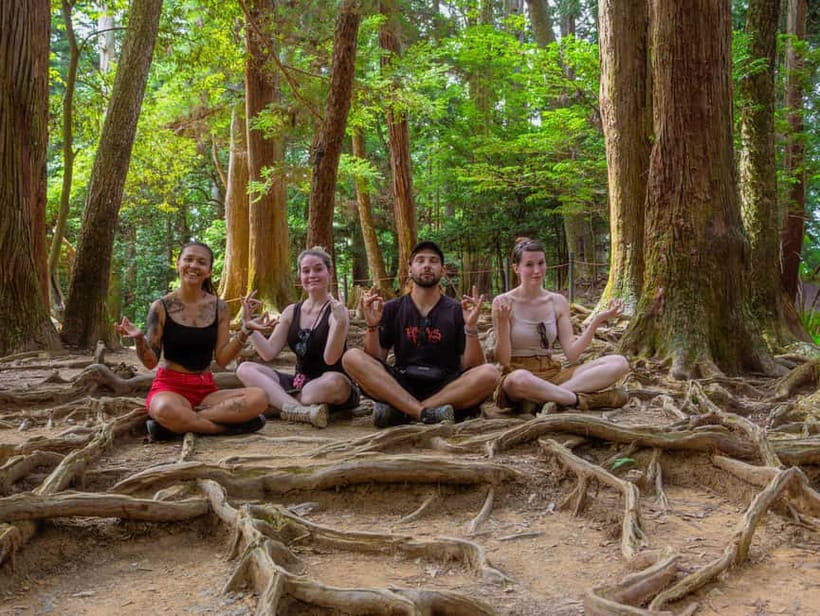
Kurama gives you something Kyoto’s city temples cannot: a mountain hike through towering cedar forest followed by a visit to a temple tied to local legends and spiritual practice. I like the gentle train ride from Demachiyanagi and the chance to see Kibune Shrine, a place associated with prayers for good relationships. I also like the optional hot spring at the end, especially after a climb.
The catch is simple: this is not a soft stroll. The route includes a sustained climb on steps, and summer heat can make it harder. The Kurama Temple may also be partly hidden by maintenance scaffolding at times, so you are paying for the whole mountain setting, not a guaranteed postcard view of the main building.
Key points to know before you book
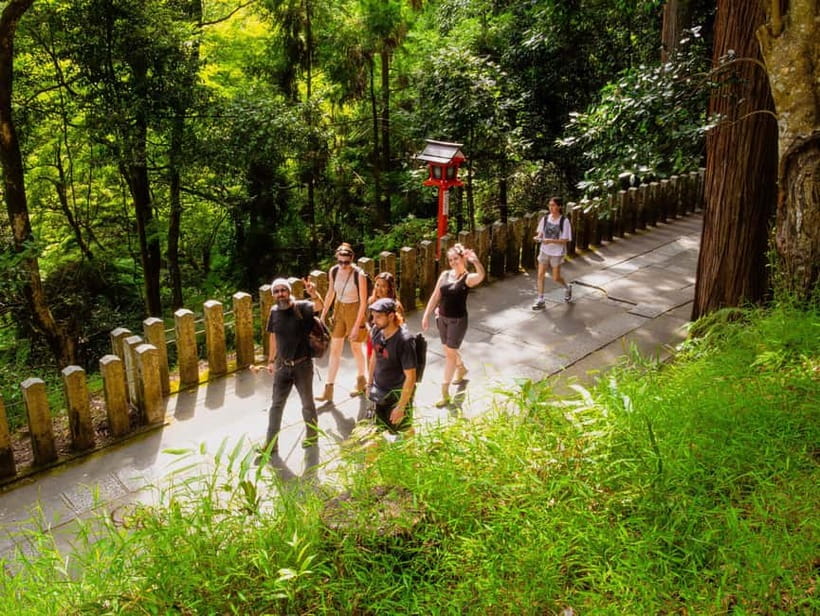
- The climb takes about 30 to 40 minutes to the summit, with plenty of stops for views and temple features.
- The Eizan train ride is part of the pleasure, carrying you from Kyoto into the forested north.
- Kibune Shrine and Kurama Temple give the walk a spiritual focus, not just a woodland setting.
- Guides such as Philippe, Chris, Kevin, and Salome add local stories, with some guides taking guests to less familiar places.
- The hot spring is optional and costs extra, but it is a very appealing way to finish the hike.
- You need decent fitness and proper shoes, and the tour is not suitable for children under 11, wheelchair users, or people with mobility impairments.
Leaving Kyoto by train for Kibune and Kurama
Your meeting point is Demachiyanagi Station, exit 7, in front of the Eizan Railway. That location matters because the train is not just transport. It is the first change of pace, carrying you away from central Kyoto toward wooded valleys and small mountain settlements.
The tour lasts four hours, but the exact starting time depends on availability. Transportation during the main outing and temple admission are included. You must arrange and pay for your return to the meeting point, although the guide finishes by explaining your choices in Kurama.
The route links two nearby mountain communities, Kibune and Kurama. You get a useful contrast: Kibune is associated with its shrine and river setting, while Kurama has the mountain temple, forest trail, and hot spring. It feels like a proper escape from Kyoto without needing a full day.
Small groups or private departures are available. That can make a real difference on a steep trail. A guide can slow the pace, add stops, or adjust the order of the visit. Philippe, one of the repeatedly praised guides, has taken people to quieter sacred areas and explained local beliefs, temple figures, and the origins of Reiki at Mount Kurama.
More Hikes and Treks in Japan:
- Full Day Hiking Tour at Mt.Takao including Hot Spring
★ 5.0 · 52 reviews - Traverse Outer Rim of Hakone Caldera and Enjoy Onsen Hiking Tour
★ 5.0 · 30 reviews - Samurai Guide Sho’s Mt. Takao Hike, Temple & Onsen from Shinjuku
★ 5.0 · 9 reviews
Kibune Shrine and the first taste of mountain quiet
The visit begins around a sacred shrine before the hike gets serious. Kibune Shrine is a key stop, and you can make a prayer for good relationships there. That gives the morning a human touch. You are not simply ticking off another religious building, but taking part in a small custom with personal meaning.
The setting is one of the strongest parts of the outing. Kibune lies along a river and is surrounded by cedar-covered hills. The air is cooler and cleaner than in central Kyoto, though summer can still feel hot during the walk.
Your guide provides context about the shrine and the surrounding area. Guides Philippe and Kevin have been praised for explaining history, customs, and local stories in a clear way. Chris has also been singled out for taking people to less obvious places, which is useful if you want more than the standard path.
Do not expect a long, leisurely shrine visit. The main purpose is to set up the hike. Wear clothes that let you move freely, and choose long trousers if insects bother you. Bring water, since the walk is active and the heat can build quickly.
The cedar trail up Mount Kurama
The climb is moderate, but the word moderate needs a little honesty. You will be walking uphill on steps through the forest, and the route is not suited to someone with no hiking experience. The summit can be reached in roughly 30 to 40 minutes, but your pace, the weather, and the number of stops will affect that time.
The best way to approach it is as a series of short efforts. Your guide can pause at scenic points and explain unusual features along the trail. Several guides have taken guests to quieter corners, shrines, and sacred spots that are easy to miss if you rush upward.
This is where the tour feels different from a regular temple visit. The forest is part of the experience, not just a backdrop between attractions. Tall cedars, mountain air, and the gradual change in elevation give you time to leave Kyoto’s busy streets behind.
The trail can also test you. One person described it as hard work in hot weather and advised having hiking experience. That is fair advice. Comfortable shoes are essential, and sandals or smooth-soled trainers would be a poor choice for a climb on steps.
The changing seasons add variety. A winter outing might bring crisp air or even light snow, while summer brings stronger heat and humidity. Spring and autumn should be pleasant, though the tour information does not promise particular colors or weather. Plan for conditions rather than relying on a scenic photograph.
Kurama Temple at the mountain top
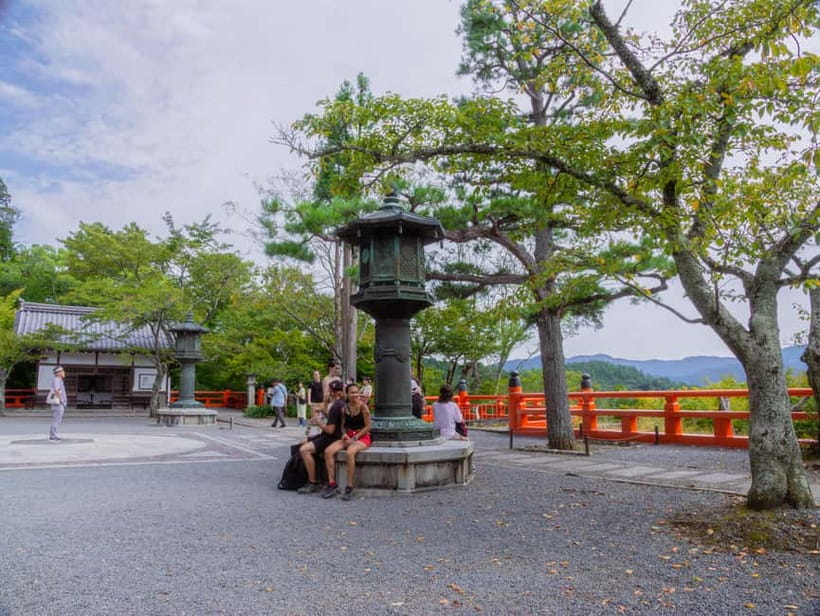
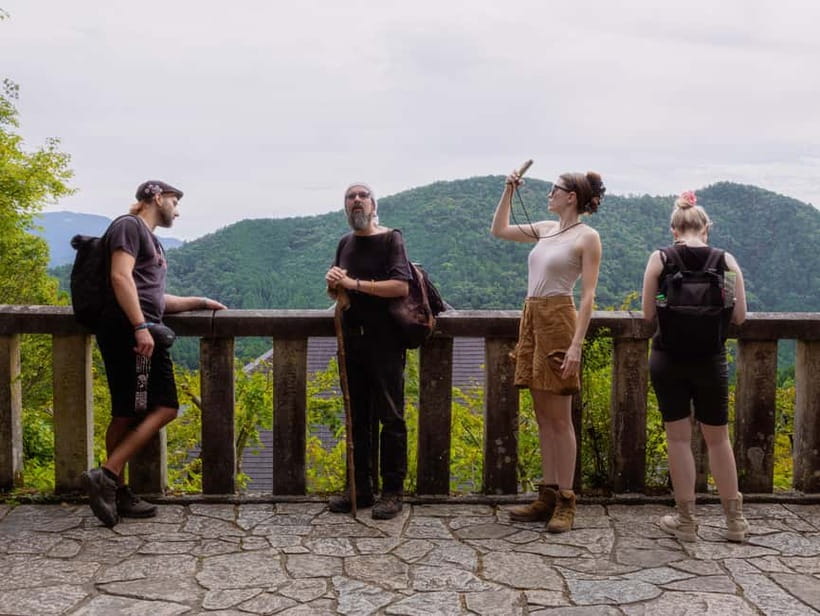
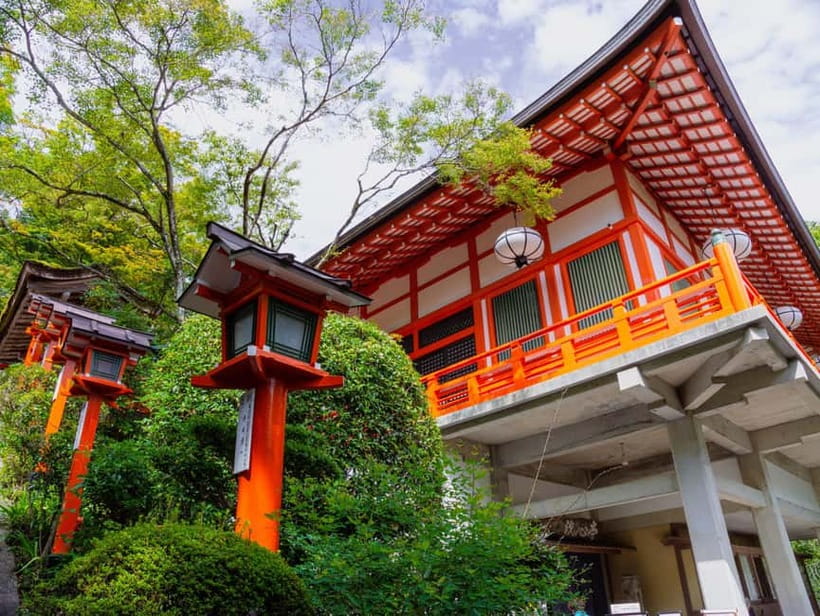
Kurama Temple is the reward for the climb. It sits high above the valley and is treated locally as a powerful spiritual place. You can offer prayers, rest after the ascent, and look down toward the surrounding hills.
The temple admission is included, which makes the $80 price easier to assess. You are not only paying for a guide, but also for the train and the entry fee. The real value is the interpretation. A good guide helps you understand the deities, legends, and religious ideas connected with Mount Kurama instead of leaving you to wander past them without context.
Philippe has been praised for explaining the history and legends of the area, while another guide, Philippe on a separate departure, showed the underground crypt and maze beneath the temple. Those particular areas may depend on access and the route chosen on the day, so treat them as possible extras, not guaranteed features.
The temple itself may be under repair. One guest found the main building covered in scaffolding, though the group could still enter and ring the large bell above the temple. This is worth keeping in mind if the temple architecture is your main reason for booking. The spiritual setting, forest, views, and guide commentary remain important parts of the stop, but construction can affect what you see.
Take a few minutes here rather than treating the summit as a quick photo stop. The cool air after the climb, the valley views, and the sense of height are central to the appeal. If you have an interest in Reiki, Mount Kurama also has special importance, and one guide points out the place associated with its origins.
A few more hot spring trips around Japan worth a look
- From Osaka: Himeji Castle, Arima Onsen & Mt. Rokko Day Tour
★ 4.6 · 339 reviews - Osaka: Nara and Uji Day Trip with Deer Park and Hot Spring
★ 4.4 · 302 reviews - From Tokyo: Private Tour to Fuji/Hakone – Onsen, Art, Nature
★ 5.0 · 116 reviews - Mt. Fuji, Hakone Private Tour from Tokyo – Onsen, Arts and Nature
★ 5.0 · 79 reviews
Descending to the village of Kurama
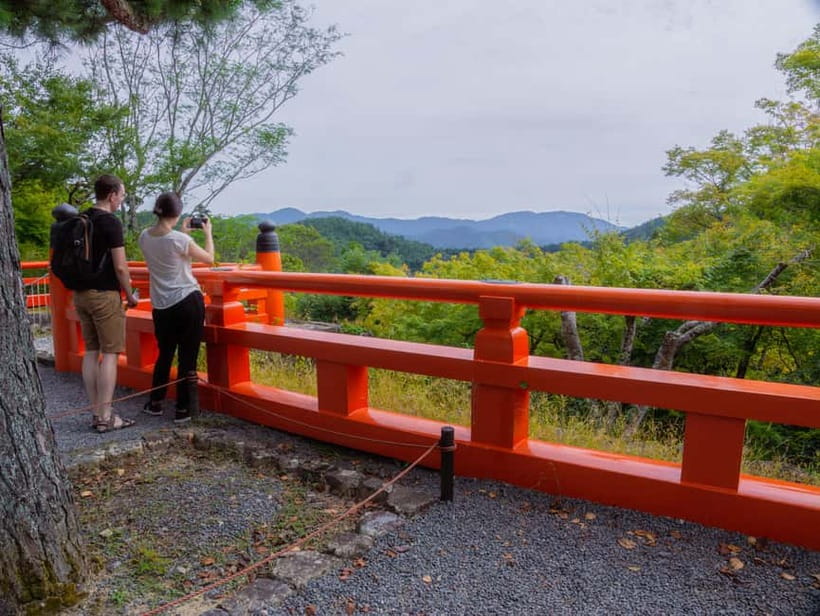
After the temple visit, you follow the steps back down toward Kurama village. Descending is easier on the lungs but can be demanding on knees, especially if you are not used to stairs. Take your time and use the pauses to look back at the trees and the mountain route.
The tour concludes in the village rather than returning you to central Kyoto. This is practical because it gives you freedom at the end. You can stop for a late lunch, walk around the village, take the train back, or visit the hot spring.
Lunch is not included. You should budget separately and understand that the tour does not promise a specific restaurant or meal. The guide offers direction about your choices, but the final hours are more flexible than the guided part of the outing.
That flexibility is useful for a half-day tour. You can continue exploring the area if you still have energy, or head back to Kyoto if the climb has been enough. It also means the four-hour duration is not a door-to-door return time.
The optional Kurama hot spring
The hot spring is the most tempting extra. The bath fee is not included, but a discounted ticket may be available through the tour. The outdoor bath has mountain views, making it a natural match for the hike.
You should check your plans before choosing it. A bath takes additional time, and you still need to arrange your own return to Kyoto. If you are in a hurry for another reservation, the village and train may be the better option.
If you have room in your schedule, I would seriously consider adding it. The walk leaves you warm and tired, particularly in summer, and a hot spring gives the outing a calm finish. One guest called it a must after hiking, and that advice makes practical sense, though the bath is entirely optional.
The information provided does not state the bathing rules, so confirm any details you need before entering. The important point is that this is not part of the $80 package and should be treated as a separate expense.
What the $80 price really covers
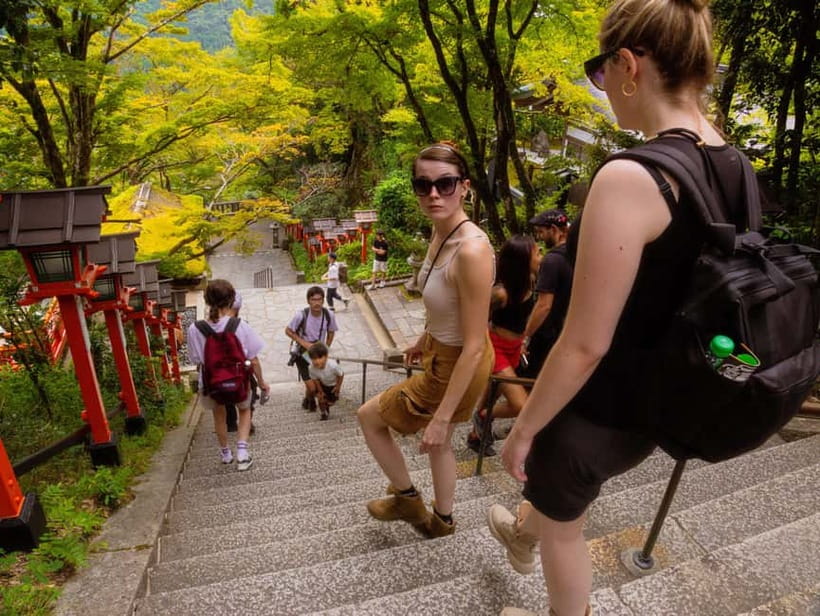
At $80 per person, this is not the cheapest way to see Kurama. You are paying for a four-hour guided outing rather than simply buying a train ticket and walking the route yourself.
The included guide fee, transportation during the tour, and temple admission cover the core costs. More important, you get help with a route that combines two mountain areas, plus explanations of religious sites and local legends. Guides such as Philippe, Chris, Kevin, Salome, and Eric have received strong praise for friendly, clear commentary and flexible pacing.
The value is best for someone who wants meaning and structure. If you are comfortable navigating rural Kyoto alone and only want the hike, you could prefer an independent visit. If you want to understand why Kurama matters, find less obvious places, and avoid working out the route yourself, the price is more reasonable.
The private or small-group option can improve that value further. A smaller party makes it easier to ask questions and adjust the pace. Still, no tour can remove the climb, the weather, or the extra costs for lunch, the bath, and the return journey.
Who should book this mountain outing
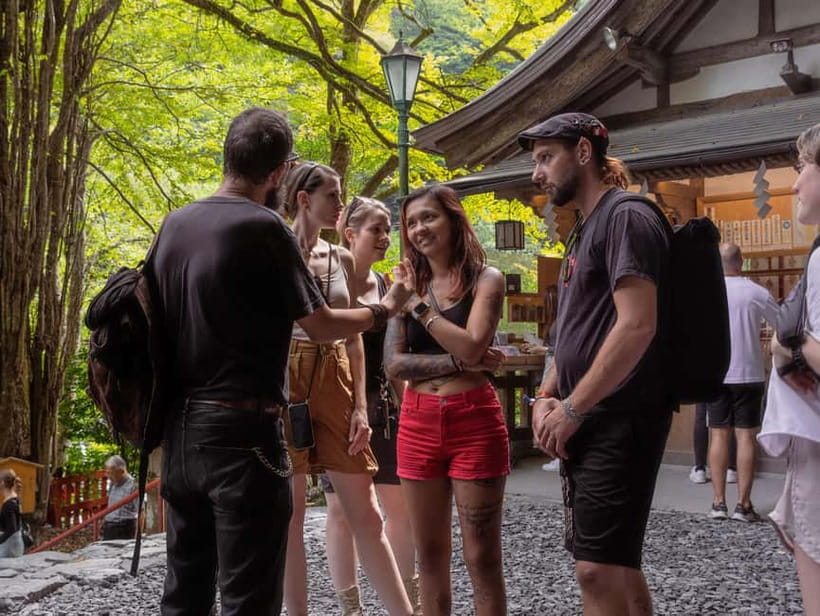
I would recommend it to active adults who want a break from Kyoto’s central temples. It suits you if a forest walk, shrine visit, mountain temple, and hot spring sound better than another packed city schedule.
It is also a good choice if you care about cultural explanation. The guides discuss Japanese traditions, temple figures, legends, and local customs rather than treating the trail as a simple exercise. The Reiki connection may add another layer if that subject interests you.
You should think twice if you dislike steps, struggle in heat, or rarely hike. The tour is not suitable for children under 11, wheelchair users, people with mobility impairments, or people without hiking experience. Long trousers, water, and comfortable shoes are basic requirements, not optional extras.
Smoking or guide behavior can also vary by individual. One account described a guide smoking on the trail and drinking beer near the end, which made the outing less comfortable. That appears to be an isolated concern beside the otherwise strong guide feedback, but it is a fair reminder that a small-group tour depends on the person leading it.
Should you book it?
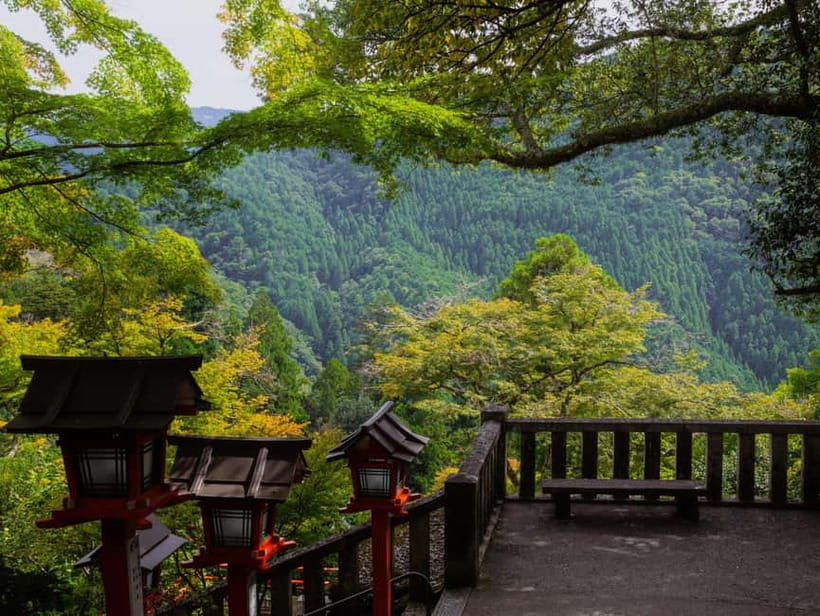
Book this if you want a spiritually focused mountain escape with a guide, rather than an easy sightseeing loop. The train ride, cedar forest, Kibune Shrine, Kurama Temple, and optional hot spring make a satisfying half-day combination.
Skip it if your priority is a fully accessible route, a guaranteed unobstructed temple view, or a relaxed walk with no serious uphill section. For the right fitness level, the $80 cost is fair because it covers the main transport, temple entry, and personal guidance in an area where the stories matter as much as the scenery.
FAQ
Where does the tour meet?
Meet at Demachiyanagi Station exit 7, in front of the Eizan Railway, in Kyoto.
How long does the activity last?
The guided activity lasts four hours. Check availability for the starting time.
What languages are available?
The tour is offered with a live guide in English or French.
Is transportation included?
Transportation during the main tour is included. Transportation back to the meeting point is not included.
Is lunch included?
No. Lunch is not included, and you can choose where to eat in or around Kurama village after the hike.
Is the hot spring included?
No. The hot spring fee is separate. A discounted bath ticket may be available through the tour.
How difficult is the hike?
The hike requires a decent level of fitness. The climb to the mountaintop takes about 30 to 40 minutes and includes steps.
What should I bring?
Bring comfortable shoes and water. Long trousers are recommended if you want to reduce the chance of insect bites.
Is the tour suitable for children?
It is not suitable for children under 11 years old.
Can I cancel the booking?
You can cancel up to 24 hours in advance for a full refund. Reserve now and pay later is also available.
Just added around Japan
- Samurai Guide Sho’s Mt. Takao Hike, Temple & Onsen from Shinjuku★ 5.0 · 9 reviews
- Tokyo Local Tattoo Friendly Public Bath Experience★ 5.0 · 4 reviews
- Japanese Head Onsen and Scalp Massage Retreat in Tokyo★ 4.5 · 2 reviews
- Mt. Fuji to Lake Kawaguchi, Lake Yamanaka and Onsen Day Tour★ 4.5 · 3 reviews
- Mt. Fuji Tours to Lake Kawaguchi and Yamanaka Onsen English Guide★ 4.5 · 4 reviews
- Tokyo City Adventures Private English Tour With Hotel Pickup★ 5.0 · 12 reviews
- Tattoo-friendly open-air Onsen & drink★ 5.0 · 25 reviews
- Private Tour to Snow Monkey, Zenkoji Temple & Hot Springs Nagano★ 4.0 · 2 reviews
Hiking & Trekking, compared.
Mount Batur Sunrise Guided Hike and Natural Hot Spring
Read our review →
Mount Batur Sunrise Hike and Natural Hot Spring Option
Read our review →
Private Tour Mount Batur Sunrise Trekking and Natural Hot Spring
Read our review →
Mount Batur Sunrise Hike, Breakfast & Hot Spring
Read our review →
Mount Batur Sunrise Hike with Breakfast & Hot Spring
Read our review →
Montanejos Hiking Tour & Thermal Pools from Valencia
Read our review →
Landmannalaugar Hike and Hot Springs from Reykjavik & Hella
Read our review →Browse the lists this tour appears in