
REVIEW · PAMUKKALE
Pamukkale and Hierapolis Full-Day Guided Tour
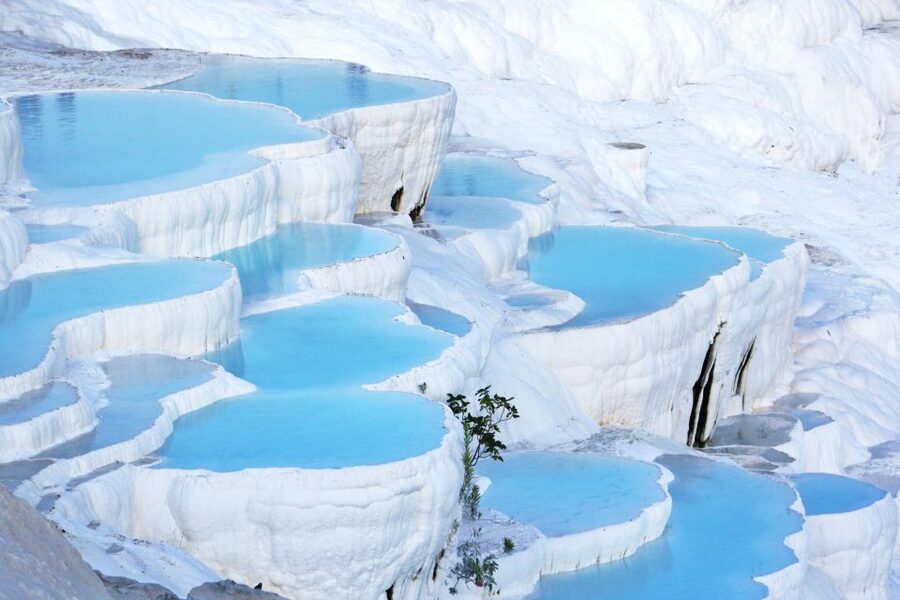
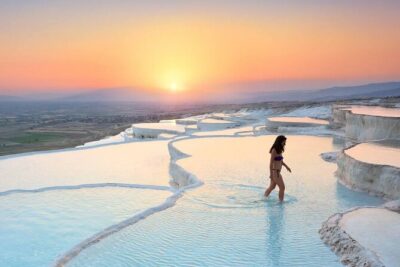
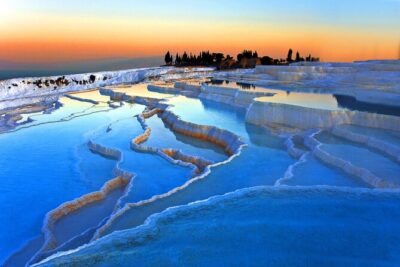
Pamukkale looks almost unreal: bright white terraces step down the hillside like frozen waterfalls, while warm mineral water gathers in shallow pools. Above them sits Hierapolis, an ancient spa city where Roman visitors came for hot springs and the promise of better health.
I like the way this 7-hour tour joins two very different sights in one outing: the natural terraces and the ruins above them. I also like having hotel pickup, entrance tickets, and an English-speaking guide included. Guides such as Elvan and Ahmed have made the ancient site easier to understand for many people.
The main catch is value. At $141 per person, this is much more expensive than visiting Pamukkale independently, and Cleopatra Pool may cost an extra $8, with a further $1 for a locker. You also need to check what happens after lunch, since some departures have included a buffet meal and a textile shopping stop.
Key points to know before booking
- White travertines: Pamukkale’s terraces are the visual star, with mineral deposits creating their famous pale, chalky surface.
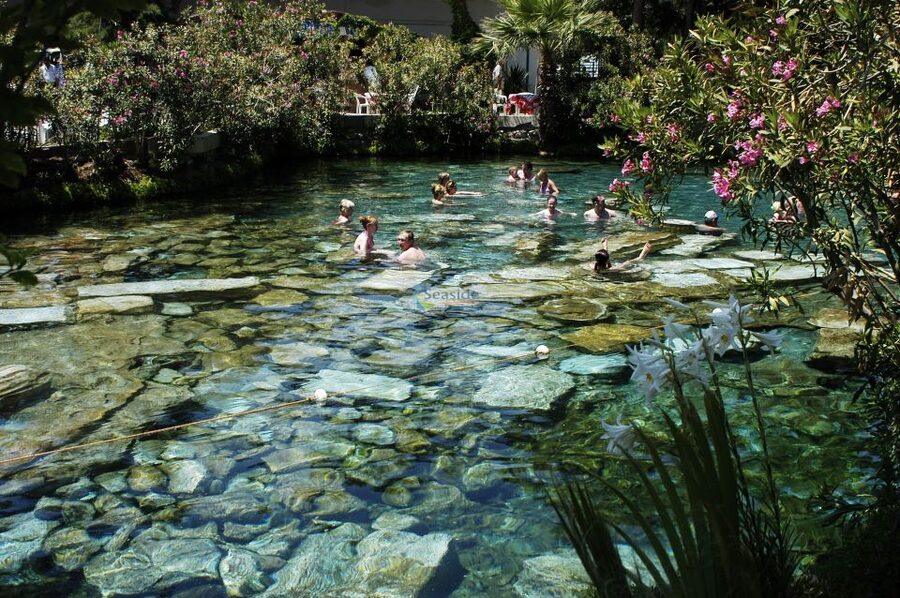
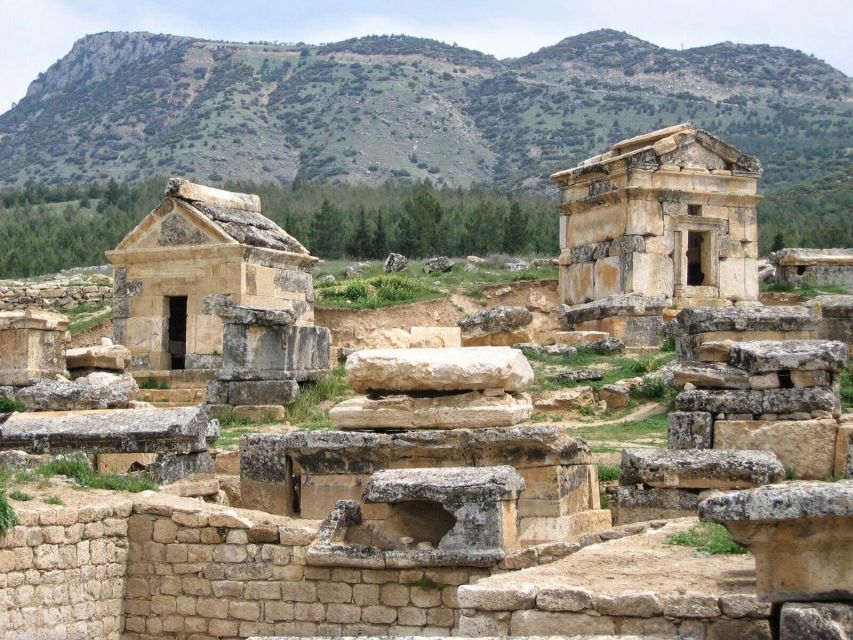
- Roman spa city: Hierapolis includes the Domitian Gate, colonnaded street, cathedral, museum, and hot springs once linked with Pluto.
- Seven hours on site: The schedule gives you enough time for the main sights, but not unlimited freedom at every stop.
- Guides matter: Elvan and Ahmed have led engaging tours, adding useful background to the ruins and thermal springs.
- Cleopatra Pool costs extra: Entry is not covered by the main tour price, and a locker may also require payment.
- Wear sensible shoes: You will walk among ruins and over uneven ground, so comfortable footwear is essential.
Pamukkale’s white terraces are the day’s big moment
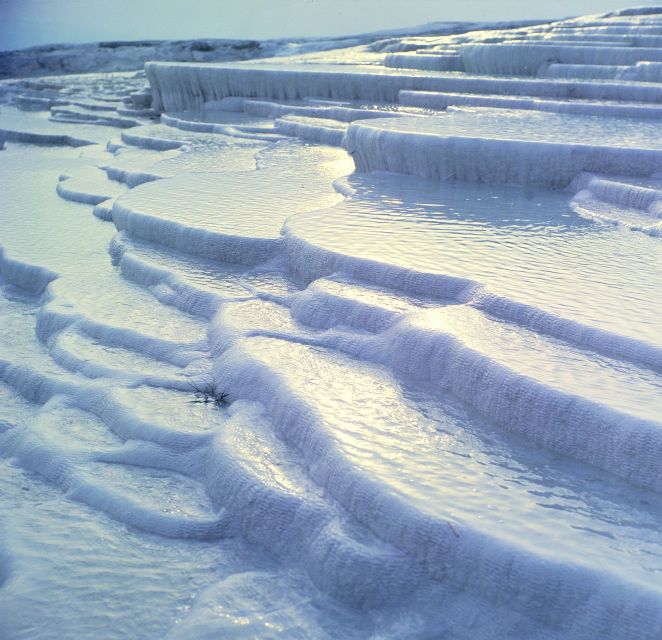
Pamukkale means cotton castle, a fitting name for the hillside of white mineral terraces. Hot spring water has flowed over the slope for centuries, leaving calcium deposits behind. The result is a series of pale basins and ridges that catch the light in changing ways.
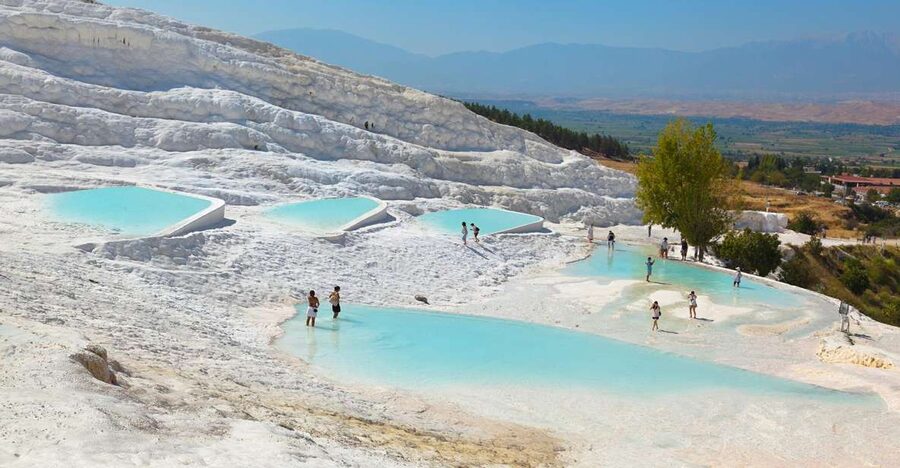
You will see the terraces from below and up close, depending on the route and the amount of water flowing when you visit. The appearance is not fixed. Some periods show more water in the pools, while other times reveal more of the dry, chalk-white surface.
That changing water level matters. If you arrive expecting every basin to be full, you may be disappointed. The site remains striking, but the scene can look more like a white mineral hillside than a wall of blue pools.
Bring a swimsuit if you hope to enter the thermal water. Also bring protection from the sun, since the bright surface reflects light strongly. Comfortable shoes are listed as essential, though you should also be ready for walking over uneven areas.
The terraces are not simply a photo stop. They explain why people built a spa city here in the first place. The same warm mineral springs that shaped the hillside drew visitors in Roman times, when bathing and medical treatment were closely linked.
More Pamukkale and Hierapolis Tours from Pamukkale:
- Pamukkale: Hot Air Balloon Flight with Flight Certificate
★ 4.5 · 277 reviews - From Selcuk/Kusadasi/Izmir: Pamukkale Full-Day Tour
★ 4.6 · 226 reviews - Pamukkale Hot Air Balloon w/Flight Certificates,Champagne Toast & Hotel Transfer
★ 4.5 · 207 reviews
Hierapolis: an ancient city built around hot springs
The ruins of Hierapolis sit above Pamukkale, and their setting tells you much about the city. This was not an ordinary settlement placed near a convenient water source. It developed as a sacred and therapeutic center around the springs.
The ancient name means Sacred City. Local religious beliefs connected the area with Apollo, while poisonous vapors from the springs were associated with Pluto, the god of the underworld. Those old stories give the site a darker edge than its calm white terraces suggest.
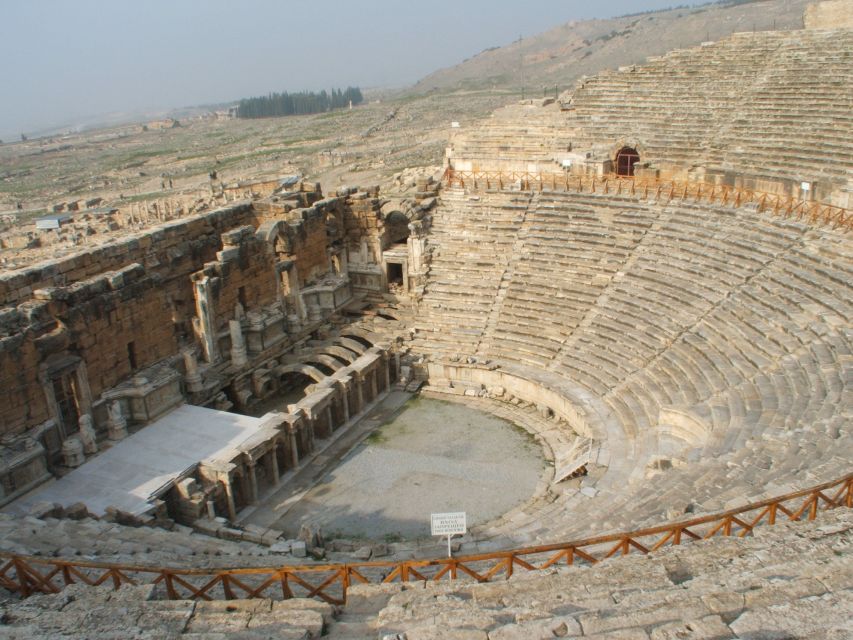
Your guide should help connect the ruins with the springs below. That context is one of the main reasons to choose a guided visit instead of walking through the site alone. Without explanation, some columns and stone foundations can look like scattered remains. With a guide, you can better see how the city functioned as a place of worship, bathing, and treatment.
The pace is likely to be steady rather than rushed, but this is still a walking tour. If you like to stop for long periods to take photographs, tell your guide early. The site is small enough to cover in a few hours, yet there is plenty to notice if you slow down.
The Domitian Gate marks a strong starting point
The Domitian Gate is one of the clearest reminders that you are entering an organized Roman city. Its monumental form gave people a formal entrance into Hierapolis, rather than an informal path into a village.
This is a good place to listen closely to your guide. Names, dates, and ruins can blur together during a full day of sightseeing, but an entrance gate gives you a useful mental map. From here, you can begin to picture the movement of people through the city.
The guide-led format is especially useful for visitors who want more than photographs. Elvan and Ahmed have both been praised for explaining the area in an engaging way, and a good guide can make the stonework easier to read.
Do not expect every feature to look complete. Ancient sites are often a mix of standing structures, broken columns, and foundations. The reward comes from seeing how these pieces fit into the wider city.
Walk the colonnaded street and see the cathedral
The colonnaded street gives the ruins a sense of scale. A long avenue lined with columns helps you understand that Hierapolis was once a substantial city, not merely a small bath complex beside the springs.
This section can be more rewarding with a guide because the remains require imagination. You will see stone, open ground, and partial structures. Your guide can point out how the street related to the public areas and explain the role of the buildings around it.
The cathedral adds another layer to the site’s story. Hierapolis was not frozen in one period. Its religious importance changed over time, and the remains reflect different stages of the city’s life.
I would plan to walk slowly here and look beyond the most obvious columns. The best parts are not always the most photogenic. A doorway, street line, or surviving base can reveal how people moved through the city.
More Full-Day Trips in Pamukkale:
- Antalya: Full-Day Pamukkale Tour
★ 4.5 · 133 reviews - From Antalya or Kemer: Full-Day Pamukkale & Hierapolis Tour
★ 4.6 · 91 reviews - Full Day Pamukkale City Tour From Pamukkale And Karahayit Hotels
★ 4.5 · 54 reviews - Budapest: Full-Day Gellért Spa Ticket
★ 4.2 · 3,340 reviews
The museum gives the stones more meaning
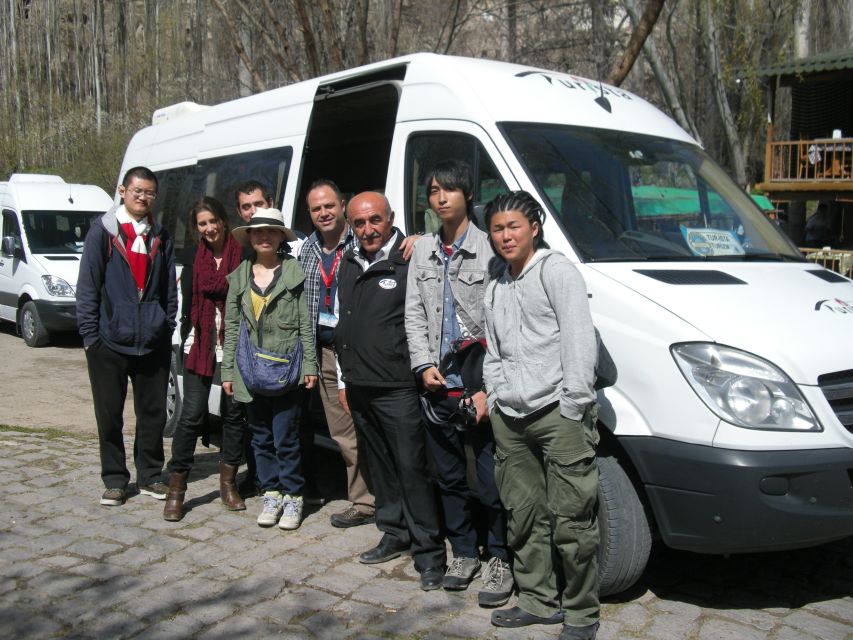
The Pamukkale Museum is included in the visit and provides a useful indoor break from the open ruins. Museums at archaeological sites can be easy to skip when the outdoor remains seem more dramatic, but this one helps explain what has been found in the area.
You can expect a more focused look at objects connected with Hierapolis and the surrounding region. The museum adds detail that cannot be seen from a distance, especially when you have been looking mainly at columns, gates, and streets.
For many people, this is the point where the site’s smaller details begin to make sense. It is also a welcome pause if the terraces and ruins are bright, warm, or tiring.
The amount of time available will depend on the guide and the day’s schedule. If museums are a priority for you, say so. A 7-hour tour has to balance the archaeological area, the terraces, bathing time, and any meal or shopping stop.
The thermal waters are more than a photo backdrop
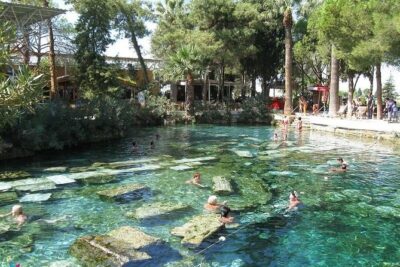
The hot springs made Hierapolis famous in Roman times. People came for their supposed therapeutic powers, and the spa tradition continues today in a modern form.
The main tour description presents time to relax in the hot springs, but you should distinguish between the general thermal area and Cleopatra Pool. Cleopatra Pool has been an optional extra, with an $8 entrance charge and a $1 locker fee reported on one departure. It was also closed for renovation during one visit.
That means you should not assume the Cleopatra experience is guaranteed or included. Ask your guide what is open on the day and what additional fees apply. Bring a swimsuit if bathing matters to you, and keep a small amount of money available for the pool and locker if you decide to enter.
The water can be a welcome change after walking through Hierapolis. Still, this is not the right tour for you if you want to spend most of the day soaking. The ruins and terraces are the main focus, and bathing time may be limited by the schedule.
Lunch and the possible shopping stop need clarification
Lunch is not listed among the included items, and drinks are specifically excluded. One departure included a simple buffet that was described as good, while another dining experience was considered poor. That difference suggests you should ask exactly what meal arrangement applies to your departure.
Do not assume drinks will be provided. Plan to buy your own or confirm the restaurant arrangements before setting out.
There may also be a textile outlet stop after lunch. This is not an attraction connected with Pamukkale or Hierapolis, and some people may see it as an unwanted sales stop. If you prefer to spend every minute at the ancient site, ask the operator if the shopping visit is part of your day.
This is an important value question. A short stop may not bother you, but a longer shopping visit can make a $141 tour feel less focused. Get a clear answer before booking rather than hoping the schedule will match your expectations.
Transport makes the high price easier to understand
Hotel pickup and drop-off are included, but only from a hotel in Pamukkale. The tour cannot collect you from another city. That restriction matters if you are staying in Denizli, Selçuk, or elsewhere on the Aegean Coast.
The ride can simplify the day. You do not need to arrange separate entry tickets, find the correct starting point, or work out how to connect the terraces with Hierapolis. A driver and local guide also make the visit more straightforward for first-time visitors.
Transport quality has been a strong part of the experience, with a comfortable vehicle and a pleasant driver noted on one departure. That is useful when the day includes several hours of walking.
Still, the transport package does not automatically make the price a bargain. Pamukkale is a compact site, and independent visitors can cover the main areas for far less. The tour earns its higher price mainly through convenience, guiding, and a structured day.
How the $141 price compares with going alone
At $141 per person, this is a premium guided visit. Entrance tickets, hotel pickup, drop-off, and an English-speaking guide are included, but drinks are not. Cleopatra Pool and a locker may cost extra.
If you are comfortable arranging your own transport and reading about the site in advance, visiting independently will probably cost much less. One estimate put a self-guided visit at under $15 per person, though that figure does not include every possible transport or meal cost.
The guided option becomes more reasonable if you value convenience or want the ancient city explained as you walk. It can also suit you if you have limited time and prefer one organized outing rather than arranging each part yourself.
The price is harder to justify if you mainly want the terraces and a quick look at the ruins. In that case, the tour may feel restrictive, especially if your departure includes a meal or shopping stop you did not want.
Who will enjoy this tour most
I would recommend this tour to you if you want a simple, organized day based in Pamukkale. It suits first-time visitors who prefer hotel pickup, included entry, and a guide who can explain the old city without requiring advance research.
It also works well for people who want a blend of nature, archaeology, and bathing. The white terraces give you the visual highlight, Hierapolis supplies the ancient setting, and the thermal waters offer a slower finish.
You may want another option if you are a budget-focused independent visitor. The site is compact, and you can explore it without a tour for considerably less.
The same is true if you dislike fixed schedules or shopping stops. Ask about the exact plan before paying, especially if you want long, quiet time at the terraces or a guaranteed Cleopatra Pool visit.
Practical advice for making the day go smoothly
Wear comfortable shoes. You will walk through archaeological remains and over uneven surfaces, and sandals with poor support may become tiring.
Bring a swimsuit if you want to use the thermal waters. Do not assume the Cleopatra Pool is included in the tour price, and ask about renovation status before planning your day around it.
Pack light. Large bags and luggage are not allowed, so leave suitcases at your hotel and carry only what you need.
Keep drinks in mind because they are not included. The strong white surface can make sun exposure feel intense, so a hat and sun protection are sensible additions, even though they are not listed as required items.
The tour lasts seven hours, but the exact starting time depends on availability. Confirm the pickup time with your hotel and remember that pickup is limited to Pamukkale.
Should you book the Pamukkale and Hierapolis tour?
Book it if you want the easy version of Pamukkale: hotel pickup, entry tickets, transport, and an English-speaking guide in one package. The best part is the combination of the white travertines with Hierapolis, and guides such as Elvan and Ahmed can add real value to the ruins.
Think twice if price matters most or if you want complete control over your day. Independent entry is far cheaper, and optional Cleopatra Pool fees plus possible meal or shopping arrangements can weaken the value.
Before booking, ask three questions: Is Cleopatra Pool open, what extra charges apply, and is the textile outlet included? If the answers suit you, this is a convenient way to see Pamukkale and its ancient spa city in one well-organized day.
FAQ
How long does the Pamukkale and Hierapolis tour last?
The tour lasts 7 hours. Starting times vary, so you need to check availability when booking.
Where does the tour pick up passengers?
Hotel pickup and drop-off are included from hotels in Pamukkale. Pickup from another city is not available.
Is an English-speaking guide included?
Yes. The tour includes a live English-speaking local guide.
Are entrance tickets included?
Yes. Entrance tickets are included in the main tour price.
Is Cleopatra Pool included?
Cleopatra Pool may require an additional $8 entrance fee, plus $1 for a locker. The pool was also under renovation during one visit, so check its status before your tour.
What should I bring?
Bring comfortable shoes. A swimsuit is also useful if you plan to bathe in the thermal waters.
Are drinks included?
No. Drinks are not included in the tour price.
Just added around Pamukkale
- Pamukkale and Hierapolis Tour from Selcuk and Kusadasi★ 5.0 · 2 reviews
- Private Tour to Salda Lake, Pamukkale, Hierapolis Ancient City, Kaklik Cave★ 5.0 · 2 reviews
- Private Tour to Pamukkale, Hierapolis Ancient City, Laodicea Ancient City★ 3.5 · 7 reviews
- Skip the Line Pamukkale Tour for Crusiers from Kusadasi Port★ 4.0 · 4 reviews
- Pamukkale Hot Air Balloon Tours★ 4.5 · 22 reviews
- Pamukkale : Hot Air Balloon Sunrise Flight w/Transfer★ 4.5 · 51 reviews
- Pamukkale Tour From Pamukkale★ 5.0 · 27 reviews
- Pamukkale Paragliding Experience By Local Expert Pilots★ 5.0 · 38 reviews
Pamukkale & Hierapolis Tours, compared.
Pamukkale Hierapolis and Cleopatra’s Pool Tour with lunch from Antalya
Read our review →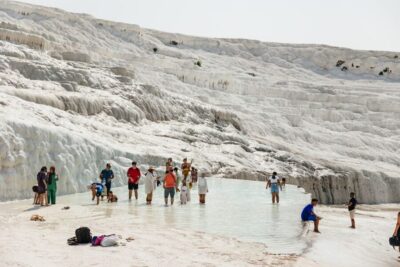
Antalya Pamukkale Hot Springs & Hierapolis Tour With Lunch
Read our review →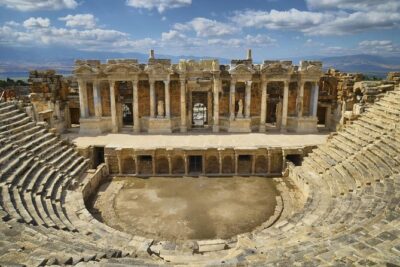

Full-Day Tour of Pamukkale from Antalya with Lunch
Read our review →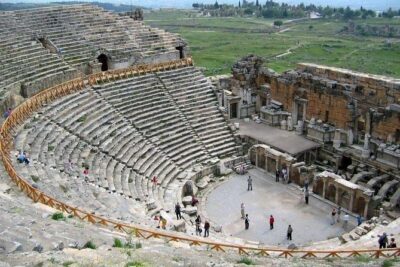
Full-Day Tour to Pamukkale From Marmaris w/ Breakfast & Lunch
Read our review →Browse the lists this tour appears in