REVIEW · TOKYO
Mt. Fuji to Lake Kawaguchi, Lake Yamanaka and Onsen Day Tour
Mount Fuji is the star here, but the best part is the variety: a high mountain viewpoint, lakeside parks, a famous shrine, seasonal flowers, and a hot spring all fit into one long day. I like the air-conditioned transport and the chance to reach Lake Kawaguchi and Lake Yamanaka without piecing together several trains and buses.
I also like the generous time at Lake Kawaguchi, where you can see Oishi Park and, depending on the season, the moss phlox fields or maple corridor. The main trade-off is the packed schedule. Weather can hide Fuji, and the onsen visit is brief, with tattoos potentially limiting entry.
Key points to know before booking
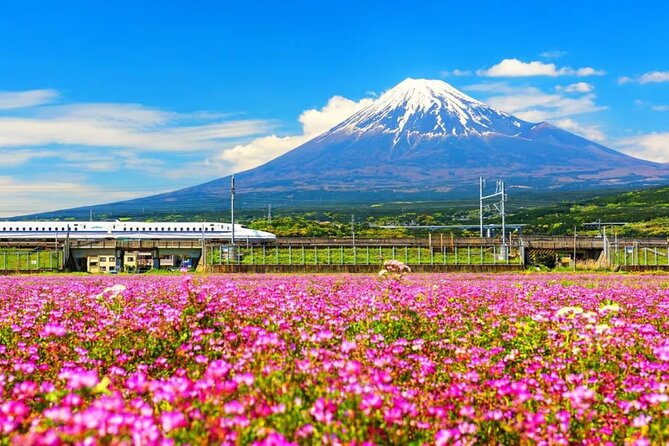
- Mount Fuji 5th Station reaches about 2,300 meters: You get a high viewpoint without hiking the mountain, though weather can change quickly.
- Lake Kawaguchi receives the most attention: About two and a half hours are allocated to the lake, with Oishi Park and seasonal sights nearby.
- The tour combines nature and culture: Arakurayama Sengen Park and Shrine add a classic pagoda, shrine, and Fuji viewpoint to the day.
- Lake Yamanaka offers a quieter second lake stop: The optional Swan Lake pleasure boat costs extra and takes about 20 minutes.
- The onsen costs about 1,000 to 1,600 yen: Large tattoos may prevent entry, while small tattoos must be covered with skin-colored stickers.
- The group can reach 40 people: This keeps the price reasonable, but stops may feel organized around a large group rather than a private outing.
Why this Tokyo to Fuji day trip makes sense
Getting from Tokyo to Mount Fuji’s lakes requires planning. You need to match train times, work out local buses, and allow for transfers between widely scattered viewpoints. This day tour handles that framework in an air-conditioned vehicle, with pickup and drop-off at designated areas.
That convenience is the main reason to consider it. At $115 per person, the price is not a bargain-basement bus ride, but it covers driver service, guide service, transportation, and a full 10 to 11 hours away from Tokyo. You still pay for the onsen, food, drinks, and the optional Fuji Shibazakura Festival, yet the price can make sense if you value time and simplicity.
The schedule is ambitious. It includes the 5th Station, Arakurayama Sengen Park, Lake Kawaguchi, Oishi Park, possible seasonal attractions, Lake Yamanaka, a pleasure boat option, and an onsen. Some of these places overlap geographically, while others require more driving, so you should expect a full day rather than a slow countryside outing.
The guide adds useful context during the drive and at the stops. Belle has been praised for enthusiastic planning, while Laner was described as patient, attentive, warm, and pleasant. Guide assignments can vary, so treat those names as examples of the kind of support reported for this experience, not a guaranteed pairing.
More Hot Spring Day Trips in Japan
- [Seasonal Limited] Mt. Fuji 5th Station &Hot Spring Day Tour
★ 4.5 · 53 reviews - Mt. Fuji 5th, Oshino Hakkai, Onsen Full-Day Trip From Tokyo
★ 4.5 · 50 reviews - Full Day Tour at Mt. Fuji, Onsen, Lake Kawaguchi and Yamanaka
★ 4.0 · 24 reviews
Starting high at Mount Fuji 5th Station
The first major stop is Mount Fuji 5th Station, at roughly 2,300 meters, or 7,546 feet. This is a popular stopping point on the road toward the summit and serves as a starting area for many climbers.
For you, its value is simple: it offers a way to reach a high point on Fuji without committing to a climb. On a clear day, the altitude gives the stop a different feel from the lakes below. You can spend about 40 minutes here, enough for a look around and photographs, but not enough for a long walk.
The catch is weather. Mount Fuji often hides behind cloud, and the upper station may feel cool or exposed compared with Tokyo. The tour requires good weather, and poor conditions can lead to a date change or refund. Even with acceptable weather, Fuji itself is never guaranteed to appear clearly, so keep your expectations flexible.
This stop also adds altitude to an already long day. If you prefer a relaxed pace, 40 minutes may feel rushed. If you mainly want to see Fuji from several angles, it is a worthwhile opening stop.
Arakurayama Sengen Park and the famous Fuji view
Arakurayama Sengen Park is one of the most recognizable Fuji viewpoints in the region. The setting combines Mount Fuji, Arakura Shrine, and the celebrated five-story pagoda, giving you a classic Japanese scene in one frame.
The park is in Fujiyoshida and is connected with Arakurayama Sengen Shrine, a Shinto site at the base of Mount Arakura. The schedule includes time here more than once, with one visit listed at about an hour and another at about two hours. That suggests the day may use the park for both its shrine setting and its famous viewpoint, although the exact order can change.
This is one of the more rewarding cultural stops because it is not just a lookout. You get a shrine setting and a strong visual connection between Fuji and the surrounding town. The view is also highly dependent on clouds, so it is wise to take photographs when Fuji is visible rather than assume it will clear later.
Allow for walking and steps. The provided details do not specify the exact route or accessibility arrangements, so anyone who needs a level path should ask the operator before booking. Most people can participate, but a stop built around a hill and shrine grounds may feel more demanding than a lakeside park.
Lake Kawaguchi gives you the longest pause
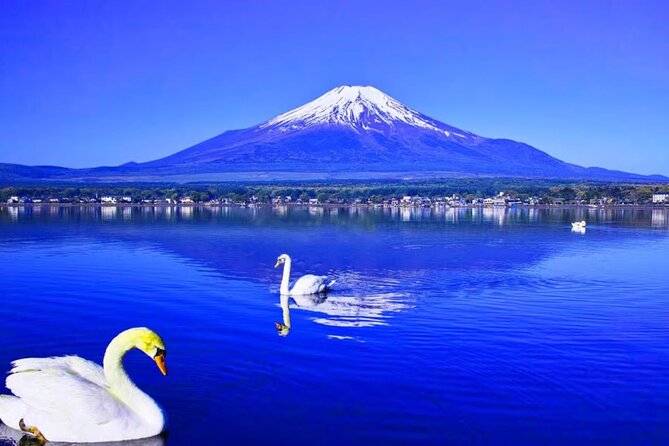
Lake Kawaguchi is one of the Fuji Five Lakes and receives about two and a half hours on the schedule. That makes it the central outdoor stop, not just a quick photograph from the roadside.
I like this allocation because it gives you time to see the lake at more than one point. Mount Fuji views can change as clouds shift, and a longer pause gives you a better chance of catching a clear moment. You may also have time to walk, take photographs, and enjoy the lake without being hurried from one viewpoint to the next.
The lake area changes with the calendar. Oishi Park is known for seasonal flower fields, including lavender, while the Fuji Shibazakura Festival features pink moss phlox in spring. The Lake Kawaguchi Maple Corridor is especially attractive during autumn foliage, when Japanese maples turn red, orange, and yellow.
Do not assume every seasonal sight will be at its best on your date. Flower and foliage timing changes from year to year, and the visit dates listed for seasonal attractions are reference points only. The Fuji Shibazakura Festival also requires an extra fee of about 1,300 yen if it is operating and included in the day’s plan.
More Hot Spring Day Trips in Tokyo
- Tokyo: Mt Fuji Lake Kawaguchi & Yamanaka Hot Spring Day Tour
★ 4.0 · 14 reviews - Mt. Fuji 5th Station, Oshino Hakkai and Hot Spring Day Trip
★ 3.5 · 13 reviews - Mt. Fuji Skiing Experience- YETI Ski Resort & Onsen Day Trip
★ 4.2 · 8 reviews - Mt Fuji Small Group 1 Day Tour Kawaguchi and Yamanaka with Pickup
★ 5.0 · 4 reviews
Oishi Park and seasonal color
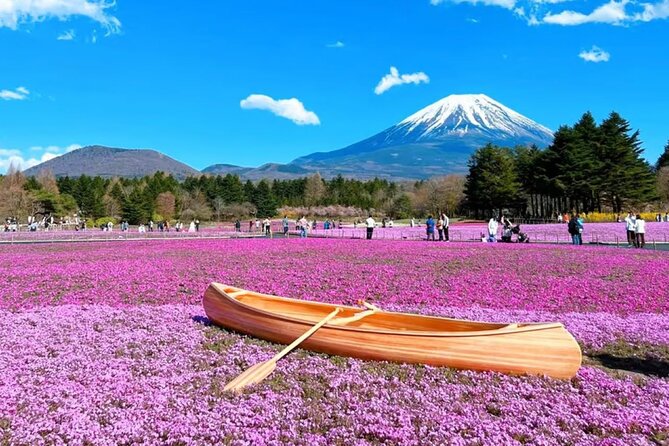
Oishi Park sits along the northern shore of Lake Kawaguchi and is known for open views toward Mount Fuji. Its broad flower areas make it a good place for photographs, particularly when the seasonal planting is in bloom.
The park is included in the tour, but the best experience depends heavily on timing. Lavender can be a draw in one season, moss phlox in another, and autumn foliage in another. If you visit outside the main bloom periods, the park still offers the lake and Fuji setting, but the flower displays may be less impressive.
The one-hour allocation is practical for a quick walk and photographs. It is not enough for an unhurried botanical visit, a long lakeside stroll, and a meal. Food and drinks are not included, so plan to use available free time carefully rather than expecting a full restaurant break here.
The Fuji Shibazakura Festival and Maple Corridor
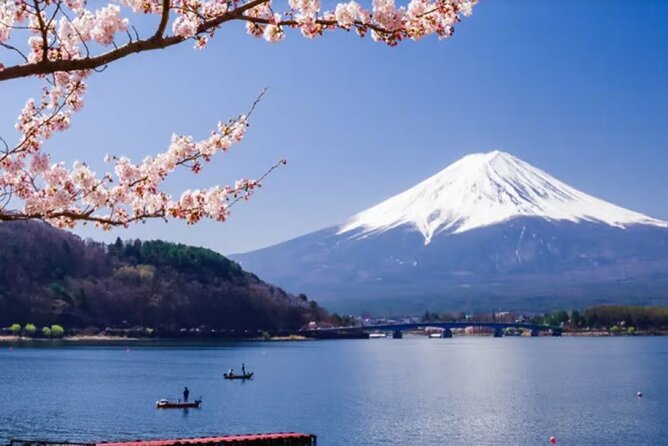
The Fuji Shibazakura Festival is a spring attraction with broad fields of pink moss phlox. It is a strong seasonal addition if your date lines up with the bloom period, but it is not an all-year highlight. Admission is not included and costs about 1,300 yen.
The Lake Kawaguchi Maple Corridor offers the same seasonal idea in autumn. Its Japanese maple trees turn red, orange, and yellow, creating a colorful route near the lake. The listed time is about one hour.
These stops reveal both the strength and weakness of the schedule. You can see several of the area’s best-known seasonal sights in one day, but you cannot control the season, the bloom, or the weather. If you are booking mainly for cherry blossoms, moss phlox, or autumn color, check the expected dates with the operator rather than relying only on a general itinerary.
It is also worth confirming which seasonal stop will operate on your date. The supplied schedule lists several possibilities, and the actual visit may depend on the calendar.
Lake Yamanaka offers a second Fuji setting
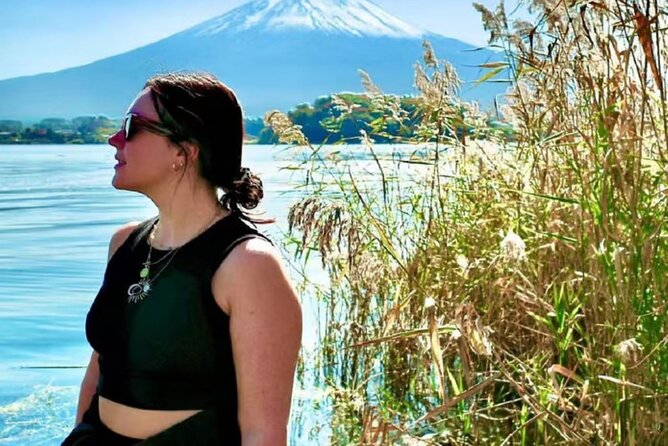
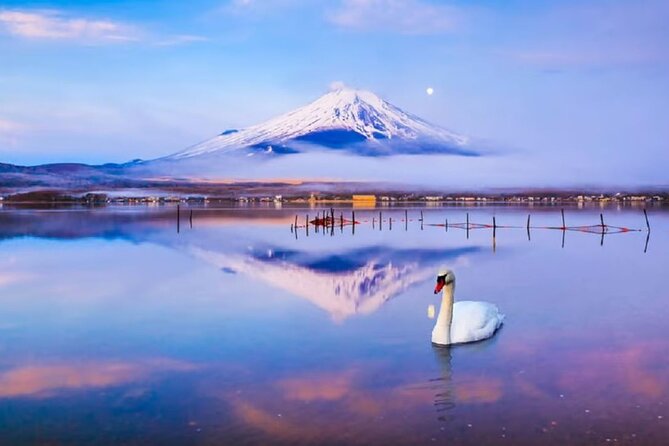
Lake Yamanaka is the largest of the Fuji Five Lakes and lies east of Mount Fuji. The tour allows about one hour and ten minutes here, giving you a meaningful second lake stop after Kawaguchi.
The two lakes serve different purposes in the itinerary. Kawaguchi is tied closely to parks, flowers, and the maple corridor. Yamanaka gives you a wider lakeside setting and a chance to see Fuji from another direction. That variety matters because Fuji’s appearance changes with your position and with the clouds.
The visit should suit you if you want more than one famous viewpoint. It may be less appealing if you prefer to spend an entire day in one town, browse shops, or take a long meal. The schedule aims for coverage rather than deep exploration of one place.
The Swan Lake pleasure boat is an extra
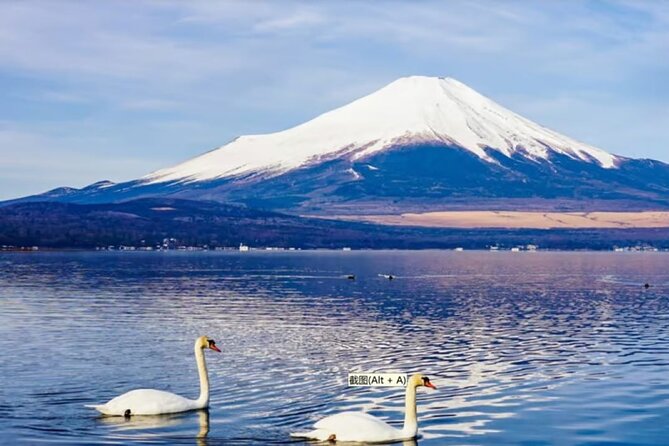
The Lake Yamanakako Pleasure Boat, called Swan Lake, is an optional 20-minute boat ride. It offers views across the water toward Mount Fuji and the surrounding countryside.
The short sailing can be a pleasant way to rest your feet after several stops. It also changes the viewpoint without requiring another walk. Admission is not included, so you should budget separately if you want to ride.
Because the boat takes only about 20 minutes, it will not transform the day into a full lake cruise. Think of it as a brief add-on, not a central part of the tour. If the weather is poor or Fuji is hidden, the value may be limited, so decide on the day if possible.
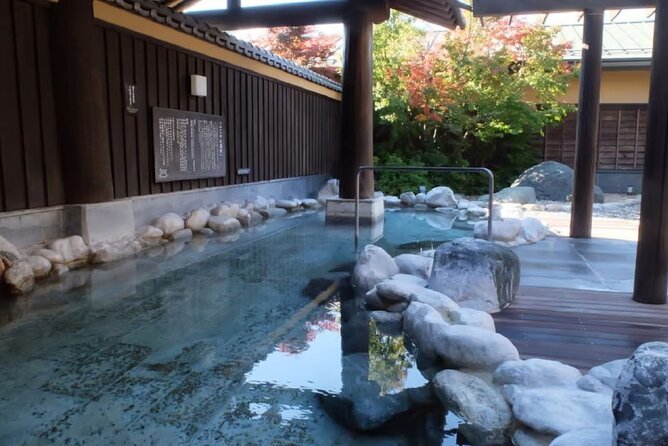
A brief stop at a Japanese hot spring
The final wellness stop is a hot spring visit listed at about 20 minutes. The onsen ticket costs approximately 1,000 to 1,600 yen, with 1,600 yen specified as the per-person amount in the booking details.
Twenty minutes is short for a traditional bath experience. Still, it can give you a taste of Japanese bathing culture after a long day on the road. You should think of it as a quick soak rather than a long spa session.
Tattoo rules matter here. Small tattoos must be covered with skin-colored stickers to enter. If your tattoo is large, you may not be allowed into the hot spring. One important point raised about the experience is that this restriction was not clear enough in advance, so contact the operator before booking if tattoo access affects your decision.
There is also a naming issue in the supplied details: the hot spring is identified as Awara Onsen in Awara City, Fukui Prefecture, even though the rest of the itinerary is centered around Mount Fuji and Yamanashi. That location does not fit naturally with the Fuji Five Lakes route. I would confirm the exact onsen name and location with TREVOPEDIA before paying, especially if the bath is a major reason you want this tour.
Timing, group size, and what the day feels like
The total duration is about 10 to 11 hours, including transportation. That is a long day, but the distance from Tokyo to the Fuji area makes the travel time part of the deal.
The vehicle is air-conditioned, which matters during warm months and after several outdoor stops. It also saves you from changing trains or waiting for local buses. The trade-off is that a vehicle shared by up to 40 people may take longer to load and move between stops than a small private car.
A full group can also affect time at viewpoints. The guide must keep everyone on schedule, and the day includes many stops. If you want a quiet, flexible visit with long meals and unscheduled walks, this is not the right format.
The experience is better suited to a first visit to the Fuji area, a short Tokyo stay, or anyone who wants to see several major sights in one outing. It is less suitable for climbers, photographers who need long periods at one viewpoint, or visitors who already know the region and want lesser-known stops.
The tour is booked through a mobile ticket, and confirmation is provided when you book. Pickup and drop-off are available from designated areas, not necessarily your hotel door, so check the meeting point carefully. The tour is near public transportation, and most people can participate, but the long day and hill-based shrine stop are worth keeping in mind.
Is $115 a fair price?
At $115, I see the value in the transportation and route planning. You are paying to connect Tokyo with multiple Fuji-area sights in one day, with a driver, guide, and air-conditioned vehicle handling the logistics.
The price is less attractive if you will not use the optional elements and mainly want one lake view. Add the onsen fee, possible Shibazakura admission, and your own food and drinks, and the total rises. Still, separate transportation between all these locations could take time and require careful planning.
The best value comes from the variety. You get a high mountain stop, a shrine and pagoda viewpoint, two lakes, parks, seasonal attractions, and a possible hot spring. You do not get much free time, but you do get broad coverage.
The tour has an average booking lead time of about 38 days, which suggests that planning ahead is sensible, especially during popular Fuji viewing seasons. Free cancellation is available up to 24 hours before the start time. If poor weather cancels the trip, you can be offered another date or a full refund. The same applies if the minimum number of participants is not reached.
Should you book this Fuji day tour?
I would book it if you want a practical first look at Mount Fuji and the Fuji Five Lakes without managing the transport yourself. It suits you especially well if you value a clear itinerary, a guide, and the chance to see several famous places in one long day.
I would pause before booking if the onsen is your main goal, because the visit is brief and tattoo rules may prevent entry. I would also confirm the exact hot spring location and which seasonal stops operate on your date.
For the clearest Fuji views, choose a date with a favorable forecast, but remember that mountain weather can still change. If you can accept a busy schedule and the possibility of cloud cover, this tour offers a solid way to reach the Fuji region from Tokyo and sample its best-known sights.
FAQ
How long does the tour last?
The total experience lasts approximately 10 to 11 hours, including transportation time.
What is included in the price?
The price includes driver service, guide service, air-conditioned transportation, and pickup and drop-off from designated areas.
Is the Mount Fuji 5th Station included?
Yes. The tour includes about 40 minutes at Mount Fuji 5th Station, located at roughly 2,300 meters above sea level.
Are Lake Kawaguchi and Lake Yamanaka included?
Yes. Lake Kawaguchi receives about two and a half hours, while Lake Yamanaka receives about one hour and ten minutes.
Is the onsen ticket included?
No. The onsen ticket costs approximately 1,000 to 1,600 yen, with 1,600 yen listed per person.
Can I enter the onsen with a tattoo?
Small tattoos must be covered with skin-colored stickers. Large tattoos may prevent entry.
Is the Swan Lake pleasure boat included?
No. The Lake Yamanakako Pleasure Boat is an optional activity, and its admission is not included.
Is the Fuji Shibazakura Festival included?
No. If the festival is part of the schedule on your date, admission costs about 1,300 yen and is paid separately.
What happens if the weather is poor?
If poor weather causes the tour to be canceled, you will be offered a different date or a full refund. Free cancellation is also available up to 24 hours before the experience starts.
More Onsen Tours in Tokyo
- From Tokyo: Private Tour to Fuji/Hakone – Onsen, Art, Nature
★ 5.0 · 116 reviews - Mt. Fuji, Hakone Private Tour from Tokyo – Onsen, Arts and Nature
★ 5.0 · 79 reviews - Tattoo-friendly open-air Onsen & drink
★ 5.0 · 25 reviews - From Tokyo: Private Motorcycle Tour – Fuji, Hakone, Onsen
★ 4.9 · 12 reviews
Just added around Tokyo
- Samurai Guide Sho’s Mt. Takao Hike, Temple & Onsen from Shinjuku★ 5.0 · 9 reviews
- Tokyo Local Tattoo Friendly Public Bath Experience★ 5.0 · 4 reviews
- Japanese Head Onsen and Scalp Massage Retreat in Tokyo★ 4.5 · 2 reviews
- Mt. Fuji Tours to Lake Kawaguchi and Yamanaka Onsen English Guide★ 4.5 · 4 reviews
- Tokyo City Adventures Private English Tour With Hotel Pickup★ 5.0 · 12 reviews
- Tattoo-friendly open-air Onsen & drink★ 5.0 · 25 reviews
- Private Tour to Snow Monkey, Zenkoji Temple & Hot Springs Nagano★ 4.0 · 2 reviews
- Mt Fuji Small Group 1 Day Tour Kawaguchi and Yamanaka with Pickup★ 5.0 · 4 reviews
Japanese Onsen Tours, compared.
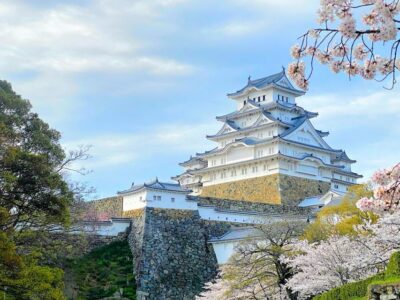
Himeji Castle, Arima Onsen & Mt. Rokko Day Tour
Read our review →
Private Tour to Fuji/Hakone – Onsen, Art, Nature
Read our review →
All-Day Pass to Yunomori Sathorn Onsen Bath and Spa
Read our review →
Mt. Fuji, Hakone Private Tour from Tokyo – Onsen, Arts and Nature
Read our review →
From Fukuoka: Mount Aso, Kurokawa Onsen, and Shrine Tour
Read our review →