
REVIEW · KUSADASI
Day Tour – Pamukkale, Travertines and Hierapolis Tour from Kusadasi
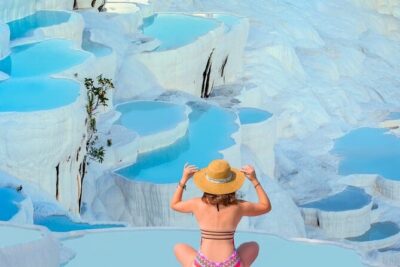
Pamukkale is nature’s great optical trick: from a distance, its white terraces look like snow or frozen waterfalls. Up close, they are limestone deposits shaped by hot spring water, with Hierapolis spread across the heights above. The setting is extraordinary, but the long drive from Kusadasi means you need to value the destination more than the journey.
I like the small maximum group of 14, which gives you a better chance to ask questions and keep up with the guide. I also like the useful mix of natural scenery and Roman ruins, from the bright travertines to Hierapolis’ huge theater and cemetery. The main drawback is time: a three-hour drive each way can leave you feeling rushed if the day includes shopping stops or slow vehicle changes.
Key points to know before booking
- Three hours each way: The ride from Kusadasi is long, though the air-conditioned Mercedes-style minibus is suited to the distance.
- Two major sights in one day: You see both Pamukkale’s terraces and the ancient city of Hierapolis.
- Thermal bathing costs extra: Bring a swimsuit if you want to use the paid pools near the ruins.
- Small group format: The tour has a maximum of 14 people, allowing for a more personal guide experience.
- Walking is substantial: Comfortable shoes, water, and sun protection matter, especially in summer.
- Shopping may affect the schedule: Some departures have included textile or onyx stops, reducing time at Pamukkale.
The long road from Kusadasi to the white terraces
The day begins with hotel pickup at about 8:00 a.m. From Kusadasi, the coach heads east toward Denizli Province, where Pamukkale and Hierapolis share the same UNESCO-listed site.
This is not a quick outing. The drive can take roughly three hours each way, making the tour about ten hours from pickup to return. That is a lot of road time for one attraction, but Pamukkale is not an ordinary nearby stop. If you want to see it without arranging your own car, this tour offers a practical solution.
The vehicle is air-conditioned, and the group is limited to 14 people. That is a useful middle ground: more personal than a large coach tour, but less expensive and demanding than hiring a private guide. Several guides, including Tahsin and Mehmet, have been praised for their friendly manner and strong command of the site. The quality can vary by departure, so the guide you receive will shape much of the day.
A word about the route: some departures have included stops at a textile shop or an onyx factory. These may be part of the local touring pattern, but they are not the reason to book this day. If your priority is the ruins, ask at the start how much time you will have at Pamukkale and whether shopping stops are planned.
More Hot Spring Day Trips in Kusadasi
- Pamukkale Day Tour From Kusadasi
★ 5.0 · 11 reviews - Small Group Pamukkale Day Tour from Selcuk or Kusadası
★ 4.5 · 10 reviews - Private: Day Tour to Pamukkale from Kusadasi
★ 5.0 · 5 reviews
Walking onto Pamukkale’s cotton-colored terraces
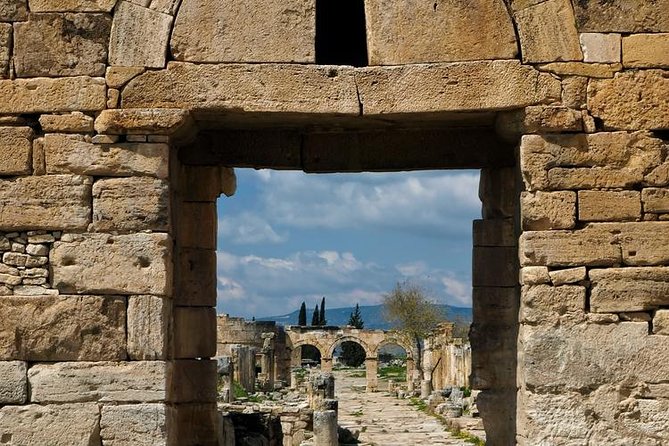
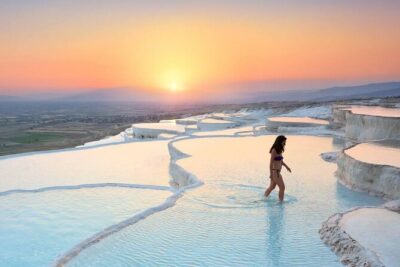
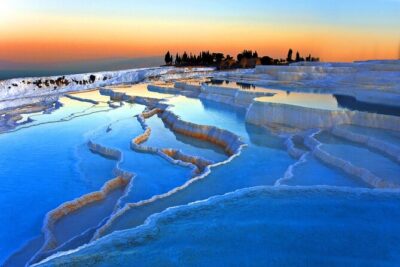
Pamukkale means cotton castle, a fitting name for the brilliant white slopes above the plain. Hot mineral water flows over the cliff and leaves behind calcium deposits. Over time, those deposits formed shallow basins, rippled shelves, and broad white terraces.
The first sight is the strongest. The terraces catch the light and change from chalk white to cream depending on the conditions. Below, the plain opens out toward Denizli. The view is wide and memorable, and you will want time for photographs before the walking begins.
You will walk alongside the guide and hear how the hot water travels down the roughly 200-meter cliff face. The explanation helps you read the site rather than seeing it as a simple white hill. The pools are natural, but not every basin will hold much water. Flow is managed to protect the formations, and some areas may look drier than expected.
Your feet and the weather matter here. The route involves a good deal of walking, and the white surface can feel harsh under strong sun. Bring water, a hat, and sunscreen. Comfortable walking shoes are useful for the approach, although the bathing and terrace areas may require you to follow site rules about footwear.
Pamukkale is at its most enjoyable when you slow down. The schedule can make that difficult, particularly if the group reaches the site late or spends time elsewhere first. I would protect your time here for the terraces and ruins, rather than treating the white slopes as a quick photo stop.
Hierapolis, a Roman city above the springs
The ancient city of Hierapolis sits directly beside Pamukkale, so the tour gives you two very different experiences without another transfer. The springs drew people here long before modern tourism, and the Roman city grew around the waters.
The necropolis is one of the most striking parts of the site. This large Roman cemetery stretches along the ancient road and includes tombs in several forms. It gives you a strong sense of Hierapolis as a place where people came not only for bathing, but also for healing, worship, trade, and final rest.
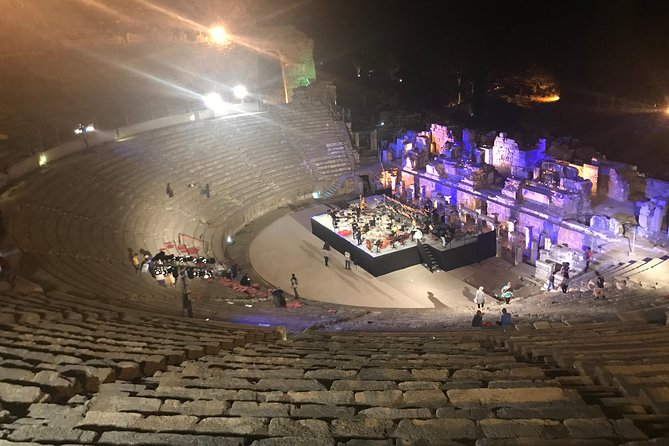
The Roman theater is another major stop. Its scale is easy to underestimate until you stand among the remains and look across the seating. It once held about 12,000 people, and the surviving decoration helps you picture performances taking place here.
The walking tour also includes St Philippe Martyrion, a basilica linked with the early Christian history of the city. It is a quieter stop than the theater, but useful for showing how Hierapolis changed across the Greek, Roman, and Christian periods.
The guide-led portion is valuable here because the ruins are spread out and not every feature explains itself. A strong guide can point out what you are looking at, suggest the best route, and answer questions. Tahsin and Mehmet have been singled out for their enthusiasm and clear explanations, while other departures have had less fluent English and lighter commentary. That unevenness is worth keeping in mind when you compare this tour with a private option.
Thermal pools and the extra bathing cost
The tour allows free time for bathing in the natural springs, but the pool entrance is not included. The stated 2025 entrance charge for Pamukkale and Hierapolis is €30 per person, and the thermal bathing area may involve an additional cost depending on the facility you choose. Confirm the current fee when booking.
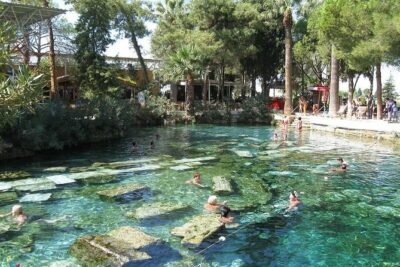
Bring a swimsuit, towel, and a change of clothes if you plan to bathe. The pools are surrounded by ancient columns, which makes the experience more memorable than a standard hotel spa. Still, do not assume every white terrace is available for swimming. Access is controlled to protect the mineral formations.
Summer crowds can make the pools less relaxing. If the area is packed, you may prefer to admire the water and spend your time exploring Hierapolis. The bathing option is a pleasant extra, not the sole reason to choose this tour.
The schedule places lunch after the bathing period, followed by the walking tour of Hierapolis. Food and drinks are officially listed as excluded, and lunch is not part of the stated inclusions. Some departures have included a buffet meal, while others have not, so clarify this before you go. If lunch is included on your departure, expect a practical group meal rather than a carefully selected local restaurant.
More Hot Spring Day Trips in Turkey
- From Kusadası: Pamukkale Day Trip w/Balloon Flight & Lunch
★ 3.0 · 3 reviews - Private Pamukkale and Hierapolis Day Tour from Kusadasi
★ 5.0 · 2 reviews - Pamukkale Day Tour from Kusadasi with Lunch
★ 5.0 · 2 reviews - From Antalya/Kemer: Pamukkale & Hierapolis Day Trip w/Meals
★ 4.5 · 2,196 reviews
What the $152.97 price really covers
At $152.97 per person, the price pays for hotel pickup and return, an English-speaking guide, and an air-conditioned vehicle. It also saves you from arranging the long journey between Kusadasi and Pamukkale yourself.
The value depends on what you want from the day. If you mainly need transport, the tour can feel expensive, especially when entrance fees and food are extra. One disappointing experience effectively felt like paying for a driver, with too little explanation and too much time spent away from the main site.
If you want a guide to explain the geology, connect Hierapolis’ ruins, and help you choose a route, the price makes more sense. The small group is another point in its favor. A 14-person limit is far easier to manage at a sprawling archaeological site than a full-size bus group.
Ask three questions before paying: how long will you have inside Pamukkale and Hierapolis, is lunch included on your date, and are textile or onyx stops planned? The answers can change the value of the day more than the advertised group size.
How to make the most of the ten-hour schedule
I would start by wearing shoes you can walk in for several hours. Add a hat, water, sunscreen, swimsuit, and a small bag for wet clothing. The sun can be intense on the exposed white terraces, and shade is limited.
Use the first part of your visit for the travertines and photographs. Then allow proper time for Hierapolis, especially the necropolis and theater. If you want to bathe, decide in advance how much time you are willing to give up from the ruins.
Keep your expectations realistic about personal freedom. The day is partly guided and partly independent, which is a good arrangement when the guide gives clear instructions. You can hear the main explanation, then explore on your own, but you still need to return to the group at the agreed time.
The tour is best for someone who wants a straightforward day trip from Kusadasi and does not mind a long ride. It is less suitable if you dislike early starts, need a slow pace, or want several unhurried hours at the site. People with limited walking ability should ask about renting a cart or other assistance, since the ruins and terraces cover a wide area.
The good and bad of the guide service
A small group gives the guide room to make the day feel personal. The strongest guides have been described as friendly, passionate, and helpful with route suggestions. That is important at Hierapolis, where a short explanation can turn a pile of stones into a readable part of an ancient city.
The weak point is inconsistency. Some departures have had guides whose English was not fluent enough for easy explanations. Others have received excellent commentary about Turkey, the springs, and the archaeological remains.
The same applies to the driver. The minibus is generally described as comfortable and well presented, but one serious complaint involved unsafe phone use while driving. That is not a minor issue. If you see unsafe behavior, speak up and ask the guide or operator to address it.
Should you book this Pamukkale day tour?
Book it if you want hotel pickup, a small group, and a guide for both Pamukkale and Hierapolis, and you accept the three-hour journey from Kusadasi. The white terraces and Roman ruins are worth the effort, and the tour can be especially useful when you do not want to handle transport yourself.
Skip it if your priority is maximum time at the site or a carefully paced archaeological visit. A private transfer, overnight stay near Pamukkale, or a tour with guaranteed longer site time may suit you better.
Before confirming, verify the entrance fee, lunch arrangements, planned shopping stops, and time inside the ruins. With those details clear, this is a sensible way to reach one of Turkey’s most unusual sights. Just remember that the destination is the star, not the road there.
FAQ
How long is the tour from Kusadasi?
The tour lasts about 10 hours, including hotel pickup, the drive to Pamukkale, time at the site, and the return to Kusadasi. The drive can take roughly three hours each way.
What is included in the tour price?
Hotel pickup and drop-off, an English-speaking guide, and transport in an air-conditioned vehicle are included. Food, drinks, and entrance fees are not listed as included.
How much is the Pamukkale and Hierapolis entrance fee?
The stated 2025 entrance fee is €30 per person. Confirm the current price before departure, as fees can change.
Can I swim in the thermal pools?
Yes, the itinerary allows free time for bathing in the natural springs and pools. The bathing entrance is at your own expense, and you should bring a swimsuit.
How large is the tour group?
The group has a maximum of 14 people. This is intended to provide a more personal experience with the guide.
Is lunch included?
The official inclusions do not list lunch, and the tour information says food and drinks are excluded. Some departures have included a buffet lunch, so confirm the arrangement for your specific date before booking.
More Pamukkale and Hierapolis Tours from Kusadasi
- Pamukkale Small Group Tour from Kusadasi Port/Hotels
★ 5.0 · 434 reviews - Pamukkale Small Group Tour From Kusadasi or Selcuk Hotels
★ 5.0 · 393 reviews - From Antalya Pamukkale Hot Air Balloon Flight with Lunch
★ 4.5 · 310 reviews - Kusadasi: Pamukkale Hot Spring & Hierapolis Small-Group Tour
★ 4.7 · 256 reviews
Just added around Kusadasi
- Private Pamukkale Tour From Kusadasi Port / Hotels★ 5.0 · 5 reviews
- Pamukkale Private Shore Excursion From Kusadasi Port★ 5.0 · 36 reviews
- Private & Small Group Pamukkale & Hierapolis Tour★ 4.0 · 2 reviews
- Full-day Private Pamukkale Tour from Kusadasi with Lunch★ 5.0 · 43 reviews
- Private Ephesus and Pamukkale tour in One Day★ 5.0 · 2 reviews
- Full Day Pamukkale Terraces and Hierapolis Ruins Tour★ 4.5 · 12 reviews
- Daily Pamukkale and Hierapolis Tour from Kusadasi and Selcuk★ 5.0 · 36 reviews
- Private Pamukkale and Hierapolis Day Tour from Kusadasi★ 5.0 · 2 reviews
Pamukkale & Hierapolis Tours, compared.
Pamukkale Hierapolis and Cleopatra’s Pool Tour with lunch from Antalya
Read our review →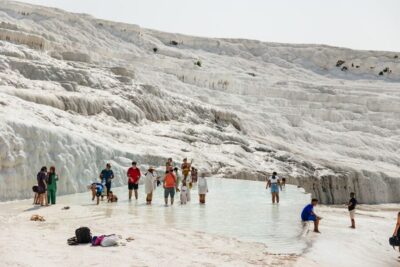
Antalya Pamukkale Hot Springs & Hierapolis Tour With Lunch
Read our review →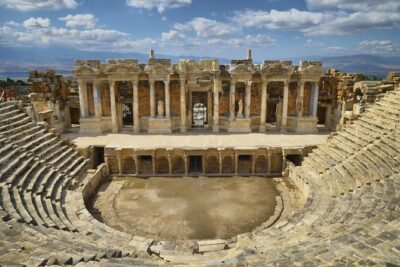
Full-Day Tour of Pamukkale from Antalya with Lunch
Read our review →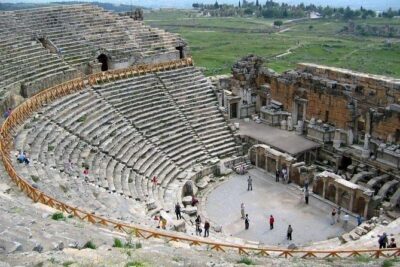
Full-Day Tour to Pamukkale From Marmaris w/ Breakfast & Lunch
Read our review →Browse the lists this tour appears in