
REVIEW · ISTANBUL
5 days Private Tour of Western Turkey (Troy-Pergamon-Ephesus-Didyma-Pamukkale)
The big draw here is the sweep of the route. In five days, you move from the ruins of Troy and Assos to Pergamon, Ephesus, Didyma, Aphrodisias, and Pamukkale, with a local guide handling the history and a driver handling the long roads. This is western Turkey in concentrated form, not a single-site excursion.
I like the private format, which keeps the tour to your own group and allows some room for questions and requests. I also like the practical package: entrance fees, five lunches, parking, guiding, transport, and the domestic flight back to Istanbul are included. The main drawback is clear: there is a lot of road time, and accommodation and drinks cost extra.
Key points to know before booking
- Troy and Assos share the opening day, with about five hours of driving from Istanbul before the ruins begin.
- Pergamon includes both the Acropolis and Asklepion, giving you ancient civic, religious, and medical sites in one day.
- Ephesus gets the longest single site visit, followed by the House of Mary and the Temple of Artemis.
- Days four and five are archaeology-heavy, with Priene, Miletus, Didyma, Aphrodisias, Hierapolis, and Pamukkale.
- The price includes a flight to Istanbul, but not your hotels, so compare the final package cost carefully.
- Gallipoli can be requested, though adding it to the first day would make an already long schedule even tighter.
What this five-day route really covers
This is not a relaxed seaside holiday with a few ruins added on. It is a moving archaeological tour through western Turkey, built for someone who wants to see a great deal in a short time.
You begin in Istanbul and finish near Denizli, where an evening flight returns you to Istanbul at about 7:50 pm. In between, the route passes through the ancient Troad, the Aegean coast, inland Roman sites, and the white thermal terraces of Pamukkale.
The schedule uses three nights around Kusadasi, with overnight stays in Assos on the first night and Kusadasi after the second, third, and fourth days. The hotel itself is not included in the stated price. Different hotel choices are available, so ask what each option adds to the total before you commit.
More Pamukkale and Hierapolis Tours from Istanbul:
- 4 Days Turkey Tour – Cappadocia, Ephesus and Pamukkale Tour
★ 5.0 · 138 reviews - 6 Days Turkey Tour Cappadocia, Pamukkale, Ephesus, Gallipoli Troy
★ 5.0 · 109 reviews - 7 Days Best of Turkey Tour: Istanbul-Cappadocia-Ephesus-Pamukkale
★ 5.0 · 91 reviews
Day one: Troy and the hilltop ruins of Assos
The first day starts at 8:00 am and includes roughly five hours of driving from Istanbul to Troy. That is a serious transfer, but it places one of Turkey’s most famous archaeological names at the front of the trip.
Troy is best approached with realistic expectations. The site is important because of its layers and its place in the story of the Trojan War, but it is not a fully intact city. Your guide matters here. Without explanation, you may see foundations, walls, and uneven remains. With context, the site becomes a lesson in how settlements were built, destroyed, and rebuilt over many centuries.
You have about 90 minutes at Troy, with admission included. That is enough for a guided overview, but not enough for a slow study of every corner. Wear firm shoes, bring water, and keep your attention on the ground. Ancient sites rarely provide a smooth walking surface.
From Troy, it is about an hour to Assos. The stop includes the Temple of Athena and the ancient city, followed by an overnight stay in Assos. The temple’s hilltop position is the main reward here, giving you a strong sense of place and a striking end to a long first day.
The opening day can also include the Gallipoli war area if you request it. That option may be especially meaningful for Australian visitors, but you should ask how it affects the timing. Troy, Gallipoli, Assos, and the long drive from Istanbul make for a full day even before stops run long.
Day two: Pergamon’s Acropolis and the ancient medical center
After leaving Assos, you face about three hours on the road to Bergama, the modern town beside ancient Pergamon. This is one of the strongest archaeological days because the Acropolis and Asklepion show two very different sides of ancient life.
The Pergamon Acropolis is set high above the surrounding area. The remains include an amphitheater and the ruins of a major ancient city. The elevated setting helps you understand why the site was chosen, but it also means walking on sloping and uneven ground.
You have about two hours here. That gives your guide time to explain the city’s major remains without turning the stop into a rushed photo break. The amphitheater is especially memorable for its steep position, though your interest in architecture, temples, or ancient city planning will shape what you enjoy most.
Next comes Asklepion, an ancient healing center described as one of the first hospitals in the world. You spend about an hour here. It is a useful change of pace after the Acropolis, since the focus shifts from power and public buildings to medicine, treatment, and the ancient idea of healing.
After Asklepion, the tour makes a roughly three-hour transfer to Kusadasi. This is where the private vehicle earns its keep. Public transport between these sites would be awkward and time-consuming, while a private driver lets you use the western Turkish road network as one connected route.
The day includes lunch, admission fees, transport, and guiding. It does not include drinks, so keep money available for water and other purchases.
Day three: Ephesus, the House of Mary, and a vanished wonder
Ephesus receives about two hours, making it the most substantial single archaeological visit on the route. That is appropriate. The ancient city is one of Turkey’s best-known sites, with broad streets, monumental remains, and enough surviving detail to show how a major Roman-era city functioned.
Your guide can help you distinguish between what you are seeing and what you are merely imagining. At a site this large, it is easy to walk past foundations without understanding their purpose. Two hours is useful, though anyone fascinated by archaeology may wish for more time.
Bring protection from the sun and wear practical footwear. The walking can be tiring, and the schedule continues after Ephesus rather than ending there. Your physical fitness should be moderate, as the tour involves repeated walks through ancient sites over several days.
The House of Mary is a short drive from Ephesus and receives about 45 minutes. The site is believed to be where the mother of Jesus spent part of her life, and it now functions as a Catholic church. This stop has a different tone from the surrounding ruins. It is more focused on religious significance and quiet reflection than on grand architecture.
The Temple of Artemis follows, with about 20 minutes. Admission is free, and the visit is brief because very little of the ancient wonder remains. One column gives you a visual clue to the temple’s former scale, but you should not expect a complete monument.
That contrast is part of the value. Ephesus shows a city with substantial remains, while Artemis reminds you how much has vanished. The stop is short, but it helps explain why the temple became famous despite its fragmentary condition.
You return to Kusadasi for the night. The same hotel base after days two, three, and four reduces packing and unpacking, though the route still involves long drives.
A few more hot spring trips around Istanbul worth a look
- 5-Day Aegean Tour – Gallipoli, Troy, Ephesus, Kusadasi, Pamukkale
★ 4.5 · 86 reviews - 5-Day Best of Cappadocia, Pamukkale and Ephesus
★ 5.0 · 6 reviews - Istanbul-Ephesus-Pamukkale (5 Days Private Tour)
★ 5.0 · 5 reviews - 5 Days Cappadocia Ephesus Pamukkale Tour from Istanbul by Plane
★ 5.0 · 4 reviews
Day four: Priene, Miletus, and the oracle at Didyma
Day four moves through three important ancient sites, beginning with Priene. The drive from Kusadasi starts after breakfast, and the visit lasts about 90 minutes.
Priene is described as a well-planned Greek city, with a preserved Hellenistic theater and remains of a synagogue. This is a good stop for understanding city layout rather than simply admiring one famous monument. Its scale is more manageable than Ephesus, and the ancient planning is easier to read.
Miletus follows, with about 90 minutes at the site. Once a major Ionian port, it includes a large theater and remains of Roman baths. The theater is the main visual anchor, while the baths help show the public side of Roman urban life.
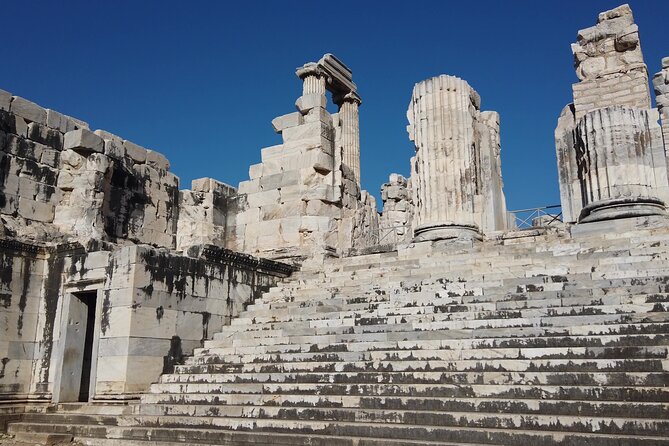
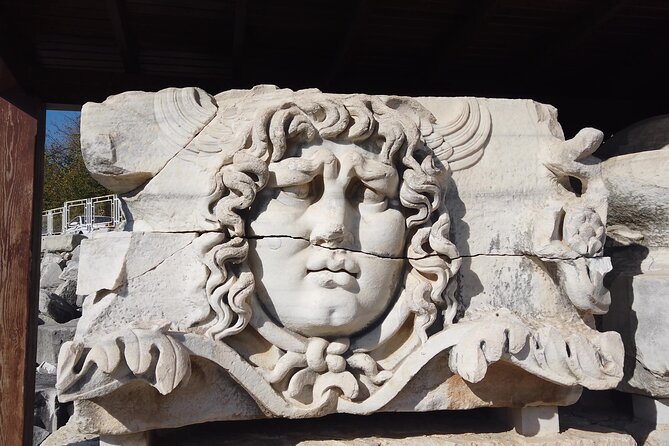
The final stop is the Temple of Apollo at Didyma, one of the ancient world’s major oracle centers. You have about an hour here. The temple is known for its large surviving architectural elements, and the scale makes it easier to picture the importance of prophecy and pilgrimage in the ancient world.
This is another busy day, but the sites complement one another. Priene offers city planning, Miletus offers civic and port life, and Didyma offers religion and ritual. You return to Kusadasi for another overnight stay.
The drawback is that none of these stops gets a very long visit. If you prefer to photograph every column or read every sign, you may feel hurried. If you want a well-chosen introduction to several sites, the rhythm works better.
Day five: Aphrodisias, Hierapolis, and the white terraces
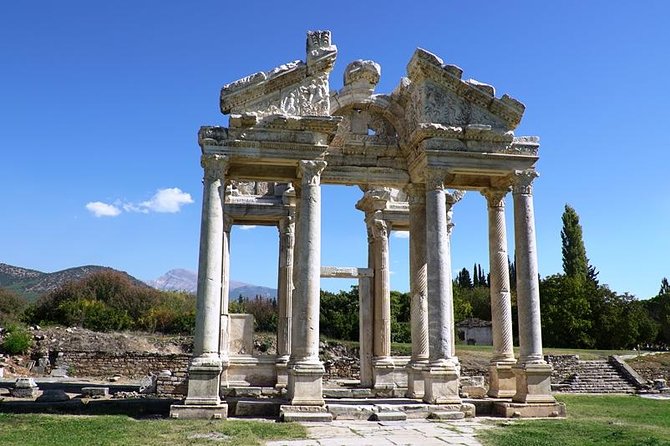
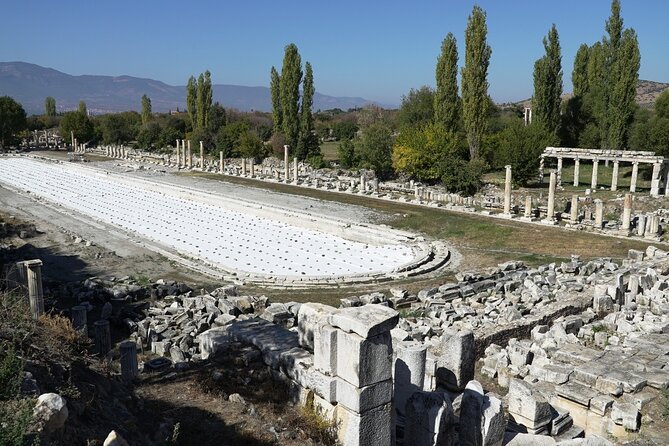
The final day begins with about two hours of driving from Kusadasi to Aphrodisias. The ancient city is associated with Aphrodite, and the most notable remains include the stadium, odeon, monumental gateway, and Temple of Aphrodite.
You have about 90 minutes here. The stadium is one of the major reasons to visit, and the monumental gateway gives the site a strong sense of arrival even in its ruined state. Aphrodisias rewards travelers who have already seen Ephesus because it feels different in scale and emphasis.
After lunch, it is about an hour to Pamukkale. This final stop combines two attractions: the ancient city of Hierapolis and the white thermal pools.
Hierapolis includes a theater and a necropolis, described as one of the largest ancient graveyards. The pairing is powerful. You see a working ancient city, public buildings, and a vast burial area before turning to the natural terraces that made this place famous.
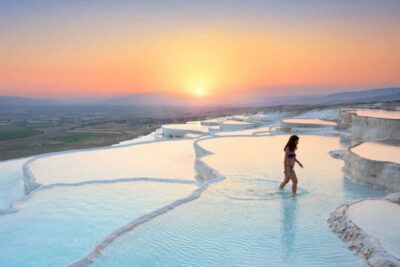
Pamukkale’s white thermal pools are the visual finale of the tour. The bright mineral formations can look almost unreal, but the visit is not only about taking pictures. The thermal waters help explain why people built and used Hierapolis here in the first place.
You receive about two hours at Pamukkale, with admission listed as free in the schedule. Confirm exactly what is covered at booking, since the overall tour price includes the major entrance fees but optional activities or personal purchases may differ.
After the visit, you are transferred to Denizli airport for the 7:50 pm flight to Istanbul. The flight is included, which saves you from arranging a separate return journey after five demanding days.
The value of $1,540.94 per person
At $1,540.94 per person, this is not a budget excursion. The price becomes easier to assess once you separate what is covered from what is not.
Included are private transport, a local guide, site entrance fees, parking, five lunches, and the domestic flight from the Pamukkale area to Istanbul. Those costs add up quickly, especially when a private vehicle and driver are involved.
Accommodation is excluded. You can choose from different hotel options, but the final cost depends on that selection. Drinks are also extra. I would ask for the exact hotel category, room basis, and total cost before comparing this with a group tour.
The private setup is the main premium. You are not sharing the vehicle with strangers, and only your own group participates. That makes the long drives more comfortable and gives you a better chance to ask questions. It may also allow the guide to adjust explanations to your interests, though the overall timetable remains tight.
The package is best value for someone who would otherwise need to organize several hotels, a driver, archaeological admissions, meals, and a flight. If you already have a rental car and prefer to spend half a day at one site, the price may feel high.
Guides, drivers, and the feel of a private trip
The tour may use a multilingual guide. Names connected with previous bookings include Ertunga, and another arrangement used Mesut as guide with Savas as driver. You should not assume a specific person will lead your departure, so confirm the guide details after booking.
A good guide is especially useful at Troy, Asklepion, Priene, and the Temple of Artemis, where the remains need explanation. The strongest personal accounts of this tour also point to careful lunch choices and quick replies to questions before departure. Those are small details, but they matter on a five-day trip with many moving parts.
You should expect a moderate level of physical activity. The route includes uneven archaeological ground, sloping sites, and repeated walking in the open air. The schedule does not suit someone who wants long breaks each afternoon.
Who should book this route
I would choose this tour if you want a broad first look at western Turkey and prefer a private vehicle to public transport. It suits history fans, first-time visitors who want help making sense of ruins, and couples or families who value their own guide and schedule.
It also works well if you are especially interested in ancient Greek and Roman sites. Troy, Pergamon, Ephesus, Priene, Miletus, Didyma, Aphrodisias, and Hierapolis are not interchangeable. Each adds a different piece to the story.
I would hesitate if you dislike long drives, need a slow pace, or want several free afternoons. The first and second days include major transfers, and the final two days pack several archaeological sites into a tight sequence.
The possible Gallipoli addition requires extra thought. It may be important to you, but adding it to the opening day could make the schedule strenuous. Ask for a revised timing plan rather than treating it as a casual extra.
Should you book this five-day tour?
Book it if your priority is coverage, private transport, and expert explanation across a wide stretch of western Turkey. The combination of included admissions, lunches, a driver, a guide, and a flight gives the price real practical value, especially for a first visit.
Skip it if you want to linger. A self-planned trip with fewer bases would let you spend more time at Ephesus, Pamukkale, or Aphrodisias. For most people choosing this experience, the right question is not can I see everything, but am I happy seeing a great deal at a steady pace.
FAQ
Where does the tour start?
The tour starts in Istanbul, with pickup offered and a stated start time of 8:00 am.
How long is the tour?
The experience lasts approximately five days.
Is this a private tour?
Yes. Only your own group participates in the private activity.
Are hotels included?
No. Accommodation is not included, although different hotel options are available to choose from.
Are meals included?
Five lunches are included. Drinks are not included.
Is the flight back to Istanbul included?
Yes. A domestic flight from the Pamukkale area to Istanbul is included, with a stated flight time of about 7:50 pm from Denizli airport on the final day.
Can Gallipoli be added?
Yes. The Gallipoli war area can be visited if requested, but you should ask how the addition affects the first day’s schedule.
What level of fitness is needed?
A moderate level of physical fitness is recommended because the tour involves walking through several ancient sites over five days.
Just added around Istanbul
- From Istanbul: Cappadocia Konya Pamukkale Ephesus 7 Nights★ 4.5 · 8 reviews
- Private Tour of Turkey In 7-Days: Cappadocia- Ephesus- Pamukkale- Istanbul★ 5.0 · 8 reviews
- 7 Day Istanbul-Cappadocia-Ephesus-Pamukkale Tour (Balloon Ride)★ 5.0 · 5 reviews
- Yalova Thermal Hot Springs Day Trip from Istanbul★ 3.5 · 3 reviews
- Turkey’s Wonders – Pamukkale, Ephesus, Cappadocia Travel from-to Istanbul★ 4.5 · 18 reviews
- Turkey’s Highlights – Pamukkale, Ephesus, Cappadocia Trip & Balloon Ride Option★ 4.0 · 19 reviews
- Private Pamukkale Day Tour from Istanbul by Plane★ 5.0 · 13 reviews
- 8 Days Istanbul, Cappadocia, Konya, Pamukkale, Ephesus by flights★ 5.0 · 12 reviews
Pamukkale & Hierapolis Tours, compared.
Pamukkale Hierapolis and Cleopatra’s Pool Tour with lunch from Antalya
Read our review →

Antalya Pamukkale Hot Springs & Hierapolis Tour With Lunch
Read our review →

Full-Day Tour of Pamukkale from Antalya with Lunch
Read our review →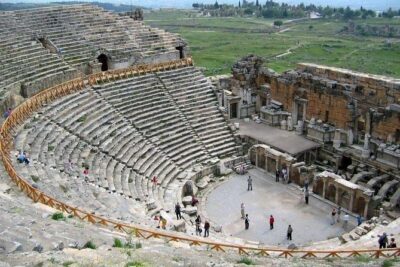

Full-Day Tour to Pamukkale From Marmaris w/ Breakfast & Lunch
Read our review →Browse the lists this tour appears in